
Hessdalen Lights: Norway's 40-Year Unexplained Mystery
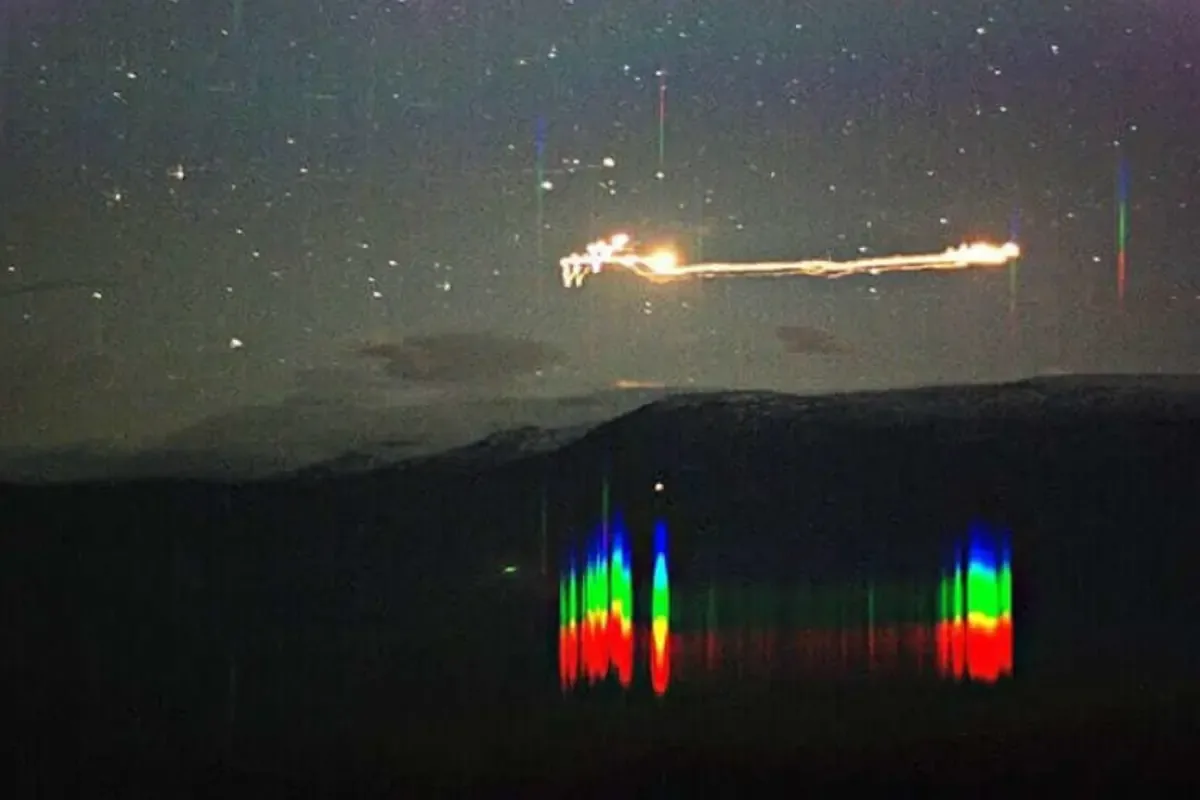
In early 1984, instruments installed in the Hessdalen Valley in central Norway recorded 53 appearances of unusual lights, and some of them remain unexplained to this day.
Cameras, radar, magnetometers, and infrared devices all worked in sync, measuring something that appeared and vanished without a sound and without a trace.
Erling Strand, one of the founders of the research effort, summed up the approach simply: whatever the phenomenon was, it needed to be measured.
Where the Hessdalen Lights Appear
The valley stretches about nine miles and lies in the municipality of Holtålen, in Norway's Trøndelag county, roughly 75 miles south of Trondheim.
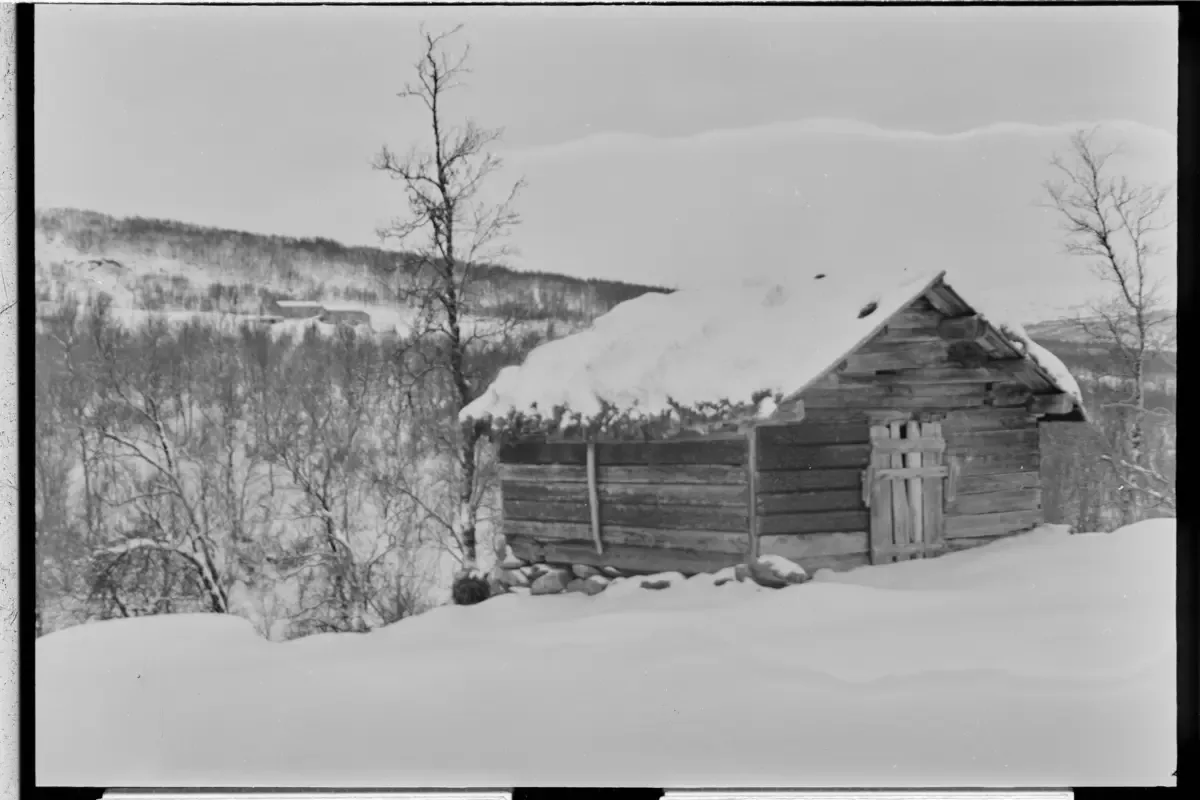
About 150 people live there, surrounded by forest and hills.
Locals claimed they had seen strange lights in the sky above the valley even before 1981, long before anyone arrived to measure them.
Serious attention didn't come until the early 1980s.
Between December 1981 and mid-1984, residents saw the lights as often as fifteen to twenty times a week: so often that nighttime visitors began showing up in the valley, curious to see with their own eyes what the newspapers had been reporting.
That frequency led the Norwegian and Swedish UFO research organizations, UFO-Norge and UFO-Sverige, to launch what would become Project Hessdalen in 1983.
A Glow Science Can't Explain
The lights don't behave like any known atmospheric phenomenon.
They appear white, yellow, or red, sometimes as a motionless point that hovers for hours, and other times as a quick flash that vanishes within seconds.
According to researchers' data, their size ranges from about a foot and a half to nearly 100 feet in diameter.
They produce no sound, leave no physical trace on the ground, and yet radar sometimes registers them as solid objects.
An Open-Air Science Laboratory
That winter saw a field study that, for the first time, turned the valley into a genuine open-air science laboratory.
The team set up cameras, radar units, magnetometers, and spectrometers, and over the observation period logged the 53 light sightings this story is based on.
Multiple instruments recorded the same events at the same time, ruling out equipment malfunction or a single observer's optical illusion.
American astronomer Allen Hynek, who had previously served as a scientific advisor to the U.S. Air Force on UFO research, later described the valley as one of the rare places on Earth where an unexplained phenomenon could be studied systematically, almost like a laboratory experiment.
The "Blue Box"
Research slowed after 1985, but it never really stopped.
In August 1998, an automated measuring station known as the "Blue Box" was installed in the valley, equipped with a magnetometer and cameras.
The station still runs continuously today, logging activity even when no researchers are in the valley.
Between 2000 and 2002, Italian and Norwegian scientists scanned the valley with radio receivers and spectrometers through the joint EMBLA project, trying to capture the phenomenon's electromagnetic signature.
After 1985, sightings began to decline. In later years the lights were recorded less and less often, far less than in the days when tourists came at night simply to wait for the next one, but still often enough that the research never stopped.
Scientific Hypotheses
Explanations have piled up ever since, and none of them has managed to account for everything that's been recorded.
One theory rests on the piezoelectric effect: the valley's quartz-rich rocks are said to release an electrical charge when subjected to tectonic strain.
The idea builds on a 1998 study by Japanese researchers Shunji Takaki and Motoji Ikeya on dark discharges in earthquake lightning, which other researchers later applied to Hessdalen.
Brazilian physicists Gerson Paiva and Carlton Taft proposed a different mechanism in papers published in 2010 and 2012 in the Journal of Atmospheric and Solar-Terrestrial Physics: that the lights form as clusters of so-called Coulomb crystals in dusty plasma, created by the ionization of air from radon decay.
A third line of research, led by Italian engineer Jader Monari, described the valley in 2013 as a kind of natural battery, with opposite sides of the valley acting as electrodes and the Hesja River serving as the electrolyte.
A Mystery Declared Solved, Too Soon
In 2007, some media outlets reported that researchers were close to a solution, and a few headlines even announced the end of the mystery.
Spectral analysis conducted by Norwegian and Italian researchers revealed the presence of scandium, an element that reacts violently with oxygen and acids and could be part of the ignition mechanism. The authors, however, stressed that their conclusions were preliminary.
Back in 2003, Italian physicist Matteo Leone had already challenged some of the earlier measurements the theory partly relied on, pointing out that some past sightings were actually stars, aircraft, car headlights, or mirages.
In other words, the puzzle never really closed. It just seemed closed for a while.
Forty Years Without a Final Answer
Scientists who've been measuring the same valley for four decades now agree on at least one thing: the phenomenon is real, physical, and measurable, and its energy source remains completely unknown.
A 2016 survey of researchers published in Frontiers in Earth Science (Caron and Faridi) found that phenomena like this remain under-studied and that part of the academic community still ignores them.
The measurements continue, night after night. And who knows: maybe one day a light will appear that finally explains itself.
Cover photo: Hessdalen lights, by SuperWikiaBros, CC BY-SA 4.0.
SOURCES
- Project Hessdalen – official project website
- Erling P. Strand, Project Hessdalen 1984 – Final Technical Report, Project Hessdalen, 1984.
- Hessdalsfenomenet – Holtålen kommune, „Om fenomenet“
- NRK Trøndelag, „UFO-gåten i Hessdalen løst?“, 16.07.2007.
- Ingeniøren, „Norsk ufo-mysterium tæt på opklaring: Kugler af brændende gas“, 3.11.2007.
- Bjørn Gitle Hauge, Optical spectrum analysis of the Hessdalen phenomenon, 2007.
- G. S. Paiva and C. A. Taft, "A hypothetical dusty plasma mechanism of Hessdalen lights," Journal of Atmospheric and Solar-Terrestrial Physics (2010).
- G. S. Paiva and C. A. Taft, "Cluster formation in Hessdalen lights," Journal of Atmospheric and Solar-Terrestrial Physics (2012).
- J. Monari, S. Montebugnoli and R. Serra, "Hessdalen: A Perfect 'Natural Battery'" (2013).
- Massimo Teodorani and Gloria Nobili, EMBLA 2002, Project Hessdalen, 2002.
- Matteo Leone, A rebuttal of the EMBLA 2002 report on the optical survey in Hessdalen, 2003.
- E. Caron and P. Faridi, "To Investigate or Not to Investigate? Researchers' Views on Unexplored Atmospheric Light Phenomena," Frontiers in Earth Science (2016).
Aron Corvin
Curiosity draws me to stories that lie at the edge of the known and the unknown. I explore mysteries, unusual phenomena, and forgotten events, taking the time to research each subject thoroughly, without sensationalism or unfounded claims. Thank you for reading Anomyst. If you enjoy my work and would like to support it, your support means a great deal to me and helps me continue exploring and sharing new stories.