
Zone of Silence, Mexico: The Real Story Behind the Desert's Most Famous Legend
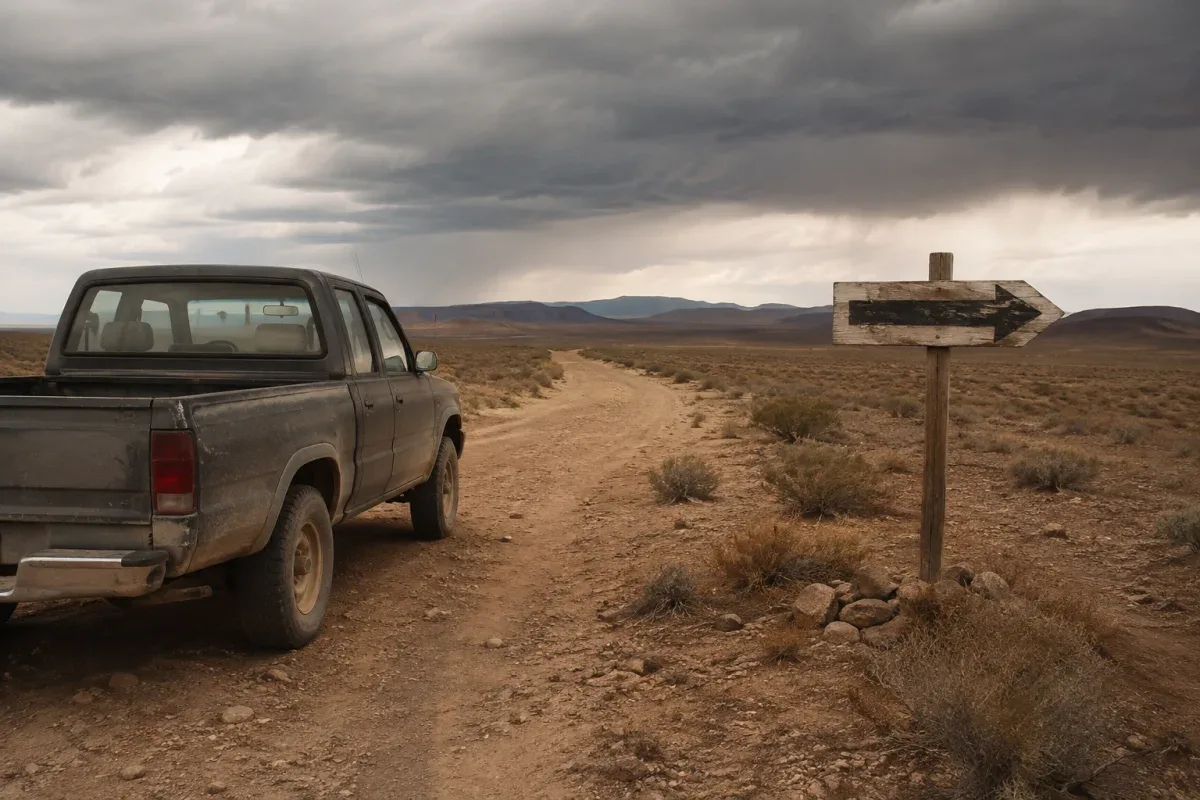
A rancher in Durango once told a truckload of tourists to keep driving until they saw Martians hopping across the road. They thanked him and drove on.
At a research station nearby, another visitor asked a field worker how to reach the heart of the Zone of Silence.
The worker's answer was blunt: they were never going to get there.
Both stories circulate among people who live near the Bolsón de Mapimí, a desert basin stretched across Durango, Chihuahua, Coahuila, and Zacatecas, and both capture something the tourists rarely notice.
The locals aren't hiding a secret. They're watching outsiders chase one.
What the legend promises
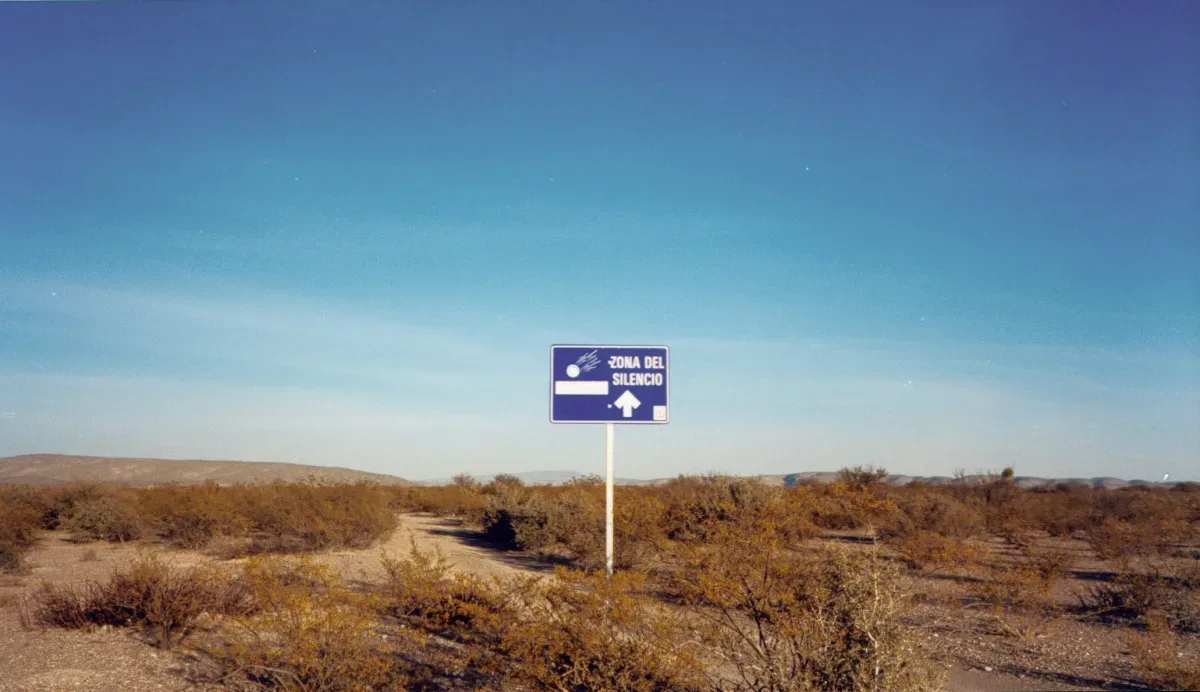
Visitors — called zoneros — come expecting a patch of desert where radios cut out, compasses spin free of magnetic north, and plants and animals grow strange under some unexplained influence.
Guides walk them in, wait for a dead radio or a spinning needle, and when neither happens, some offer an explanation: the zone moves. You have to find it again each time.
The pitch works because it has a real event behind it.
In July 1970, a US Air Force test rocket meant for the White Sands range in New Mexico veered off course during re-entry and slammed into this same desert, roughly 300 kilometers past the border.
It carried two capsules of radioactive cobalt-57, and the search and cleanup that followed — detailed in a memo Henry Kissinger later sent to President Nixon — took weeks.
A declassified note from Mexico's government pointed out this wasn't even the first American missile to land on their soil; a Pershing had done the same three years earlier, near Van Horn, Texas, with far less fanfare.
The Athena crash, by contrast, became a story people kept telling. And the story it fed into was already old.
One radio, one engineer, one name
Unlike most of what follows, this part of the story has a name, an employer, and a date attached to it, repeated consistently across local accounts: in 1966, a Pemex engineer named Harry de la Peña was surveying a pipeline route through the desert when his radio stopped receiving.
He's widely credited with coining the phrase on the spot. What came after his discovery is where the story gets harder to pin down.
A separate strand reaches back to 1930, claiming that aviator Francisco Sarabia — later celebrated as a national hero for a record transcontinental flight — lost radio contact flying over this same stretch of desert.
No flight log backs it up.
It exists only as something people repeat, never as something anyone filed away. Older still, according to the same oral tradition, are accounts of ranch families finding warm stones scattered across the ground, fallen from somewhere above, going back to the mid-1800s.
A real radio failure gave the place its name. Everything people hung on that name afterward is a different matter.
The rocks and lights that followed
The Athena impact gave the legend a fresh audience right as another genuine event added fuel: a meteorite, later named Allende, broke apart over the same region in February 1969 and scattered fragments across the desert floor.
It remains one of the most heavily studied meteorites ever recovered — a genuine scientific prize wrapped in a folk claim that it's thirteen billion years old, nearly the age of the universe itself.
A second alleged meteorite fall, near Yermo in February 1970, shows up in local retellings but not in any meteorite catalog anyone can point to.
Sightings piled on top of the rocks. Older residents describe humanlike figures glimpsed at a distance.
Two farmers once claimed a hovering craft changed color before releasing glowing humanoid passengers.
A couple whose truck got stuck in desert mud during an October 1975 storm say two unusually tall men in yellow raincoats freed them, then vanished without leaving footprints in the wet ground.
None of these accounts carry documentation beyond the people who tell them.
The part where science checks in
Andrea Kaus spent two years, from 1988 to 1990, living and working inside the Mapimí Biosphere Reserve for her doctoral research at the University of California, Riverside.
Her radio worked. Her compass worked. "Neither I nor anyone with whom I spoke," she later wrote, "apart from the zoneros — had any trouble with either their radios or compasses while working in the Reserve."
She had an explanation ready for the mutation stories too: the tortoise-shell patterns tourists mistake for anomalies are a normal variation in the local population, and the desert plants that appear to change color simply react to drought.
Geologist Carlos García Gutiérrez reached the same conclusion from a different angle, arguing publicly for years that the "zone of silence" label has no basis in geology and survives mainly because people keep repeating it as fact.
Field checks by Mexican journalists visiting the reserve have turned up the same result Kaus did: radios that work, compasses that point north, no measured signal dead zone anywhere in the basin.
The magnetic-anomaly explanation some guides offer for the supposed rocket malfunction has never appeared in a published geophysical study either.
What official concern does exist isn't about missing signals — it's about foot traffic.
Reserve staff have flagged the growing number of visitors hunting for something supernatural as a real strain on a desert ecosystem the protected area exists to guard.
What actually earned protection here
The reserve itself, created in 1977 across 340,000 hectares, exists for a creature that has nothing to do with any legend: the bolsón tortoise, the largest land tortoise native to North America, not formally identified as its own species until 1959 and now listed as critically endangered.
The ground beneath it holds its own quiet history — this basin sat under the shallow Tethys Sea millions of years ago, and marine fossils still surface in the hills around it.
The Allende meteorite's real age, confirmed at 4.567 billion years, doesn't reach back to the universe's beginning.
It matches the age of the Solar System itself — the moment this rock, and the planet it eventually landed on, first took shape.
SOURCES
- Zona del Silencio: The Urban Legend of The Zone of Silence, Amusing Planet.
- The strange cause of alien sightings in Mexico's Zone of Silence, BBC Science Focus.
- What's the Zone of Silence?, HowStuffWorks.
- Andrea Kaus, The Zone of Silence in Northern Mexico: Scientific Marvel or Just Fiction?, excerpted from her doctoral dissertation, University of California, Riverside, 1997.
- USAF Accidentally Launched Rocket into Mexico's Mapimí Desert 45 Years Ago, National Security Archive, 2015.
- Jim Eckles, In 1970, An Athena Missile Went Deep Into Mexico, White Sands Missile Range Museum, 2021.
- Carlos García Gutiérrez, critique of the "zone of silence" name, buzos.com.mx.
- H. Barral et al., La Población Actual de la Tortuga Llanera (Gopherus flavomarginatus) en la Reserva de la Biosfera Mapimí, Ciencia Latina Revista Científica Multidisciplinar, 2023.
- Cuáles son las zonas del silencio que existen en México y qué misterios las rodean, Infobae.
- The Allende meteorite, Pueblito de Allende, Chihuahua, Mexico, background on fall date and composition.
Aron Corvin
A researcher of the unknown who loves a good story, but doesn't sell sensationalism. I research every topic in detail before I publish it. If you enjoy what I write, your support would mean a lot and help me keep going.