
The Paracas Skulls: What Really Happened Before the Alien Story?
On the slopes of Cerro Colorado, not far from Paracas Bay, archaeologists uncovered underground burial chambers reached by a vertical shaft about 20 feet deep (6 meters). Peru's dry coastline preserved the bones, baskets, and layers of fabric inside.
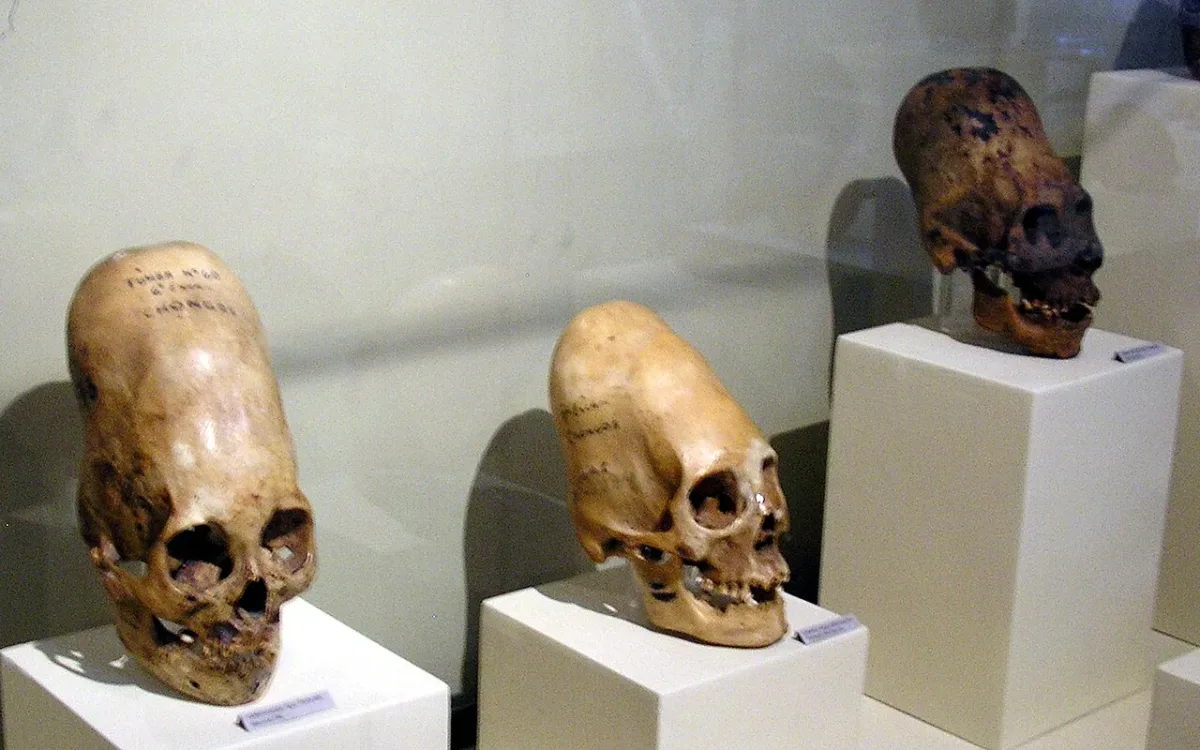
Some of the skulls had tall, elongated domes, strange enough that over time they became fodder for stories about unknown hominids and aliens.
People have always altered their bodies: they've tattooed their skin, filed their teeth, bound their feet. But few practices look as unsettling as reshaping an infant's skull.
In photographs, these skulls look like they belong to another species. In reality, they're the product of one of the best-documented traditions in Andean culture.
The name "Paracas skulls" refers to human skulls found in the cemeteries of the Paracas culture on Peru's southern coast. Their strange shape grabs attention easily, but a photograph alone can't explain how that shape came to be.
The answer lies in the burial context, in how an infant's skull develops, and in data other researchers can independently verify.

- 1.The Tombs Preserved Far More Than Strange Skulls
- 2.The Paracas Skulls Were Deliberately Shaped in Early Childhood
- 3.Pressure Changes the Direction of Growth, Not the Species
- 4.How the Story of "Unknown DNA" Began
- 5.A DNA Claim Without Verifiable Lab Data
- 6.A Published Analysis of One Sample Found a Human Origin
The Tombs Preserved Far More Than Strange Skulls
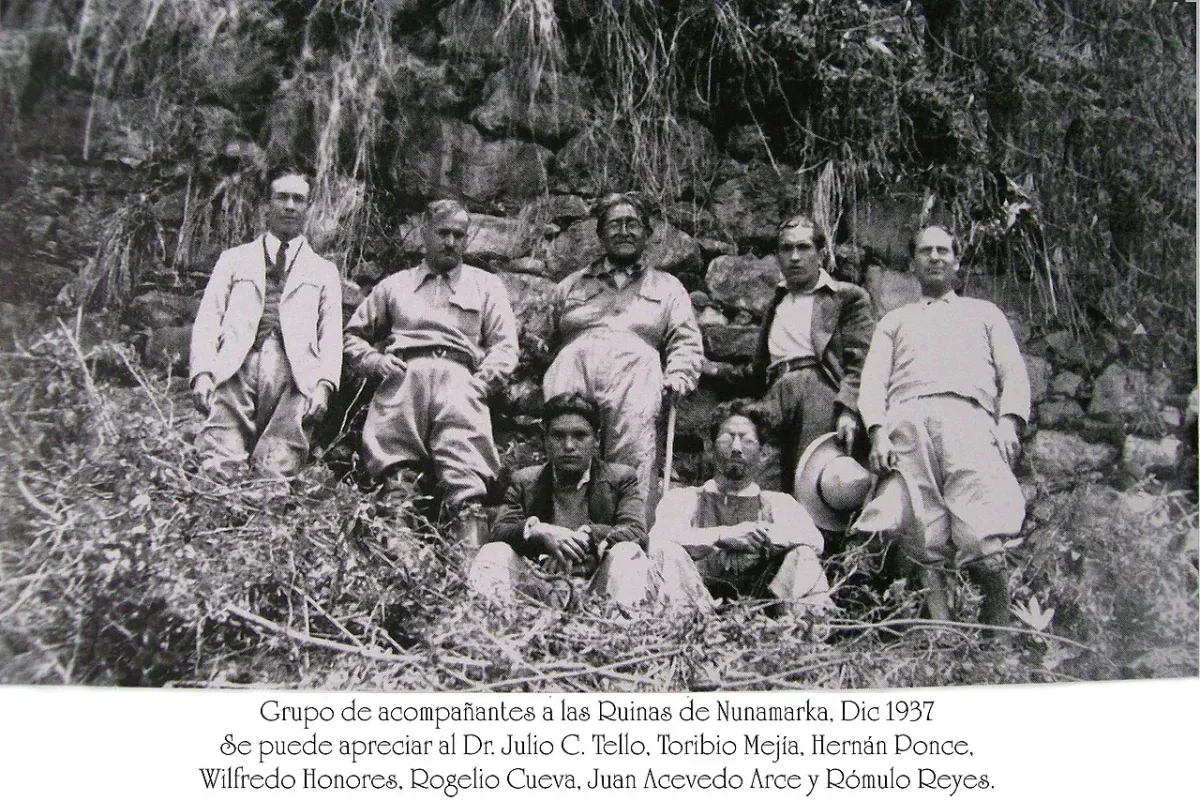
Julio C. Tello and his colleagues excavated the Cerro Colorado, Arena Blanca, and Wari Kayán sites from 1925 to 1928.
During one of the early excavation seasons, Tello's team recorded five chambers on the third terrace and 66 graves in the Arena Blanca sectors (Tello, Paracas, ch. II). Those numbers reflect that one season, not a final tally of every tomb at Cerro Colorado. Later research would distinguish the earlier Cavernas phase from the later necropolis.
These chambers were no ordinary pits. Beneath a layer of sand sat a narrow stone entrance, then a vertical shaft cut through hard-packed earth, and finally a room where the dead were laid to rest.
Tello called them "cavernas," or caverns, even though human hands shaped them, not natural processes.
So archaeologists didn't just find isolated, oddly shaped skulls.
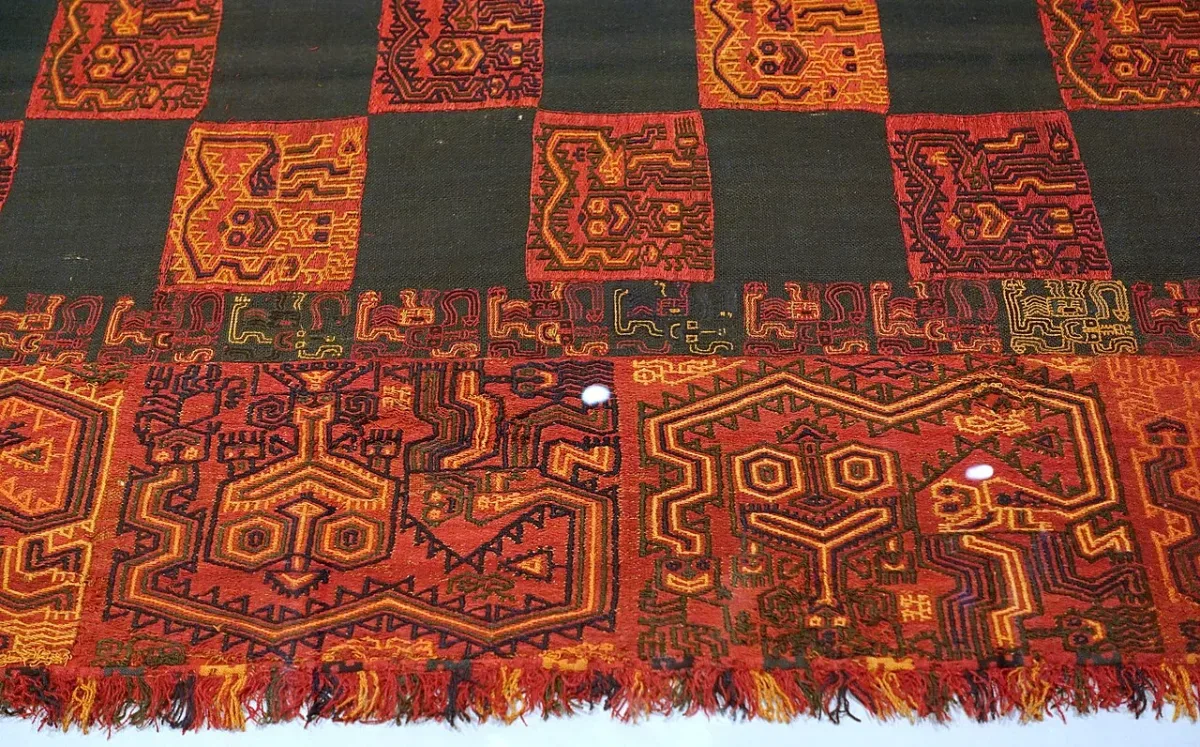
Each skeleton was part of a complete burial assemblage that included textiles, pottery, food, and other offerings.
At the large Wari Kayán necropolis, Tello's team uncovered 429 burial bundles packed into about 2,800 square feet (260 square meters). The bundles were moved to a museum in Lima between December 1927 and April 1928 (Tello, Paracas, ch. II).
That doesn't mean 429 elongated skulls turned up, though, and it doesn't confirm the popular claim that more than three hundred such specimens exist. A burial bundle, a tomb, and a skull aren't the same unit of count.
The Paracas Skulls Were Deliberately Shaped in Early Childhood
Their shape was no accident.
The most comprehensive published survey of skulls from the Paracas Cavernas period at Cerro Colorado examined 159 of the best-preserved individuals: 137 adults and 22 minors. They were studied as part of a collection of more than five hundred individuals.
A bioarchaeological study by Juliana Gómez-Mejía and colleagues, published in the Journal of Archaeological Science: Reports, found signs of intentional modification in 98 percent of that sample.
It's a practice in which adults permanently reshape an infant's skull while the bones are still soft, using boards, pads, bands, or wrappings that apply steady pressure.
The shaping happened while the skull's sutures were still open, so the pressure could guide growth in whatever direction was wanted.
Cranial shaping wasn't unique to this region, nor did it appear out of nowhere. The same study notes that the oldest evidence of the practice in Peru comes from Pernil Alto, in the Palpa region, dating to the fourth millennium BCE.
Paracas, a culture that stretched more than 185 miles (300 kilometers) along the coast between 800 and 200 BCE, practiced this shaping as part of a broader Andean pattern of body modification.
The elongated skulls, then, belong to a long history of deliberate body modification in the Andes, not to some isolated, unexplained event on the peninsula.
The most common result was the tabular erect form, found in 60 percent of the people examined. In this shape, the skull is flattened front and back, so it grows taller instead.
The bilobed form, marked by two rounded lobes, showed up more often in women than in men: researchers found it in 34 percent of women and 19 percent of men.
Still, the distribution of shapes showed no clear link to social status or burial location.
The procedure didn't produce the same result in every child. The final shape of the skull depended on the angle of pressure, the kind of device used, and how the process was carried out.
That's why researchers don't expect every skull to look identical. If anything, the differences between skulls from the same tombs help them study what this practice meant socially, rather than treating every variation as an anomaly.
Head shape, then, isn't a reliable marker of elite status. It may have signaled sex, ancestry, kinship ties, or membership in a particular community.
The authors propose an explanation rooted in Andean cosmology and social divisions, though they stress that the motivation remains a matter of hypothesis. What the skeleton shows here is a social decision, not evidence of a separate human species.
Pressure Changes the Direction of Growth, Not the Species
An infant's skull grows along with the brain, and its bones are joined by fibrous sutures. When pressure restricts growth in one direction, that growth can redirect toward parts of the skull that aren't equally constrained.
The skull behaves as a single functional unit: restrict growth on one side, and the other sides take up the slack.
With circular shaping, bands wrap around the head and cinch the skull, while tabular techniques use rigid surfaces that press from the front and back. Research by Daniel Fernandes and colleagues describes how restricting growth in one direction can trigger compensatory growth in another, with possible changes to the base of the skull and the face.
Despite the altered shape, the volume of the cranial cavity can stay comparable to that of people whose skulls were never intentionally modified.
An unusual skull outline, on its own, isn't evidence of a different human species. If the shape changes while the volume and internal anatomy stay within normal human ranges, there's no reason to conclude you're looking at a new species.
The Cerro Colorado study notes that the shaping was typically carried out from the first days of life through age two or three.
In most of the cases examined, no clear physical or neurological damage could be tied to the procedure, though not every consequence can be reconstructed from bone alone.
The scientific literature does mention rare cases of infection and death. One of the few documented fatalities involved a child from Peru's Chillón Valley (Mendonça de Souza et al., 2008).
None of that means the practice should be portrayed as painless or risk-free. It was a permanent change that adults imposed on a child.
Popular articles often claim that some of these skulls are 25 percent larger and 60 percent heavier than typical human skulls.
But the popular articles making that claim don't include a table of measurements, a reference sample, or any description of method. Without that data, these figures remain assertions, not scientific findings, and they can't call the documented practice of intentional cranial shaping into question.
The same goes for the claim that certain skulls have only a single parietal bone. Confirming that reliably would require a clear scan and an anatomical examination of the specimen in question, including the condition of the sagittal suture.
A photo taken from a single angle isn't enough evidence for that kind of conclusion. Such a finding could just as easily result from a congenitally fused suture, so it needs to be checked through anatomical examination, not decided from a photograph alone.
How the Story of "Unknown DNA" Began
The story starts at the private Paracas History Museum. According to the Peruvian outlet Panamericana, Brien Foerster, a tour guide and author of books on ancient mysteries, convinced museum owner Juan Navarro in 2011 to allow genetic testing.
Samples of hair with roots, a tooth, skull bone, and skin were taken from five skulls and handed over to Lloyd Pye, a writer known for claiming the "Starchild" skull had alien origins. He passed them along to an anonymous scientist in Texas.
That scientist, according to Panamericana, told Foerster that the sample labeled 3A carried mitochondrial DNA with mutations unknown in any human, primate, or animal, though he cautioned that the data was still incomplete.
Foerster published those preliminary results in 2014, and the internet turned them into headlines claiming the people of Paracas "weren't human."
The results were never published in a peer-reviewed journal, and neither the testing procedure nor the geneticist's identity has ever been made public, so the claim can't be verified.
A DNA Claim Without Verifiable Lab Data
Thornton and colleagues trace that claim, in 2022, back to an unnamed geneticist.
Mitochondrial DNA traces the maternal line of inheritance and makes up only a small fraction of a person's total genetic material. Even a confirmed, unusual sequence wouldn't, on its own, prove the existence of a new species.
The available descriptions of that report include no DNA sequences and no control data.
That's why this claim can be cited as an unverified statement, but not accepted as evidence. In science, a finding isn't considered confirmed until an independent lab reproduces it.
Contamination from modern DNA is a persistent problem when analyzing ancient human remains. Guidelines from Dongya Yang and Kathy Watt warn that a single touch can introduce more human mitochondrial DNA than survives in the sample itself.
A single touch of a hand can leave behind skin cells, and each one may carry around a thousand copies of mtDNA. That's why a lab has to show how it distinguished ancient DNA from what researchers or other people might have introduced, or from DNA that entered the sample during earlier analyses.
American geneticist Jennifer Raff, an expert in ancient DNA, showed exactly what that kind of lapse looks like. In 2016, she examined two rounds of testing promoted by advocates of the "unknown lineage" theory.
The first round was Foerster and Marzulli's attempt at the private museum in Peru, tied to the claim about unusual DNA. The second round involved a skull from a private collection in Oregon, which writer L. A. Marzulli published an analysis of in one of his books.
In footage of the first sampling, Raff sees exposed skin, an uncovered beard and hair on the participants, and distilled water being sprayed onto the mummy, water that isn't actually DNA-free.
In the second round, Marzulli says the team wore protective suits, but by his own account, they blew compressed air into a drilled hole, and neither the tools nor the sample were treated with bleach or UV light.
In neither case was the DNA of the people who handled the remains ever sequenced, so it's impossible to rule out that the unusual results came from them. Raff concludes that all the samples were almost certainly contaminated.
A Published Analysis of One Sample Found a Human Origin
In 2022, Jessica Thornton and her colleagues published the results of a microscopic, spectroscopic, and genetic examination of hair and tissue.
Their paper, which includes an STR analysis of an elongated skull, covers a single specimen excavated in 2016 in Palpa, in Peru's Ica region.
The study is neither a systematic survey of Tello's collection nor a retest of the 2014 sample.
The sample was donated by Dennis Swift of Creation Science Ministries (Thornton et al., 2022), and the paper appeared in a low-visibility open-access journal.
That doesn't make the results worthless, but it does mean they should be treated as a limited forensic analysis of a single specimen, not as independent confirmation for the whole collection. The sample didn't come from a museum collection, and it wasn't accompanied by excavation documentation.
The authors used STR markers, short repeating segments of DNA that forensic science uses to identify individuals.
The resulting STR profiles were consistent with a human origin for the material and suggested the sample came from a male.
Microscopic and spectroscopic analysis likewise showed that the hair examined matched human hair.
The paper notes DNA degradation and extra alleles at two markers, which could point to technical interference or the presence of DNA from another source. A follow-up attempt to analyze the TP53 and FOXP2 genes didn't produce the expected results.
These findings don't support any claim that the specimen has alien origins. At the same time, it would be a stretch to draw a final genetic conclusion about every Paracas skull from a single sample. The authors themselves noted that further analysis would require more samples.
A published population study of ancient DNA points the same direction. In a 2010 study, Fehren-Schmitz and colleagues examined 218 individuals from sites in the Palpa region, the Paracas Peninsula, and the Andean highlands, successfully analyzing and replicating mitochondrial DNA in 130 of them.
They found that Nasca populations were closely related to the earlier Paracas culture from both Palpa and the peninsula, and that all carried Indigenous American haplogroups.
That study doesn't test the specific claims in this story, but it shows that Paracas populations in the Palpa region and on the peninsula fit genetically within the Indigenous population of the Americas.
The strongest evidence still comes from the skeletons found in a well-documented burial context. In the sample of 159 individuals, almost every skull shows signs of intentional shaping.
Their unusual shape didn't form before birth. It developed during early childhood, under pressure from cloth, bands, and boards. It was a permanent change to a child's head, carried out by adults.
Behind the elongated skulls of Paracas isn't an unknown species. It's a human decision made for a child more than two thousand years ago. Why they chose that particular shape is a question the bones alone can't answer.
Cover photo: Marcin Tlustochowicz, ParacasSkullsIcaMuseum, CC BY 2.0, via Wikimedia Commons.
SOURCES
- Tello, Julio C. (1959/2005). Paracas. Primera parte. Lima: Universidad Nacional Mayor de San Marcos. Digital edition, ch. II: five chambers on the third terrace, 66 graves at Arena Blanca (Cabeza Larga), and 429 bundles.
- Gómez-Mejía, Juliana; Aponte, Delia; Pezo-Lanfranco, Luis; Eggers, Sabine (2022). "Intentional cranial modification as a marker of identity in Paracas Cavernas, South-Central Coast of Peru." Journal of Archaeological Science: Reports 41: 103264. DOI
- Fehren-Schmitz, Lars; Reindel, Markus; Tomasto Cagigao, Elsa; Hummel, Susanne; Herrmann, Bernd (2010). "Pre-Columbian population dynamics in coastal southern Peru: A diachronic investigation of mtDNA patterns in the Palpa region by ancient DNA analysis." American Journal of Physical Anthropology 141(2): 208–221. DOI
- Tomasto-Cagigao, Elsa (2017). "Modificaciones craneales Paracas: ¿estatus, etnicidad, estética?" Boletín de Arqueología PUCP 22. DOI
- Tomasto-Cagigao, Elsa (2020). "Advances in regional paleopathology of the southern coast of the Central Andes." International Journal of Paleopathology 29. DOI
- Reindel, Markus; Isla, Johny (2009). "El Periodo Inicial en Pernil Alto, Palpa, costa sur del Perú." Boletín de Arqueología PUCP 13. DOI
- Mendonça de Souza, Sheila et al. (2008). "Cranial deformation as the cause of death for a child from the Chillon River Valley, Peru." Chungara 40(1). DOI
- Yang, Dongya Y.; Watt, Kathy (2005). "Contamination controls when preparing archaeological remains for ancient DNA analysis." Journal of Archaeological Science 32(3): 331–336. DOI
- Fernandes, Daniel et al. (2019). "Cranial deformation and genetic diversity in three adolescent male individuals from the Great Migration Period from Osijek, eastern Croatia." PLoS ONE 14(8): e0216366. DOI
- Moss, Melvin L. (1958). "The pathogenesis of artificial cranial deformation." American Journal of Physical Anthropology 16(3): 269–286. DOI
- Anton, Susan C. (1989). "Intentional cranial vault deformation and induced changes of the cranial base and face." American Journal of Physical Anthropology 79(2): 253–267. DOI
- Thornton, Jessica E. et al. (2022). "Raman spectroscopy and STR analysis of the elongated skulls from the Paracas mummies of Peru." Journal of Biotechnology & Bioinformatics Research 4(4). DOI
- Raff, Jennifer (2016). "Genetic mythologies: 'Nephilim DNA' from the Paracas skulls." Violent Metaphors, September 20, 2016. Link (a geneticist's critical commentary, not a peer-reviewed study).
- "Polémica investigación genética sostiene que los 'cráneos Paracas' no son humanos." Panamericana, January 22, 2016. Link
Aron Corvin
Curiosity draws me to stories that lie at the edge of the known and the unknown. I explore mysteries, unusual phenomena, and forgotten events, taking the time to research each subject thoroughly, without sensationalism or unfounded claims. Thank you for reading Anomyst. If you enjoy my work and would like to support it, your support means a great deal to me and helps me continue exploring and sharing new stories.