
The Isdal Woman: Six Identities, One Code, and a Grave Without a Name
A watch lay beside the body, not on her wrist. Next to it were two earrings and a ring. The woman lay on her back, on the rocks in a valley above Bergen. The front of her body had burned, while her back was largely spared. The hands had stopped at ten past ten.
It was November 29, 1970. No one knew who the woman was. The labels had been cut from her clothes, and the markings peeled off the bottles. Everything suggested someone had wanted to erase any trace that might reveal her identity.
Yet the watch, the earrings, and the ring were left beside the body. She would later become known as the Isdal Woman.
Why Were the Labels Cut Out?
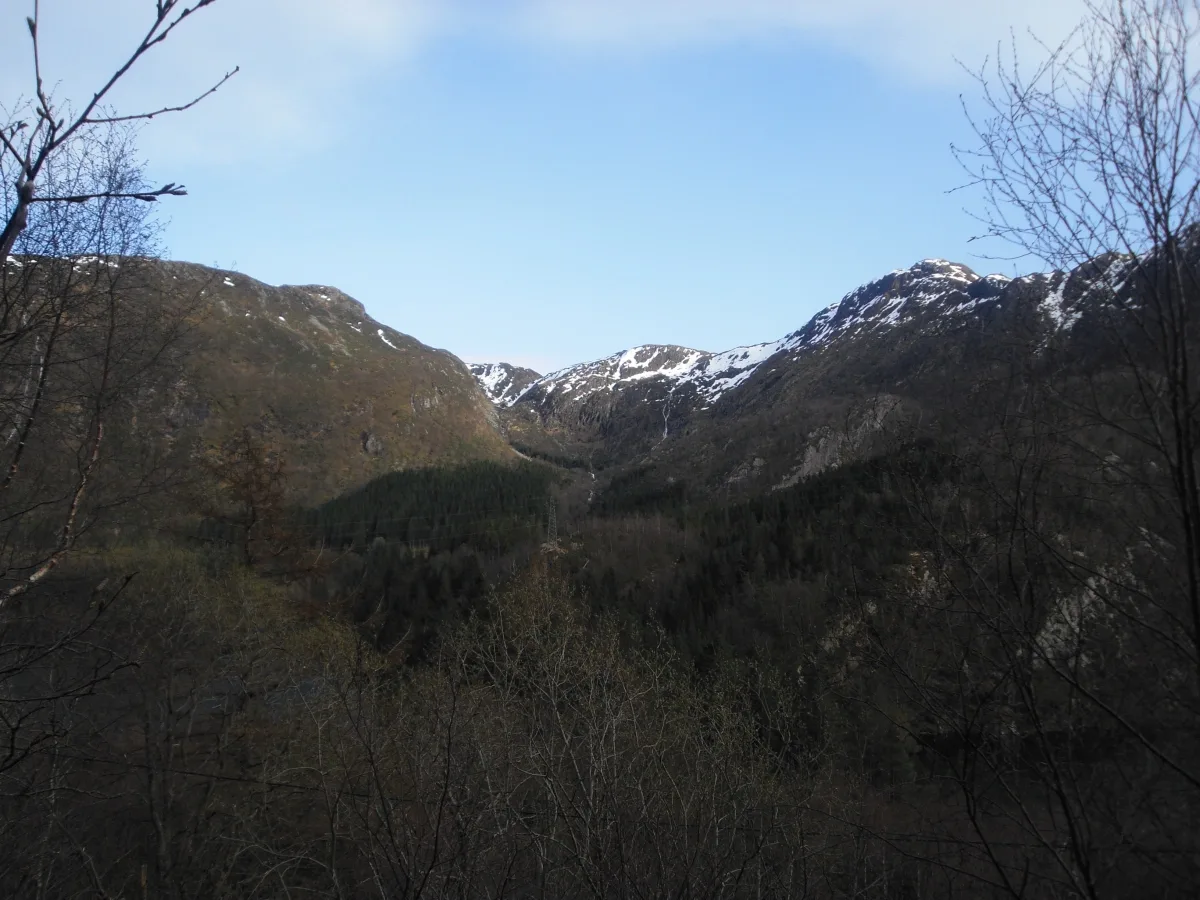
In November 1970, a father was hiking a trail above Bergen with his two daughters, ages ten and twelve. In a hollow among the rocks, they spotted a body. The valley is called Isdalen, though locals call it Dødsdalen, the Valley of Death.
The woman lay on her back, her head pointed down the valley, her arms raised alongside her body in what looked like a boxer's stance. She was nearly naked.
The front of her body and her clothes were badly burned, and her face was unrecognizable. Her back, which had been pressed against the ground, suffered only minor damage. Nearby, investigators found the remains of rubber boots and nylon stockings.
An empty bottle and an umbrella turned up as well. The labels had been cut from her clothing, and the markings scraped off the bottles. Police couldn't find a single item that might reveal her identity.
The autopsy found soot in her lungs, meaning she was likely still alive while she burned.
Her body contained the remnants of somewhere between 50 and 70 Fenemal tablets. Gasoline was found beneath the body, and her blood showed a high concentration of carbon monoxide. Everything pointed to the fire having been set deliberately.
Police closed the case as a probable suicide. Carl Halvor Aas, the police lawyer who was among the first to reach the scene, doubted that conclusion. "I do not believe it was suicide," he told the BBC. By his account, the idea was discussed within the police department too, but few people believed the woman had taken her own life.
Why Did the Isdal Woman Use So Many Identities?
Three days later, police found two suitcases in a luggage locker at the Bergen train station.
One held German marks, and both contained wigs, a pair of glasses, makeup, eczema cream, and a notebook. The cream's label, partly peeled away, had once listed a doctor's name and a patient's. The clothing labels, again, had been cut out.
Police contacted department stores abroad, including the Galeries Lafayette in Paris, but none recognized the packaging.
The investigation showed that the woman had traveled through Norway and other parts of Europe using at least six different identities, according to the BBC, or at least eight according to NRK. The exact number has never been confirmed. In Stavanger, she went by Fenella Lorck; in Bergen, Elisabeth Leenhouwer.
Every name was fake, as were the Belgian addresses she gave.
On hotel registration forms, she consistently listed Belgian citizenship. She presented herself as a traveling saleswoman or an antiques dealer. By comparing the handwriting on these forms, police linked the different names to a single person.
The notebook was written in code. Police managed to partly decipher it and determined it wasn't a spy's cipher but a kind of travel log, recording cities, hotels, and dates. There were no names.
Even so, the notes helped police reconstruct her movements through Norway and France.
Alvhild Rangnes, a waitress at the Hotel Neptun, was 21 at the time and remembered the unknown guest well. She described her as an elegant, self-assured woman with dark hair and a calm expression.
She dressed tastefully and wore a wig. She spoke English with an accent, occasionally slipping in a German word.
On one occasion, she sat near two German sailors and an officer but never spoke to them. She did, however, wink at the waitress.
She changed hotel rooms often, and on one occasion did so three times in a single stay.
In Stavanger, a shopkeeper sold her a pair of rubber boots. Boots like the ones she'd bought were later found beside her body.
She was last seen on November 23, 1970, when she checked out of room 407 at the Hotel Hordaheimen. She paid in cash and left by taxi.
Not even six different identities explained why she traveled or what happened to her. Police never found an answer.
What Did the Tooth Analysis Reveal?
After the autopsy, Professor Gisle Bang preserved her jaw. He believed a dentist from another country might recognize the particular way her teeth had been worked on.
She had 14 fillings and several gold crowns, which, by the standards of the time, was considered unusual dental work for Norway.
After Bang died, the jaw was thought to be lost. It and a set of tissue samples were the only parts of the body never buried.
In 2016, journalists from NRK, Norway's public broadcaster, found it in an archive, along with tissue samples preserved in paraffin blocks.
In 2017, Norway's Kripos crime unit and the University of Bergen, with help from Jurian Hoogewerff at the University of Canberra, analyzed the enamel from three teeth.
The ratio of strontium and oxygen isotopes in tooth enamel can offer clues about the water and food a person was exposed to during childhood.
It was the first analysis of its kind ever used in a Norwegian criminal case.
The results suggested the woman was likely older than previously believed, closer to her forties than her thirties.
The chemical traces pointed to a childhood spent somewhere around Nuremberg or along the French-German border. NRK published the analysis results that same year.
A DNA profile extracted from the tissue samples pointed to European ancestry.
Police searched for possible matches through Interpol and planned to issue an Interpol black notice. No match has ever been announced.
Investigators hoped someone who had known the woman, or who recognized her story, would eventually come forward.
The woman was buried in February 1971, in an unmarked grave, in a coffin lined with zinc.
At the Catholic funeral, the priest spoke of an unknown woman who had ended up, far from home, without any family. The coffin was decorated with lilacs and tulips.
Police kept an album of photographs from the funeral, hoping that one day a relative might come forward.
The analyses offered clues about the region where she grew up, but never her name. What remains is the question of why a woman, likely from Central or Western Europe, ended up in a valley above Bergen with no known identity and no family.
Spy, Victim, or Something Else?
The Cold War gave the whole case an extra dimension.
Norway was developing and testing the Penguin missile at the time, and security services took an interest in reports that the woman had allegedly been watching the tests in the west of the country.
Those reports never led to a clear conclusion. No document has surfaced that reliably shows who she worked for, if she was connected to any intelligence service at all.
The case was closed before her burial in February 1971, and reopened in 2016. That year, NRK released new reconstructions of her likely appearance.
Some investigators believed the woman had been murdered, while others accepted the possibility of suicide. The official police conclusion was probable suicide, but Aas never agreed with it.
In 2005, a local resident told the newspaper Bergensavisen that five days before the body was found, he'd encountered a woman followed by two men dressed in city clothes.
They were about 65 feet (20 meters) behind her. Everyone in the group looked dressed for the city, not for a hike in the mountains. The woman seemed frightened and, according to the witness, as if she had resigned herself to something unavoidable. She looked like she wanted to say something, but she never did. The BBC published a piece on new leads in the case in 2019.
In 2023, the Swiss newspaper Neue Zürcher Zeitung published an investigation that offered a new hypothesis.
A contributor to the paper, a professional fact-checker, found a document in the Swiss federal archive linking the case to the Swiss banker François Genoud, known for his ties to Nazi circles.
Under that hypothesis, the woman may have been part of an intelligence operation, and Norway's own security service may have covered up certain traces.
Still, the NZZ stressed that the available evidence isn't enough to confirm the theory. It remains a possible explanation, not an established fact.
In 2019, a local resident found a bag in the valley, roughly 130 feet (40 meters) from where the body had lain. It was buried about 6 inches (15 centimeters) below the surface and filled with dirt and roots.
It was blue-gray with red stripes, and its short handles, about 14 inches (35 centimeters) long, led researchers to suspect it might be a child's bag. When they opened it in the lab, it held nothing but dirt.
The bag was empty. The grave still has no name.
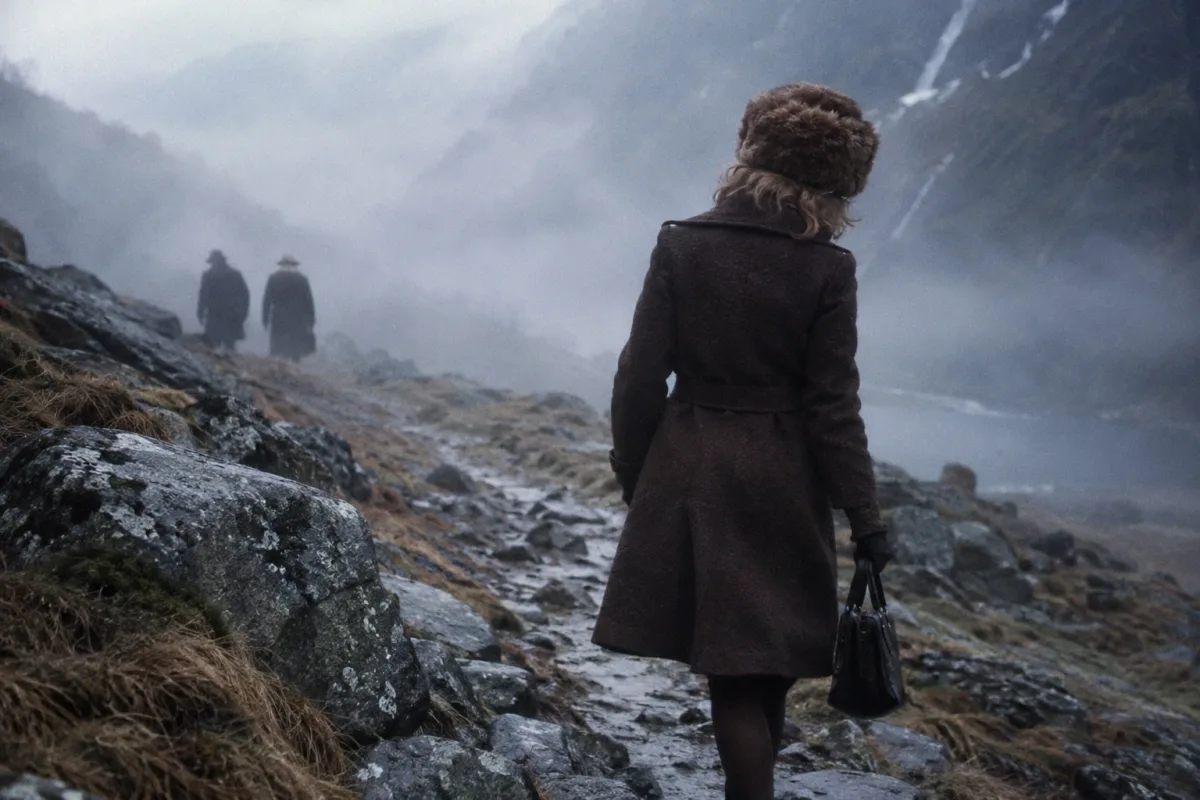
Cover image: Illustration created using artificial intelligence. It does not depict a real person or a documented event.
SOURCES
- BBC News, "Isdal Woman: The mystery death haunting Norway for 46 years", May 13, 2017.
- BBC News, "'Major breakthrough' in Norway's 46-year-old Isdal woman mystery", May 19, 2017.
- NRK, "Kjemiske analyser av Isdalskvinnen peker mot Tyskland og Frankrike", May 19, 2017.
- Monika Nordland Yndestad, "Turgåer møtte isdalskvinnen", Bergensavisen, March 20, 2005.
- BBC News, "Death in Ice Valley: New clues in Isdal Woman mystery", June 24, 2019.
- Neue Zürcher Zeitung, "In 50-year-old unsolved death in Norway, an explosive new lead points to Nazi-allied Swiss banker", June 12, 2023.
Aron Corvin
Curiosity draws me to stories that lie at the edge of the known and the unknown. I explore mysteries, unusual phenomena, and forgotten events, taking the time to research each subject thoroughly, without sensationalism or unfounded claims. Thank you for reading Anomyst. If you enjoy my work and would like to support it, your support means a great deal to me and helps me continue exploring and sharing new stories.