
The 1967 Shag Harbour UFO Crash: A Flash on the Water and an Empty Seafloor
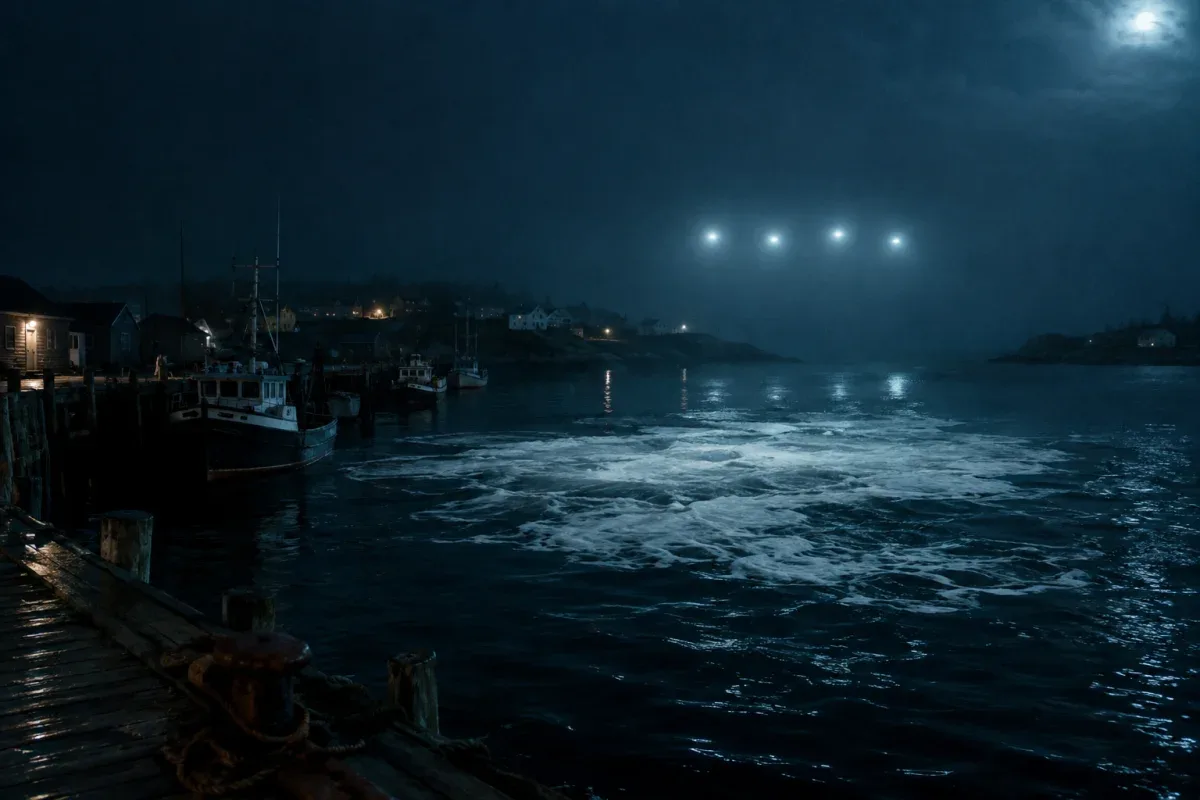
At 11:45 p.m. on October 4, 1967, a Royal Canadian Mounted Police corporal and six other witnesses watched a large dark object come down toward the water off Shag Harbour, a fishing village on the southwestern coast of Nova Scotia.
Four white lights sat in a horizontal row, 15 feet apart. It was flying east, low. Then it dropped sharply, with a high whistling sound, and hit the sea.
There was a flash, and after it a single light riding on the surface. The corporal went for a boat. The light sank before he could reach it.
All that was left was foam, four days of searching, and a folder that now sits at Library and Archives Canada.
This piece doesn't start from the legend that grew up around Shag Harbour. It starts from the 35 pages of file UAR/N/116-125 in record group RG 77: two memoranda from the Directorate of Operations, a run of telexes from military command, several pages of other reports, and two newspaper clippings.
What the file contains is more interesting than the story that grew out of it.
- 1.Documents That Don't Agree
- 2.Five Minutes, One Flash, and a Light That Sank
- 3.The Flares Were Ruled Out. The Telex Doesn't Say That
- 4.From Report to Operation: Four Days of Telexes
- 5.What Else Is in the Folder
- 6.The Submarine and the Second Vehicle: Claims Without a Document
- 7.Why the Case Still Holds Water
Documents That Don't Agree
The National Research Council of Canada kept the folder, but the memoranda and telexes inside it are military command documents, copied into its archive. In them the place is called Lower Woods Harbour. The name the case goes by today, Shag Harbour, came from the newspapers and from the people who live there.
The first memorandum is dated October 6, 1967 (p. 11) and signed by Colonel W. W. Turner, the director of operations. It puts the whole event at 23:45 local time.
The telex from the Rescue Coordination Center in Halifax, sent October 5 at 13:20 GMT (p. 10), carries 050210Z in its field A.
Field A isn't the time the message went out. In the same file, a message from Vancouver was sent at 06:50 GMT on September 28, and its field A reads 05:00 GMT. Field A, then, marks the moment of the event, not of transmission.
Read that way, it happened at 23:10 in Nova Scotia, which sat three hours behind GMT that fall.
So there is a 35-minute gap, and nothing in the folder explains it. It's also why both times show up in the literature: each writer opened a different document first.
A third time, 23:20, is the one most later accounts cite, and it doesn't appear anywhere in these pages. Readers who know the case will have met it elsewhere. They won't find it here, not because it's wrong but because it doesn't come from the file.
The same is true of the object's size.
The October 6 memorandum (p. 11) describes it as "in excess of 60 feet in diameter."
The second memorandum (p. 21), written later that month in answer to a letter from an American citizen, Anthony Altamore, gives its length as approximately 60 feet.
Those are two different measurements, and no document in the folder reconciles them.
The duration is reported two ways as well. The telex says "in excess of five minutes," the memorandum "approximately five minutes." The gap is small, but it's a difference in kind: one is a lower bound, the other an estimate.
Even the word for the impact changes.
The first memorandum says the object "produced a bright flash on impact." The second calls it a "bright splash," a phrase it puts in quotation marks itself.
One word belongs to a light; the other belongs to a mass hitting water.
The newspapers disagreed about the color as well. The police telex lists four white lights. Teenagers the Halifax Chronicle-Herald tracked down in the days that followed described three orange lights in a row; another group counted four and called them yellow or white.
Brian Dunning, who read those texts in sequence, builds part of his critique on exactly that.
None of this makes the file a forgery. It means the documents were written by different people, at different times, from different sources: one condensing a field report into an office document, one answering a letter from another country, one writing down what witnesses had told him.
Anyone citing this case, then, has to say which document they're citing.
Five Minutes, One Flash, and a Light That Sank
The most detailed account is in telex RCC 076, sent October 5 (p. 10).
It holds everything the corporal could report with his eyes still on the water: a dark object, in excess of 60 feet, four white lights set horizontally, 15 feet apart, moving east at low altitude, coming down to the surface itself.
They had it in view for more than five minutes. It descended with a high, whistling sound, and the impact showed as a flash.
Afterward one light stayed on the surface, long enough for a boat to be sent for.
The position went into the log: 43 degrees 30.5 minutes north, 65 degrees 45 minutes west.
The diving order adds what the coordinates leave out: the object was about 300 yards offshore.
Seven witnesses are not a handful of anonymous passersby. The telex notes that the corporal knew the names of the other six, so the police had names, not just a head count. This isn't one man's account that nobody else could check.
Later accounts put the number higher. Dunning writes of "about a dozen people," including a Mountie, who saw the object go into the water, and of two more Mounties and a few other people who saw the light on the surface. Those numbers rest on newspaper reports, not on the telex.
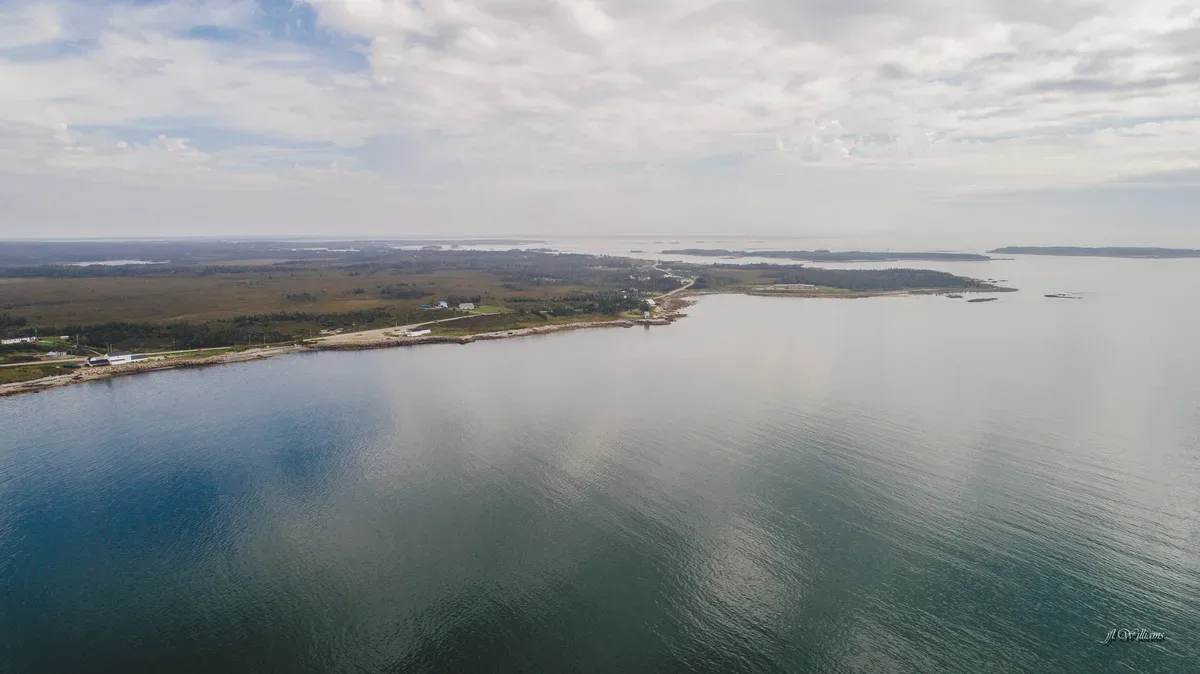
Details from other sources don't change that picture, but they fill it out.
The Halifax Chronicle-Herald clipping from October 7, by Ray MacLeod, supplies what the telexes lack: a look at the patch on the water.
The reporter describes an unusually large stretch of churned water and foam where the light went down. A fishing boat captain quoted in the piece, as Dunning reads it, put the patch at 80 feet across or more and thought it looked yellowish in the dark.
The telexes stay with a more restrained account: light, surface, sinking.
The Flares Were Ruled Out. The Telex Doesn't Say That
This is the most quoted sentence in the whole case. The October 6 memorandum (p. 11) says the Rescue Coordination Center had "discounted the possibilities that the sighting was produced by an aircraft, flares, floats, or any other known object."
The telex the sentence rests on (p. 10) says less: "ALL OTHER POSSIBLE LEADS (A/C, FLARES, ETC.) CHECKED - NIL RESULTS." Checked, no results.
Checking and finding nothing is not the same as ruling out. If flares were dropped from an aircraft, a search for wreckage will turn up nothing, because there is no wreckage to find. A missing wreck doesn't rule out flares, any more than a missing fingerprint rules out a visitor.
Dunning pushes the argument to its end. A flare dropped from a plane leaves a burned cardboard tube behind, and finding one of those on the Atlantic at night is close to impossible, so "NIL RESULTS" doesn't mean there were no flares. In his reading, the government didn't rule out flares or aircraft. It just failed to find any trace of them.
The telex leaves that possibility open. The memorandum closes it.
Why? The memorandum was written two days after the fact and sums up what was known by then. "Discounted" sounds more decisive than "checked, nothing found," and the distance between an office summary and a field record isn't the distance between truth and lies.
That's why this case can't be closed as flares or as anything else. The file doesn't say there were flares. It says they were checked.
From Report to Operation: Four Days of Telexes
The operation is best traced through the times the messages were sent. There's no mystery here, just procedure.
October 5, 13:20 GMT. The Rescue Coordination Center in Halifax sends its first report.
It reports that Coast Guard lifeboat 101 and many small boats had already searched the area extensively, with no results, and that 101 was heading for the position with a police officer on board.
October 5, 21:20 GMT. Headquarters asks naval command to take over the investigation and to consider an underwater search as soon as possible.
October 5, 22:50 GMT. Orders go out to the diving unit: one officer and three men, position 43 degrees 30 minutes north, 65 degrees 45 minutes west, object about 300 yards offshore. The team is to go to Clarks Harbour, where boat 101 and the corporal will be waiting.
October 6, 19:13 GMT. Approval comes to charter a local vessel and release boat 101, on condition that the search area be widened and covered thoroughly.
October 7, 01:46 GMT. A helicopter is requested to move three divers and 400 pounds of equipment from Shearwater to Barrington.
The answer comes back in under an hour: an HO4S will fly the leg from Shearwater to Shelburne and back.
October 7, 22:30 GMT. Two days of underwater search by divers over the probable area, in good conditions, have produced nothing. An area half a mile by a mile and a half has been thoroughly covered by that hour.
October 8. The divers go back in at first light. Nothing turns up. At 21:30 GMT the search is closed with the words "SEARCH TERMINATED 082130Z."
Four days, three divers, one helicopter, two ships, local fishermen, and not a single object pulled from the water. That's what the file actually claims. Everything else is interpretation.
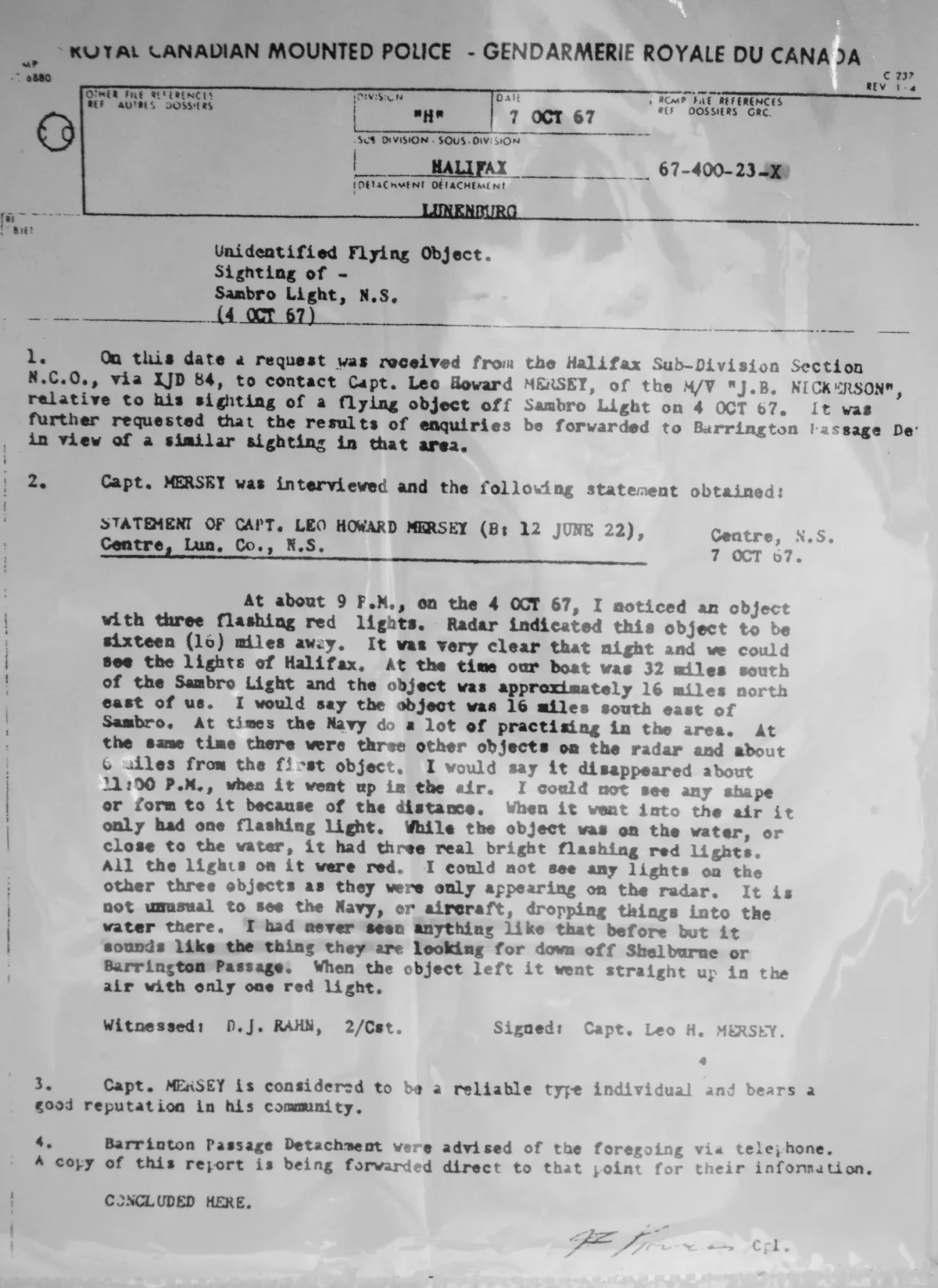
What Else Is in the Folder
The file isn't only about Shag Harbour. The same folder holds other 1967 reports: two Vancouver sightings from late September, three reports from Don Brooks of Dummer, Saskatchewan, over the course of August, a report from the Moose Jaw base, and a report from Alberta describing an object as two bowls facing each other.
One entry worth singling out is a roundup of earlier Nova Scotia sightings that naval command sent on October 6.
Among the entries is one from February 27, 1967: four white flares seen near Lawrencetown, with searchers and a helicopter checking the area and turning up nothing.
Same formulation, same outcome, seven months before Shag Harbour. It says nothing about October, but it shows how that office worked: report, check, note, archive.
There are two clippings. The Globe and Mail of September 30 (pp. 8–9) carries a lengthy piece on UFOs in Canada. The other is the Halifax Chronicle-Herald of October 7 (p. 19), by Ray MacLeod, under a headline Dunning lists in his sources as "Could Be Something Concrete in Shag Harbor UFO." The scanned page carries the banner "Halifax Herald."
It reports that no aircraft had been reported missing, that navy divers had searched, and that all they found was a patch of churned water and foam.
Dunning leans on those other reports for his main argument. In later retellings, he writes, sightings from around Nova Scotia merged with Shag Harbour and became part of its mythology, though they have nothing to do with it.
The file supports his point: the reports are in the same folder, but they're separate documents with separate dates and separate witnesses.
The Submarine and the Second Vehicle: Claims Without a Document
From Don Ledger's Maritime UFO Files (1998) to Dark Object (2001), which Ledger wrote with Chris Styles, the case has carried claims the file doesn't contain.
First: there was more than one object.
Second: the first one traveled about 25 miles underwater to the spot where sonar picked it up, and the navy monitored it for days.
Third: the military knew more than it admitted, and witness testimony stayed off the record.
The part of the file that covers Shag Harbour never mentions a submarine, sonar, or a radar contact, and no report confirms a second vehicle.
That doesn't prove the claims false. It proves this file doesn't back them up, and that they have to be read as what the authors assert, not as findings from the archive.
Barrington Municipality, which now sells the case as a tourist attraction, repeats them without caveats. That's its job. This article's job is to mark where the document stops.
Why the Case Still Holds Water
Shag Harbour isn't the only case of an object entering the water, or the only Canadian case from 1967 in the same archive.
A survey of such reports, from the Tic Tac footage to the Barents Sea, is a subject in its own right.
What the pattern means is another question, and one our piece on underwater bases takes up, with Shag Harbour among its cases.
Even among such sightings, Shag Harbour is one of the few the state followed with paperwork from the first night.
A little under five months earlier, on May 20, 1967, at Falcon Lake in Manitoba, Stefan Michalak claimed he touched an object and was burned.
The difference is that Falcon Lake left material behind. File UAR/N/200 says Michalak had burns on his stomach, that by May 25 he had lost twelve pounds because he couldn't eat, and that he later handed over a scorched shirt and moss from the site. Shag Harbour left nothing but testimony and paper.
That's why the comparison is useful. Falcon Lake has a trace and one witness. Shag Harbour has seven witnesses, an official search, and no trace.
The first is stronger as evidence of an object, the second as evidence of procedure: for four days, the state looked for something it couldn't name.
What keeps this case alive is consistency. The people who saw it weren't alone, the time was recorded in telexes the same night, and the search followed a procedure that can be checked.
What keeps it in the gray zone is the same thing: there's no object. No wreckage, no fuel, no stain that can be analyzed, no radar track. What exists is testimony, foam that dispersed, and paper.
Today it's being turned into heritage.
The Shag Harbour UFO Incident Society, founded in 2006 by locals, witnesses, and researchers, runs an interpretive center in the village. Laurie Wickens, then a young man, appears on their site as a witness, in a photo of him looking out over the bay where the object came down.
His name doesn't appear in the file, but it lives in the village's memory, and for a case like this, that's perfectly normal.
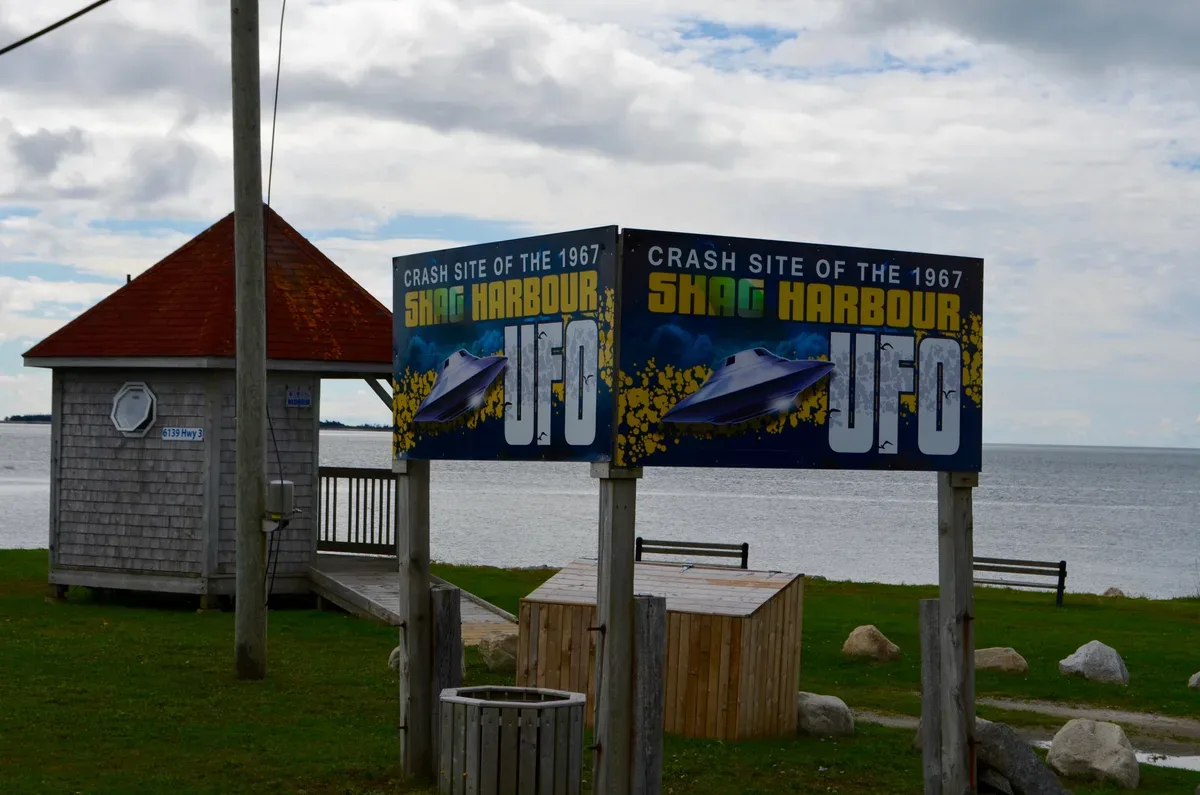
That's also the healthiest way to look at the case today: as a place where state procedure and local memory touch, not as proof that aliens visited Nova Scotia.
The file doesn't say what fell into the water. It says what was done about it, who wrote what, and where the paper stops.
In the case of Shag Harbour, that's more than most stories have, and less than the legend demands.
Note: The featured illustration is an AI reconstruction of the scene, based on the witness descriptions in the file. It isn't a photograph and shouldn't be read as evidence.
SOURCES
- National Research Council of Canada, file UAR/N/116-125, RG 77, vol. 310 (R1207-31-X-E, MIKAN 134925), Library and Archives Canada, 35 pages, digital copy
- p. 8–9: Globe and Mail clipping of September 30
- p. 10: telex RCC 076, sent October 5 at 13:20 GMT, with field A 050210Z
- p. 11: Directorate of Operations memorandum of October 6, 1967
- p. 12–18: telexes on the search, diving orders, and equipment transport
- p. 19: Halifax Chronicle-Herald clipping of October 7, by Ray MacLeod (page banner reads "Halifax Herald")
- p. 21: memorandum of October 25, reply to a letter from Anthony Altamore
- Library and Archives Canada, file record in the database (archived page)
- National Research Council of Canada, file UAR/N/200: Falcon Lake, Manitoba, May 1967 (Stefan Michalak)
- Shag Harbour UFO Incident Society
- Barrington Municipality: Shag Harbour UFO Incident
- Brian Dunning, "The Shag Harbour UFO", Skeptoid Podcast #565 (2017)
- Don Ledger, Maritime UFO Files (1998); Don Ledger and Chris Styles, Dark Object (2001). Books, no link.
Aron Corvin
A researcher of the unknown who loves a good story, but doesn't sell sensationalism. I research every topic in detail before I publish it. If you enjoy what I write, your support would mean a lot and help me keep going.