
The 1994 Ariel School UFO Incident: What Really Happened in Zimbabwe?
In archival storage at Rice University in Houston lie 150 boxes of documents, tapes, and notes left behind by psychiatrist John Mack.
In November 1994, Mack recorded interviews with children from Ariel School in Zimbabwe. Sixty-two students claimed that during morning recess they had seen a UFO land, along with a being who, as they tell it, telepathically delivered a message about the destruction of the planet.
The material was digitized as early as 2023, yet to this day the public has seen only excerpts of those conversations. The full recordings remain unavailable, even to researchers who ask for them.
The case is known as the Ariel School incident, named for a private elementary school in the town of Ruwa, about 12 miles southeast of Harare.
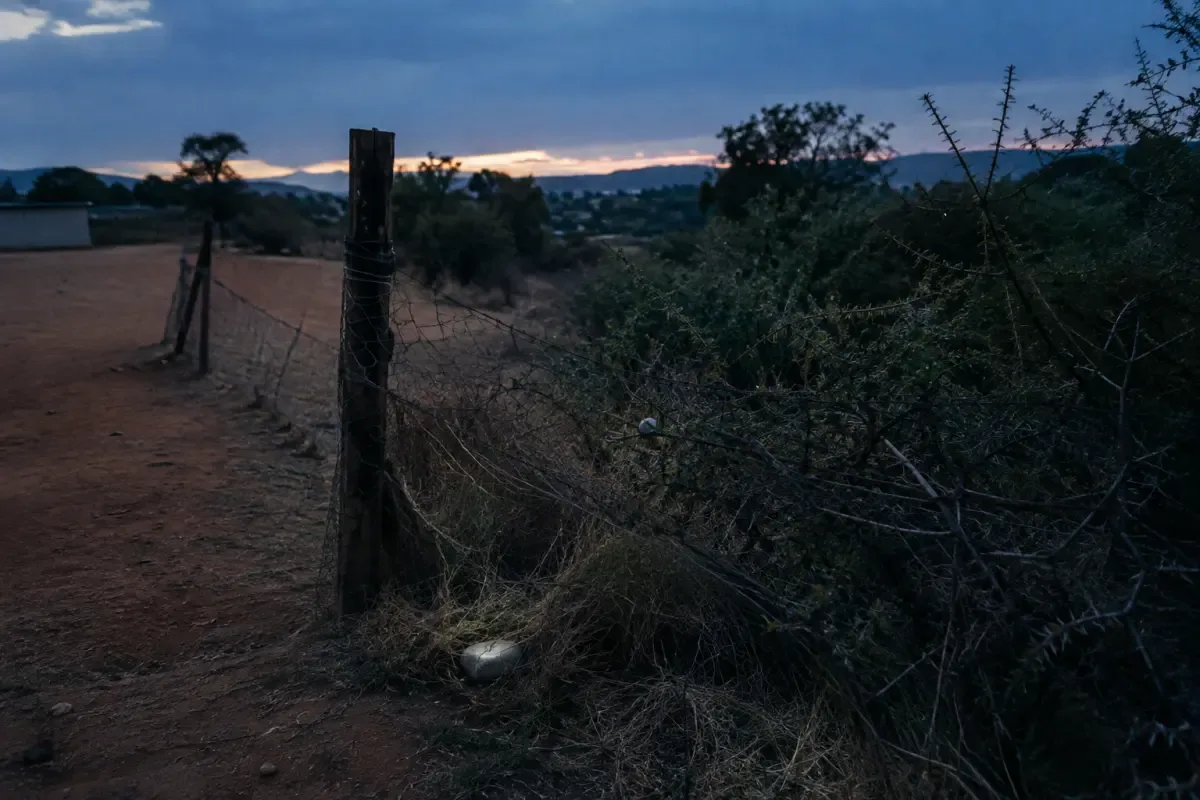
According to 62 students between the ages of 6 and 12, silvery objects came down onto a neglected, brush-covered patch of ground right beside the schoolyard during recess on Friday, September 16, 1994.
Within days, the story had made the rounds of the world's media, and writer and researcher Jerome Clark would later rank it among the most significant close encounters of the third kind of that decade.
Three decades later, the witnesses are still divided. Some insist they remember details none of them could have invented, while one former student admitted on television that he made the whole thing up on his own.
- 1.Two Nights Earlier, the Sky Was Already Burning
- 2.The Recess That Turned Into Panic
- 3.The Investigation That Contaminated Itself
- 4.The Environmental Message Didn't Arrive Until Mack Did
- 5.Africa Has a Long History of Episodes Like This
- 6.A Confession That Contradicts Itself
- 7.The 150 Boxes No One Has Seen
Two Nights Earlier, the Sky Was Already Burning
Another event came before the story, and this one is confirmed.
On the evening of September 14, 1994, people across southern Africa watched a fireball slice across the sky, and the radio station ZBC asked listeners to call in and report what they had seen.
Calls came in from Zimbabwe, Zambia, and Botswana, with descriptions ranging from a single shooting star to a fleet of 16 glowing craft.
According to Brian Dunning's research for the Skeptoid podcast, the fireball was the remains of a Zenit-2 rocket reentering the atmosphere.
That rocket had launched the Cosmos 2290 satellite from the Baikonur Cosmodrome in late August of that year, and data on individual pieces of it show they kept falling through the atmosphere throughout September, right in the window when the fireball was reported.
That episode of regional UFO mania, as Dunning called it, gripped southern Africa two days before any child at Ariel School told their story.
The Recess That Turned Into Panic
The teachers at Ariel School were in a meeting when recess began that Friday morning.
The only adult in the schoolyard was the woman who ran the school snack bar, suddenly surrounded by excited, frightened children.
According to later accounts, the children described one or several silvery objects that had come down or hovered over a thorny, overgrown stretch of ground just outside the school fence, an area they were normally forbidden to enter because of snakes.
Some of the children ran away, while the older ones stayed to watch. According to Dunning's research, of the roughly 250 students at school that day, 62 said they saw something, while nearly 200 reported nothing unusual.
UFO sightings with large numbers of witnesses are far from rare. Witnesses tend to agree on only a few basic claims, while the most important details of the story often diverge.
The 62 students who reported seeing a UFO in Zimbabwe in 1994 each described the event in their own way, and those very differences show how hard it is to boil their testimony down to a single version.
The Investigation That Contaminated Itself
News of the story reached the BBC's Zimbabwe correspondent, Tim Leach, by way of the same radio appeal ZBC had used to collect eyewitness reports of the fireball.
Leach visited the school on September 19 and recorded the first interviews with students and staff. He later said he had found war zones easier to endure than that conversation.
The next day, Cynthia Hind arrived as well. She was the editor of the newsletter UFO Afrinews and MUFON's representative for Africa.
She asked the children to draw what they had seen. Out of dozens of drawings, she herself picked 22 that she felt showed the sighting most clearly, while the rest, later analyses found, differed widely from one another.
Hind interviewed the children in groups of two to six while the others listened and watched, which Dunning points to as a classic recipe for cross-contaminating witness testimony.
She argued publicly that country children had no access to popular culture about aliens, so their drawings of flying saucers had to come from real experience.
That claim doesn't hold up, though. Ariel was one of the most expensive private schools in the region, with a swimming pool, tennis courts, and a golf course, and it sat on the outskirts of Harare, a city of about 1.2 million people in 1994.
Its students were taught in English and had access to the same television and movie theaters as children in any other modern city.
The Environmental Message Didn't Arrive Until Mack Did
On Hind's advice, Leach contacted John Mack, a Harvard professor of psychiatry who had published a book on alien abductions that year and was actively looking for new cases to investigate.
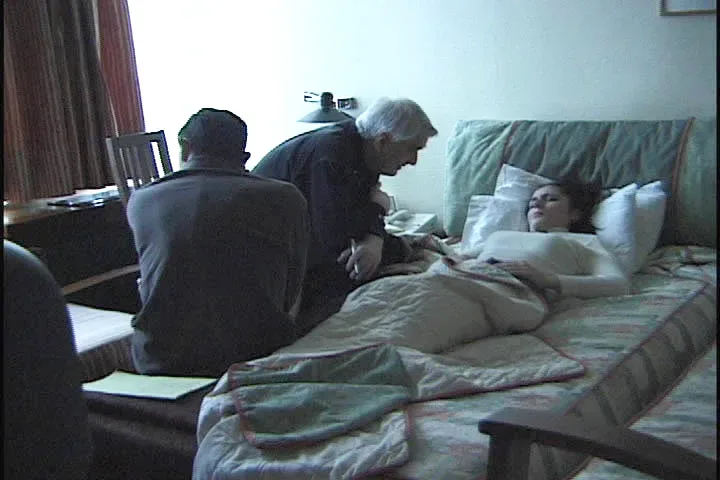
Mack didn't reach Ariel School until November, more than 10 weeks after the event, and interviewed 12 children whose transcripts, according to the biography by Ralph Blumenthal, eventually ran to 104 pages.
At the time, Harvard was running an internal investigation of Mack over his methods with patients who claimed to have been abducted by aliens.
The inquiry ended in 1995 and Mack kept working, but the episode shows how contested his approach to the subject was, even within his own profession.
What the case is most famous for, a telepathic message about pollution and the destruction of the planet, doesn't appear in the earlier reports by Leach or Hind.
According to Dunning, that element enters the story only with Mack's interviews, and Hind didn't add it to her own reporting until afterward. Even in Mack's own interviews, only three of the 12 children mentioned the message, according to an analysis published in Skeptical Inquirer in 2025.
Dunning reads this as a result of Mack's own activism against nuclear weapons and pollution, which, in his assessment, shaped the questions Mack put to the children. That is Dunning's interpretation, not a proven fact, but the chronological order of the documents can be verified.
In one of those interviews, an 11-year-old girl said, according to a clip of the interview quoted by the Mail & Guardian, that "we mustn't get too technologed," a clumsy phrase that sounds more like a child fumbling for words than an adult's warning.
Africa Has a Long History of Episodes Like This
Mass hysteria in African schools is hardly a rare phenomenon.
A literature review by psychiatrist Demobly Kokota, published in the Malawi Medical Journal in 2011, documents numerous episodes in which students, most often preadolescent and adolescent girls, developed symptoms of fear, screaming, or fainting at the same time, with no physical cause.
Kokota also cites a 1962 case at a boarding school in Tanzania, where an epidemic of laughter spread to the surrounding villages and lasted 18 months.
Her conclusion is that the psychosocial environment, stress, and emotional tension play a decisive role in spreading such episodes, which usually subside once the children are physically separated and reassured that there is no danger.
Besides hysteria, researchers have proposed more concrete explanations.
Gideon Reid has put forward the hypothesis that the children may have mistaken puppets used by traveling theater troupes for the beings they described.
In those years, such troupes toured schools in rural Zimbabwe promoting awareness of AIDS, literacy, and farming practices, and the puppets' look, with big eyes and dark clothing, resembles the descriptions the children gave.
None of these hypotheses has been confirmed by physical evidence, just as the claim of an alien craft hasn't been. They all remain plausible explanations, not proven facts.
A Confession That Contradicts Itself
In a 2023 episode of the Netflix series Encounters, a former Ariel School student identified only as Dallyn said he had made up the whole event himself.
By his account, he wanted to get out of class, so he pointed out a rock glinting in the sun to a friend and claimed it was an alien spaceship. Within half an hour, he says, the whole school was talking about aliens.
As VICE reported, Dallyn added that the other witnesses had essentially talked themselves into believing they'd seen something. Another former student, introduced in the same documentary as Lisil, describes a long-lasting fear left by that day, including nightmares that, she says, continue to this day.
Dallyn's confession, however, doesn't survive a check against his own earlier words.
In a 2008 interview, 15 years before the Netflix confession, the same Dallyn described on camera an object whose light changed colors, a completely different scene from the glinting rock he talks about today.
His newer version also clashes with the accounts of other former students in the same documentary, several of whom still describe direct eye contact with a being with large, dark eyes.
One witness's confession doesn't prove a hoax for all 62, just as the others' steadfast claims don't prove that aliens visited.
The 150 Boxes No One Has Seen
Hind and Mack are both dead now. Hind died in 2000, and Mack in 2004, when he was killed in a traffic accident in London. Neither can decide the fate of the recordings anymore. They left that in the hands of former associates.
In 2007, Mack's assistant, Dominique Callimanopulos, entrusted the material to Randall Nickerson, a self-described abduction survivor and former patient of Mack's. His testimony appears in Mack's 1994 book, and the two appeared together on The Oprah Winfrey Show that same year.
It took Nickerson 15 years to turn that material into the feature-length documentary Ariel Phenomenon, released in 2022, in which the now-adult witnesses mostly stick to what they said as children.
Journalist Gideon Reid of The Skeptic has spent years trying to get access to the unedited footage in the Rice University archive, and he argues that existing documentaries rely on an editing trick in which separate shots are spliced together so they seem to belong to the same moment.
In one example, a shot of Leach describing his call to Mack cuts straight to a shot of Mack walking across the schoolyard, erasing the 10-week gap between the two events. The head of the archive also told Reid that the material still isn't ready for researchers, even though it was publicly announced in 2023 that everything had been digitized.
Of the 12 children Mack recorded, only seven have appeared in clips shown to the public across three decades of documentaries.
The remaining five interviews have been seen by no one outside a small circle of collaborators, and how those 12 were chosen from a total of 62 witnesses remains unexplained.
Until those recordings are opened up, the Ariel School case remains what it was in 1994: a story pieced together from clips that other people chose to show us.
SOURCES
- Brian Dunning, "The 1994 Ruwa Zimbabwe Alien Encounter", Skeptoid Podcast
- Demobly Kokota, "Episodes of mass hysteria in African schools: A study of literature", Malawi Medical Journal, 2011
- Gideon Reid, "The seemingly impossible task of getting access to Ariel School's 'Impossible Archive'", The Skeptic
- Nathaniel Janowitz, "A 1994 UFO Sighting by Children Changed Lives. What If This Guy Made It Up?", VICE
- Sean Christie, "Remembering Zimbabwe's great alien invasion", Mail & Guardian
- NPR, "John Mack, Author of Lawrence Book, Dies in London"
- Ralph Blumenthal, The Believer: Alien Encounters, Hard Science, and the Passion of John Mack, University of New Mexico Press, 2021.
- "A Closer Look at Encounters and the Ariel School Sighting", Skeptical Inquirer, 2025
Aron Corvin
A researcher of the unknown who loves a good story. I won't sell you sensationalism just for a click. If you enjoy what I write, your support would mean a lot and help me keep going.