
Is Water Memory Real? The $1 Million Challenge Nobody Ever Won
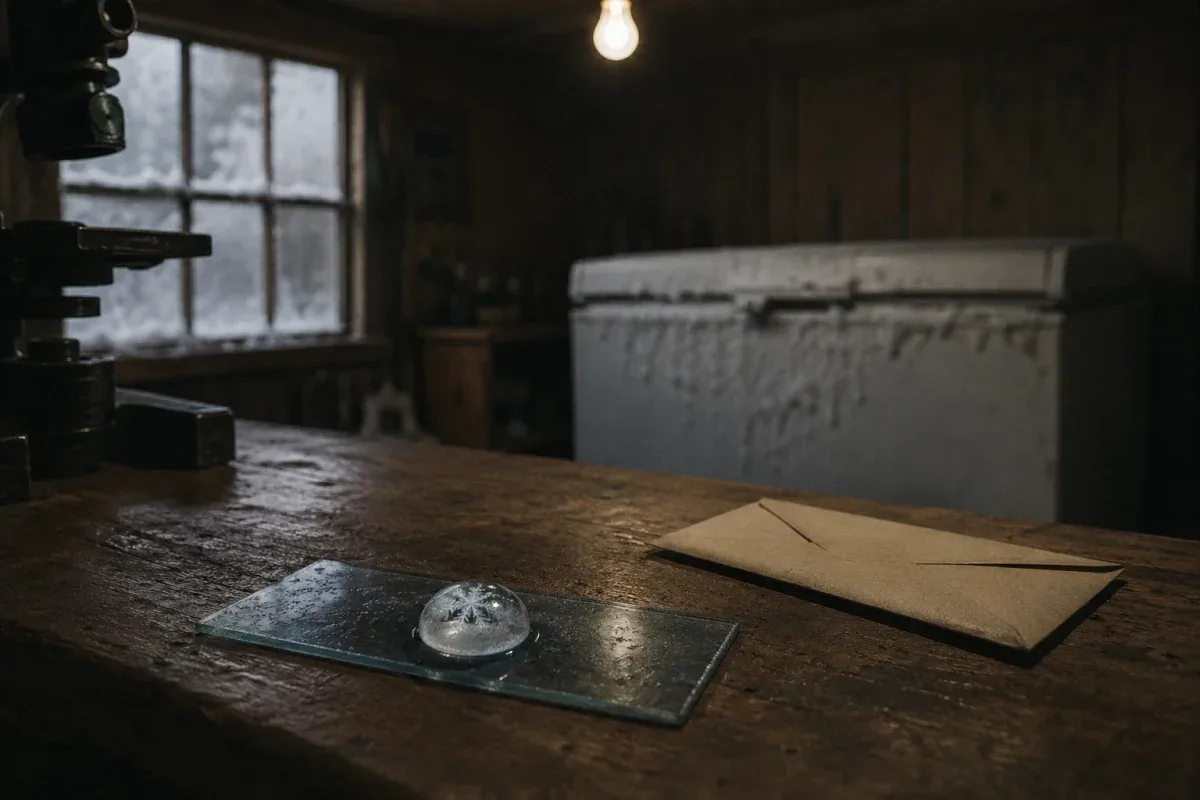
In 1994, a Japanese businessman named Masaru Emoto began freezing drops of water and photographing whatever ice crystals formed at their centers.
He believed the shape of each crystal depended on what the water had "heard" — a kind word, an insult, a burst of classical music, a prayer.
Within a decade his photo book The Hidden Messages in Water had climbed onto the New York Times bestseller list, and millions of readers had accepted his central claim: that human emotion could reshape the microscopic structure of frozen water, a phenomenon he and his followers called water memory.
The claim traveled well beyond the book.
It appeared in the 2004 documentary What the Bleep Do We Know!?, in a keynote address at United Nations headquarters, and on the labels of bottled water marketed as "blessed" or "structured."
Entire product lines, from water filters to meditation programs, began citing Emoto's photographs as evidence of what they sold.
Endorsements arrived from the Dalai Lama and from Hollywood.
One now-defunct retailer even warned customers that leaving a bottle too close to a microwave, a cell phone, or an unsupervised television could ruin its crystals.
The claim also caught the attention of the magician James Randi, who in 2003 offered Emoto one million dollars to reproduce his results under conditions both men agreed to in advance.
Emoto never took him up on it.
Neither Emoto nor anyone else ever completed Randi's specific challenge before it was terminated in 2015.
From Vibration Meters to Ice Crystals
Emoto was born in Yokohama in 1943 and studied international relations at Yokohama Municipal University before working at the Nagoya bureau of the newspaper Yomiuri Shimbun.
In 1986 he founded a company called IHM in Tokyo, and three years later he acquired the marketing rights to a device called the Magnetic Resonance Analyzer, patented by an American inventor who claimed it could detect disease from the magnetic field around a strand of hair.
Emoto renamed the device the "Vibration-o-Meter" and built a consulting business around it.
In the early 1990s he added a title to go with the business: a "Doctor of Alternative Medicine" credential from the Open International University for Alternative Medicine, an India-based correspondence school.
It required no coursework, and watchdog groups and, later, an Indian students' union petitioning the country's education ministry have both named it among the region's diploma mills.
He used the title "Dr. Emoto" for the rest of his career, treating what he later described as thousands of clients with the renamed device before he ever froze a drop of water.
By his own institute's account, Emoto and his colleagues began freezing water samples and photographing the resulting ice crystals around 1994.
He described the underlying force as hado, a Japanese word for vibration that, in his usage, folded together sound, emotion, and a kind of universal life force — a term he used, one science writer later observed, roughly the way wellness marketing uses the word "quantum," a label applied more for effect than for meaning.
Over the years his own explanations of how the effect worked shifted and sometimes contradicted each other, at times crediting the sound of a word and at other times its underlying meaning, without ever settling on a single testable mechanism.
He published the first volume of Messages from Water through his own company in 1999, and by 2004 its successor, The Hidden Messages in Water, had reached the New York Times list.
His books eventually appeared in more than thirty languages, and he claimed combined sales in the millions — a commercial success far larger than anything his theory had achieved in a laboratory.
Fifty Petri Dishes, One Photograph
The method behind the photographs, as later described in Emoto's published research, involved placing small amounts of water into rows of petri dishes, freezing them for several hours at between -25°C and -30°C, then moving them into a walk-in refrigerator kept at -5°C.
A technician searched the apex of each frozen droplet for a crystal under a microscope.
Out of fifty to a hundred droplets from a single sample, only a fraction typically formed a recognizable crystal at all, and fewer still formed one that looked like a clean, symmetrical snowflake rather than a shapeless lump of ice.
The technician then chose which image counted as representative and sent it onward.
That last step drew the sharpest criticism.
Nothing in the published record prevented the same freezer of "polluted" water from producing one shapeless droplet and one lovely one, and nothing but personal judgment decided which image the public would see.
William Reville, who directed the microscopy unit at University College Cork, wrote in the Irish Times that it was "very unlikely that there is any reality behind Emoto's claims," pointing to the missing procedural detail and the room it left for subjective selection.
Materials scientist William Tiller, a Stanford professor who appeared alongside Emoto in What the Bleep Do We Know!?, separately warned that ice crystal shape is sensitive to mundane variables — trace contaminants, the precise rate at which water is cooled — that Emoto's write-ups rarely described controlling for.
Tiller later said he had not fully understood the film's premise when he agreed to be interviewed for it.
Even Emoto, defending himself years afterward, conceded more than he perhaps intended: "Photographing crystals is a subjective science," he wrote.
The claim never gained acceptance in mainstream chemistry or physics, and Emoto's published work did not establish a reproducible physical mechanism for the effect.
His name did appear once in a scientific journal, however. In 2004 Emoto published Healing with Water in The Journal of Alternative and Complementary Medicine, a venue devoted to alternative medicine rather than mainstream chemistry or physics.
The piece ran to just three pages and was built largely around his own crystal photographs, a photo essay in form rather than an experimental study.
The evidence remained insufficient to establish the effect, particularly because the method left substantial room for subjective selection and lacked a reproducible physical mechanism.
That silence left the subject to a small circle of sympathetic researchers on one side and a much larger, more vocal population of critics working entirely outside any laboratory on the other, with almost no one in between.
A Prayer at the Reservoir, Rice in the Jars
Two demonstrations did more to build Emoto's popular reputation than any laboratory result, and neither one involved a peer-reviewed journal at all.
In the first, by his own account, a Buddhist priest named Kato Hoki spent an hour praying beside Japan's Fujiwara Dam sometime in the mid-1990s, a body of water Emoto described as polluted and murky before the ceremony began.
Water drawn from the reservoir before the prayer produced no visible crystal at all, Emoto wrote; water drawn afterward produced what he called a crystal of heavenly beauty.
No published independent analysis appears to have established a measurable change in the reservoir water before and after the prayer.
The second demonstration needed no dam, no priest, and no microscope — only rice, water, and a few glass jars.
Emoto claimed that cooked rice sealed in a jar labeled "thank you" stayed fresh far longer than rice sealed with the label "you fool," and the demonstration became a fixture of classrooms, parenting blogs, and online videos, repeated by teachers and hobbyists who rarely controlled for anything beyond the labels themselves.
In 2014, the journalist Carrie Poppy tested the claim herself for the Skeptical Inquirer, sealing identical portions of rice under kind, cruel, and blank labels and tracking them for weeks.
She found no consistent link between the words on a jar and how quickly its contents spoiled.
She did find that her two control jars had slightly different lids than the others — a small, unplanned variation in humidity and airflow, exactly the kind of mundane difference Tiller had warned could stand in for intention.
Mold, as it turned out, does not read labels.
The Million-Dollar Challenge Emoto Never Took
Randi was a retired stage magician who had spent decades investigating paranormal and pseudoscientific claims through the foundation that bore his name.
In May 2003, he issued Emoto a public challenge in his newsletter, Swift.
Any real test of the effect, Randi argued, needed double-blind conditions, so that no one recording results could unconsciously steer them; without that safeguard, he predicted, Emoto would "get fuzzy results that prove nothing."
He backed the prediction with his standing One Million Dollar Paranormal Challenge, open since the 1990s to anyone who could demonstrate a paranormal claim under laboratory conditions both sides agreed to in advance, and he said publicly that he never expected to have to pay it.
Emoto never responded.
No formal application from Emoto to the JREF appears in the surviving record, and he never sat for any version of the double-blind test the challenge required.
Parapsychologist Dean Radin — whose own attempts to test the claim are the subject of the next section — later noted on his blog that he was still waiting on a prize check of his own, and that as far as he knew, neither he nor Emoto had ever formally applied for one.
The challenge required a mutually agreed test team and a signed protocol arranged in advance; nobody connected to Emoto's research ever set one up.
Emoto never won the prize.
The challenge had a longer history than its million-dollar version suggests: Randi first offered a thousand-dollar prize back in 1964, and it grew into the million-dollar JREF challenge only in the 1990s. More than a thousand people applied over its full run, and not one of them succeeded.
Emoto, meanwhile, went on to publish several more books, lecture on several continents, and address the United Nations, all without ever proposing the one test built specifically to settle the question.
Two Studies, One Weak Signal
The closest anyone came to a controlled test was a collaboration with Radin himself, a parapsychologist then affiliated with the Institute of Noetic Sciences and already known for the Global Consciousness Project, which tests whether collective human emotion can shift the output of electronic random-number generators around major world events.
Radin's interest in Emoto's claim, in other words, grew out of a research program already built around the idea that intention could act on physical systems at a distance.
In 2006, Radin, Emoto, and two colleagues published a small double-blind pilot study in the journal Explore.
Volunteers in Japan focused positive thoughts on labeled bottles of water shipped from California; other bottles served as untouched controls.
Emoto's associate Takashige Kizu froze samples from each bottle, searched for a crystal at the apex of each frozen droplet, and photographed whichever ones he found — all, by design, without knowing which bottle was which.
A hundred website visitors then rated the resulting photographs for beauty, also blind to their origin.
The "treated" water scored higher, a difference the authors reported as highly significant.
Critics noted a gap the blinding never closed: nothing constrained which photogenic crystal, out of however many each bottle produced, Kizu chose to send back for rating in the first place.
Science writer Brian Dunning argued that this single point of unblinded human judgment, exercised before the blind rating ever began, was enough on its own to account for the result.
As the neurologist and science writer Steven Novella later put it in his own review of the case, Emoto's data are a study in how easily a researcher convinced of an idea can keep finding it, however the results are sliced.
A follow-up published in 2008 in the Journal of Scientific Exploration — a journal devoted to contested and paranormal claims rather than mainstream chemistry or physics — was billed as a triple-blind replication and tried to close that gap.
Six bottles of water sat inside a shielded, double-walled steel room in California, built to rule out mundane explanations like stray electromagnetic fields, while matching bottles nearby and in a distant, unshielded location served as two kinds of control.
Over three days, some 1,900 volunteers in Austria and Germany aimed their attention at the shielded samples, and more than 2,500 independent judges then rated the resulting crystal photographs for beauty.
Treated water scored higher than the water sitting nearby in the same room — a weak but statistically real difference.
It scored no higher at all than the water sent to the distant, unshielded location, which was the one comparison built to test whether intention worked across distance, and the one that came back empty.
Radin added a second, computerized measure to this study that scored crystal symmetry directly from the photographs rather than relying on a human sense of beauty.
By that objective measure, the treated water scored higher than both controls at once, a cleaner result than the aesthetic ratings produced.
Radin's own account of the study nonetheless settled on modest language: the effects across both of his experiments were small, he wrote, and "many more replications are needed" before anyone could call this an established effect.
No outside laboratory has published one since.
A Different Kind of Water Memory
The phrase "water memory" predates Emoto's crystals by more than a decade, and belongs to an entirely separate scientific controversy.
In 1988, the French immunologist Jacques Benveniste published a paper in Nature reporting that antibody solutions diluted past the point where a single original molecule could remain still triggered a reaction in human immune cells — a result that, if real, would have handed homeopathy a physical mechanism.
Nature's editor, John Maddox, published the paper alongside an unusual editorial urging readers to suspend judgment, then sent a three-person team — himself, the magician James Randi, and fraud investigator Walter Stewart — to watch Benveniste's laboratory attempt the experiment again under tighter controls.
Nature's own retrospective account of the visit found that once proper blinding was introduced, the effect the team had come to verify disappeared.
Benveniste, furious, compared the visit to a "McCarthy-style witch-hunt" and refused to retract the paper.
His outside funding dried up anyway, and his laboratory was eventually wound down; in 1997 he founded a company called DigiBio to pursue a new claim, that biological molecules communicate through electromagnetic signals that could be recorded and transmitted digitally.
That claim fared no better with the wider scientific community, and Benveniste died in 2004 still defending it.
Nothing ties Benveniste's antibody solutions to Emoto's ice crystals except a shared name.
One concerned the immune system; the other concerned beauty under a microscope.
Both, a decade and a half apart, produced a striking result that evaporated the moment independent investigators controlled for who knew what and when — and both left behind believers convinced the mainstream had simply refused to look.
What the Ice Already Knew
None of this required a new theory of water.
Long before Emoto froze his first droplet, physicists already had a detailed account of why ice crystals take the shapes they do.
In March 1936, the Japanese physicist Ukichiro Nakaya grew the world's first artificial snow crystal in a laboratory at Hokkaido University, forming it on the tip of a single rabbit hair inside a cooling chamber, after several years of failed attempts using ordinary cotton and wool string as a starting point.
From more than three thousand photomicrographs of natural snowflakes, he sorted crystal shapes into seven major families and dozens of minor ones, then cataloged thousands more artificial crystals against the exact temperature and humidity in which they formed, producing what is still called the Nakaya diagram.
Needles, flat plates, hollow columns, and elaborate branching stars each correspond to specific, measurable atmospheric conditions — no emotional content required.
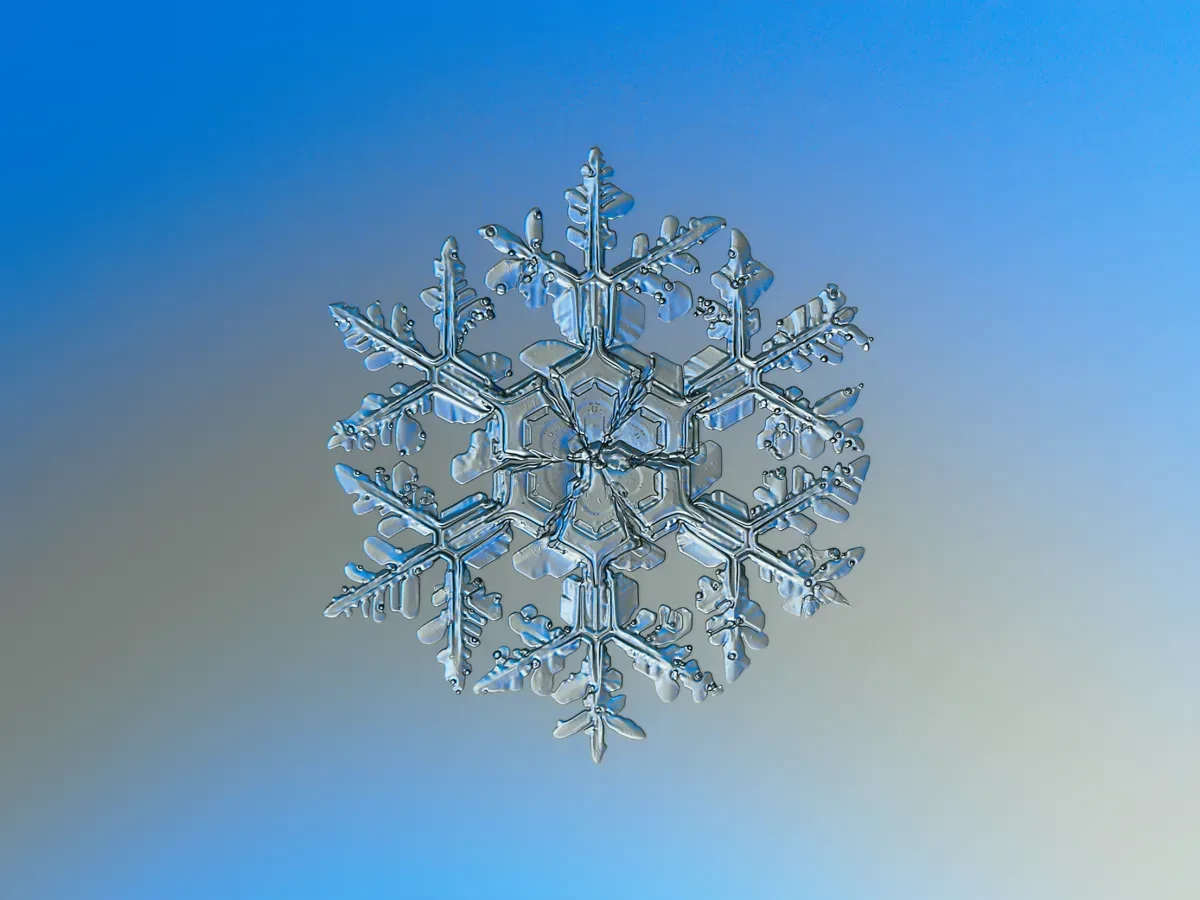
Photographic evidence of that diversity is older still.
The Vermont farmer Wilson Bentley photographed his first snowflake through a microscope in 1885, catching each flake on a black tray and lifting it into place with a feather before it melted, and he spent the next four decades building an archive of more than five thousand such images.
A widely reproduced plate from 1902, now held by the Smithsonian Institution, was already establishing decades before Emoto's birth that no two crystals are identical — a fact of ordinary physics, not of intention.
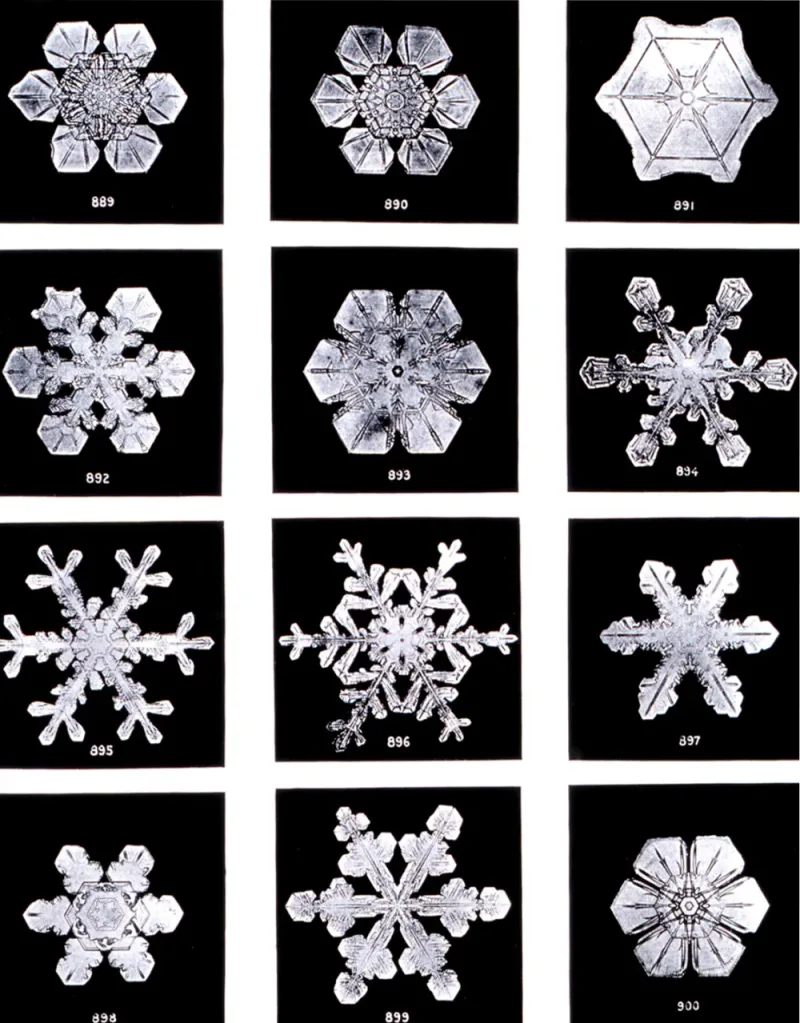
That natural variability is exactly what makes water-crystal photography such an easy stage for a subjective demonstration.
Two droplets from the same sample can freeze into different shapes for reasons that have nothing to do with intention, and a photographer choosing which of fifty droplets to publish will almost always find one that fits the story already being told.
Arigato
By the time The Hidden Messages in Water made him internationally known, Emoto had reframed his work as a mission rather than a research program.
In May 2005 he addressed a subcommittee at United Nations headquarters in New York, during the launch of the UN's International Water for Life Decade.
The trip, he later said, inspired the Emoto Peace Project, built around a free children's picture book about water that he hoped to eventually place in the hands of every child on the planet.
By the time of his death he had personally certified more than 350 "hado instructors" to carry the method forward, and his seminars had taken him to audiences on five continents.
Emoto fell ill with pneumonia in October 2014 while on a lecture tour in Shanghai.
He was flown home to Tokyo, treated for several weeks, and died there on October 17 at the age of 71, his wife Kazuko at his side.
According to his family's own account, his last word was arigato — Japanese for thank you.
The million dollars was never paid out.
By 2015 the JREF had terminated the challenge outright, so the prize no longer exists as an open offer.
Radin and Emoto's own double-blind and triple-blind experiments reported small, positive-looking signals, but they were collaborations with Emoto, not independent checks, and Radin himself cautioned that "many more replications are needed" before the effect could be called established.
No independent replication has since done so.
The mystery, then, is not that water was never tested. It was.
The mystery is why those intriguing results never became a reproducible finding, and why the claim never faced the test designed to settle it.
SOURCES
- Carrie Poppy, "A Grain of Truth: Recreating Dr. Emoto's Rice Experiment," Skeptical Inquirer, 2014
- Brian Dunning, "The Water Woo of Masaru Emoto," Skeptoid, 2014
- Dean Radin, "Water crystal replication study," Entangled Minds, 2009
- Radin, D., Hayssen, G., Emoto, M., Kizu, T., Double-Blind Test of the Effects of Distant Intention on Water Crystal Formation, Explore: The Journal of Science and Healing, 2(5), 2006. (PMID 16979104)
- Radin, D., Lund, N., Emoto, M., Kizu, T., "Effects of Distant Intention on Water Crystal Formation: A Triple-Blind Replication," Journal of Scientific Exploration, 22(4), 2008
- Emoto, M., "Healing with Water," The Journal of Alternative and Complementary Medicine, 10(1), 2004
- William Reville, "The pseudoscience of creating beautiful (or ugly) water," The Irish Times, 2011
- Steven Novella, "The Pseudoscience of Masaru Emoto," NeuroLogica Blog, 2017
- Harriet Hall, Masaru Emoto's Wonderful World of Water, Skeptical Inquirer, 2007.
- Greg Taylor, "The One Million Dollar Paranormal Challenge," Psi Encyclopedia, Society for Psychical Research, 2015 (updated 2026)
- DNA India, "Concerned about 'growth of fake degree holders' in India, students' union SFI urges HRD Ministry to take action," 2019
- Nature, retrospective news coverage of the Benveniste affair, 2004
- Davenas, E. et al., Human basophil degranulation triggered by very dilute antiserum against IgE, Nature 333, 1988.
- Maddox, J., Randi, J., Stewart, W.W., "High-Dilution" Experiments a Delusion, Nature 334, 1988.
- Smithsonian Institution Archives, "Wilson A. Bentley: Pioneering Photographer of Snowflakes"
- Kenneth Libbrecht, "The Formation of Snow Crystals," American Scientist, 2019
- The Edge Magazine, "In Memorial: Dr. Masaru Emoto (1943–2014)," 2014
Aron Corvin
A researcher of the unknown who loves a good story, but doesn't sell sensationalism. I research every topic in detail before I publish it. If you enjoy what I write, your support would mean a lot and help me keep going.