
DMT Entities: Hallucination, Archetype, or Real Encounter?
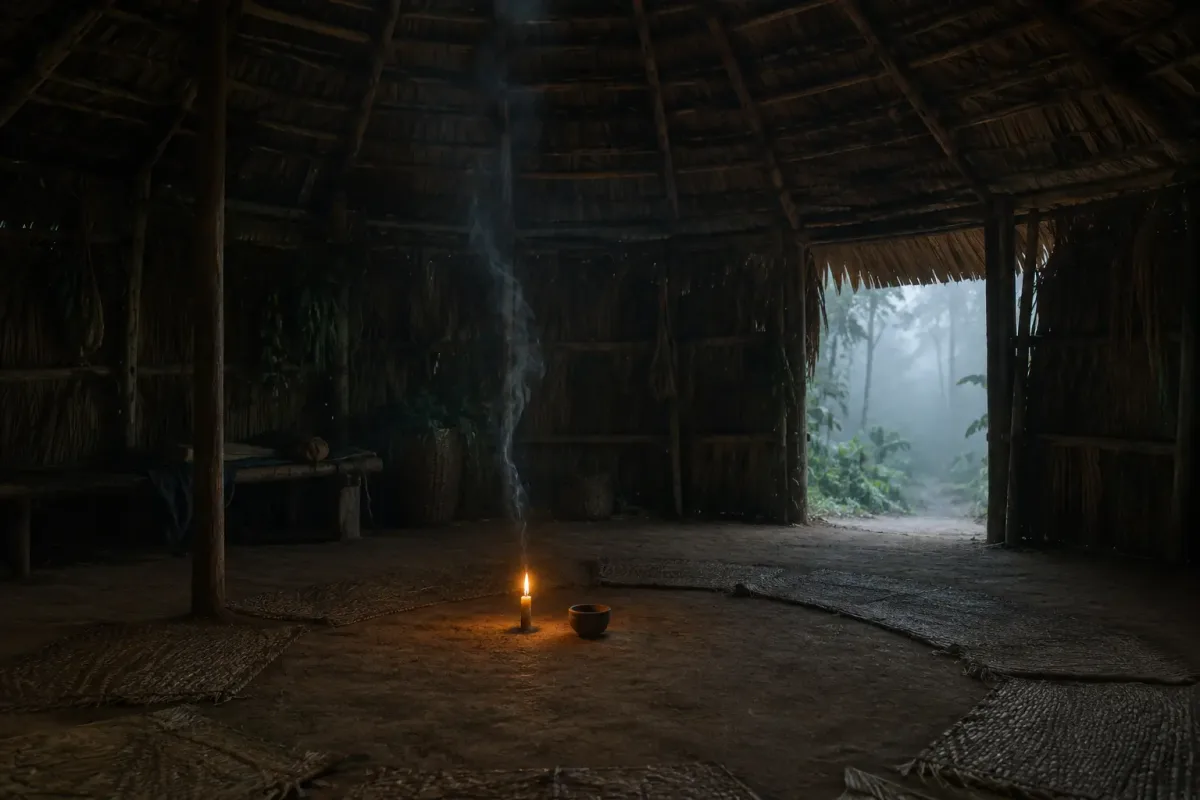
In a survey published in the Journal of Psychopharmacology in 2020, 80 percent of the 2,561 respondents who reported meeting a being after inhaling DMT said some form of communication took place, and 40 percent described a two-way exchange.
Nearly all of them, 99 percent, reported an emotional response to the encounter. Only about one in five had gone in hoping to meet anyone or anything, and most said the being initiated the contact.
The survey was based on a self-selected online sample recruited largely through DMT-related communities, so the participants were not a random cross-section of DMT users.
The compound in question is N,N-dimethyltryptamine, or DMT for short, which users often describe as one of the most intense psychedelic experiences.
Unlike many other classic psychedelics, DMT is particularly associated with encounters involving seemingly conscious beings, and it produces them with striking consistency.
That consistency, more than the sheer strangeness of the visions, has puzzled researchers for decades. It recurs in people who have never heard of one another.
Ninety-nine percent of respondents reported an emotional response to the encounter, and 41 percent felt fear at some point.
A Brief History of One Molecule

DMT was first synthesized in 1931 by the Canadian chemist Richard Manske, but nobody at the time suspected the compound had psychoactive properties.
The discovery didn't come until 1956, when the Hungarian chemist and psychiatrist Stephen Szára injected himself with the substance and described visual hallucinations, shifts in his perception of space, and speech disturbances.
Only a year earlier, DMT had been isolated from plants that Indigenous peoples of the Amazon had used for centuries to prepare tobacco blends and brews. That raised the question of how long humanity had already been familiar with this state of consciousness without knowing its chemical formula.
The decades that followed were shaped by the molecule's political fate rather than its scientific one.
In the mid-1960s, the United States banned DMT for public use, and in 1970 it was placed in the strictest category of controlled substances, on the grounds that it had no medical value and carried a high potential for abuse.
Research all but died out for 20 years, until the psychiatrist Rick Strassman got approval to resume it.
Between 1990 and 1995, Strassman ran clinical trials at the University of New Mexico, approved by the U.S. Drug Enforcement Administration. They were the first of their kind in the country in more than 20 years.
In total, he injected 60 volunteers with about 400 doses of DMT.
Many participants reported encounters with what they described as intelligent, autonomous presences: aliens, angels, spirits. Strassman later gathered his observations in the book DMT: The Spirit Molecule, which set off a whole new wave of interest in psychedelic research.
The Key, Not the Source
DMT works primarily by binding to the 5-HT2A receptor, one of the brain's serotonin receptors.
That interaction changes how the brain processes information, including perception, emotion, and the sense of time.
The substance occurs naturally in the plants used to brew ayahuasca, an Amazonian drink that Indigenous communities use in ritual settings. According to some studies, trace amounts are also present in the human body itself, though its exact biological role remains unclear.
Advocates of psychedelics, drawing on the philosopher Aldous Huxley's idea of the brain as a kind of "reducing valve," argue that DMT doesn't create experiences but opens access to states of consciousness that already exist and are normally blocked so that we can function and survive.
That view has no empirical confirmation and remains an interpretation, not an established fact. Still, it has circulated in psychedelic culture for decades and is often offered as an explanation for why these experiences feel more real than everyday life.
A Catalog of Beings
Although every description bears a personal stamp, the patterns repeat often enough that researchers have started to classify them.
A 2019 content analysis examined 149 online DMT trip reports published between 2009 and 2019, identifying 180 entity encounters. Earlier, in 2012, Jon Hanna analyzed Erowid's much larger collection of experience reports, which at the time contained 22,640 reports, including 1,159 categorized as mentioning entities or beings.
A comprehensive 2020 survey from Johns Hopkins University, covering 2,561 people, reached similar results. The terms respondents used most often were "being," "guide," "spirit," "alien," and "helper."
Machine Elves
The best-known subtype is credited to the ethnobotanist Terence McKenna, who in the late 1960s, during experiments with synthetic DMT in Berkeley, described an encounter with what he called self-transforming machine elves.
By his account, the beings looked like shining geometric figures trying to teach him a language the human mind can't fully grasp.
The term has since become a standard part of the psychedelic vocabulary, though McKenna himself never claimed he could prove the elves existed outside his own mind.
Insectoids, Reptilian Figures, and Geometric Beings
Beyond machine elves, reports often feature insectoid beings, most commonly a giant praying mantis that seems to be performing some kind of surgical procedure. There are also reptilian figures with scales and elongated faces, which users describe as authoritative and sometimes threatening.
A third major category consists of geometric, nonhumanoid beings with no recognizable form. Their communication is described as nonverbal and telepathic, almost like an exchange of feelings with no words in between.
Angelic, Plant, and Therapeutic Figures
Beings that users describe as angelic turn up less often, but almost always in a context of peace and unconditional affection. In ayahuasca ceremonies, so-called plant spirits appear especially often, an archetype users connect to the very substance they've taken into their bodies.
Some reports also describe what are known as therapeutic entities, beings that seem to act deliberately on emotional or physical pain. Ceremony facilitators often link their presence to the sense of relief participants report after especially difficult stretches of the experience.
Mythological Deities
Rarer but striking are encounters with figures that resemble deities from the world's mythologies, from the Hindu god Shiva to characters from the Greek pantheon.
Users describe these as the most intense encounters, accompanied by a sense of awe they rarely attribute to other kinds.
It's worth stressing that none of these categories proves the entities exist outside the experience of the person describing them. This is a catalog of subjective experiences, not a list of confirmed species.
How the Beings Communicate
The way these beings supposedly communicate also repeats from one report to the next.
At one end of the spectrum, users describe complete silence, without a single spoken word but with a clear sense of presence and intent. At the other end are experiences of fully intelligible speech, as clear in grammar and meaning as a conversation with another person. In between are degrees where users make out only single words, emotional tones, or what they describe as a sense of receiving a message with no actual language attached.
This pattern isn't a formal scientific classification, but it recurs so often in firsthand accounts that some researchers in the psychedelic field have begun using it as an informal framework for comparing reports.
Three Explanations, None Proven
Science currently offers three basic frameworks for interpreting these encounters, and none of them is conclusive.
The first, neurological, treats the entities as a product of chaotic brain activity: a brain flooded with unusual signals tries to organize them into recognizable shapes, much as we sometimes see faces in clouds.
The second, Jungian, views the entities as archetypal projections of the collective unconscious, fragments of the psyche that, freed from the ego's control, temporarily take on a form and a voice.
The third framework, the most speculative, treats them as autonomous beings from an external, independent reality that DMT supposedly just opens the door to.
Over the past 10 to 20 years, a technological variant of this idea has also emerged. It holds that reality might be structured like digital code, with DMT acting as a tool that temporarily grants access to that layer of information, and even allows limited manipulation of it.
That variant is developed furthest by the British neurobiologist and pharmacologist Andrew R. Gallimore, who in Alien Information Theory (2019) describes the universe as an informational system and DMT as a tool that temporarily opens access to one of its layers.
That's a metaphor, not a tested hypothesis, and serious science doesn't treat it as anything more for now.
None of the three frameworks can currently be confirmed or definitively ruled out. The neurological explanation has the most empirical support because it rests on known mechanisms of perception, while the other two are philosophical positions more than scientific ones.
What remains beyond dispute is that thousands of people who don't know one another, and who live in different cultural contexts, report surprisingly similar details.
What the Skeptics Say
Researcher James Kent, author of the book Psychedelic Information Theory, argues that these beings are mostly a product of pareidolia, the human brain's tendency to recognize familiar shapes in chaotic, random patterns, like faces in a cloud or in coffee grounds.
According to Kent, under the influence of DMT the visual system enters a chaotic state, and the brain, which is wired above all to pick out human and humanoid outlines, reads that chaos as the presence of another being rather than random noise.
More recent findings from neuroscientists at Imperial College London point in a similar direction, but with a more precise mechanism.
According to an analysis published in NOEMA magazine, researcher Christopher Timmermann proposes that DMT temporarily breaks down the brain networks responsible for our sense of continuity and identity. Out of that breakdown, he argues, the brain assembles new, seemingly conscious patterns, because evolution has programmed it to hear a predator's footstep in the rustling of branches rather than just the wind.
That same tendency to detect intent in chaos could explain why visual chaos under DMT so often takes the shape of beings, and not just abstract blotches.
A smaller but methodologically different study from 2021 backed up similar observations. Instead of relying on later recall, the researchers interviewed 36 experienced users right after they inhaled DMT. Encounters with seemingly autonomous beings were again common, described mostly as benevolent, while only a minority involved elements of threat.
The authors also noted that these experiences echo other kinds of extraordinary accounts, from near-death experiences and shamanic traditions to alien abduction stories.
Even these explanations, however, don't settle everything.
The open question is why, if this is purely a matter of random pattern recognition, specific archetypes like insectoid figures or machine elves keep turning up in completely unconnected people around the world, often before they've ever heard of such descriptions.
The Dark Side, Rarely Mentioned
Not every encounter is described in terms of love and wisdom.
According to the Johns Hopkins survey, about 41 percent of respondents felt fear at some point during the experience, although love, joy, and trust remained the dominant emotions across the sample as a whole.
In traditional ayahuasca ceremonies in the Amazon, facilitators and participants sometimes talk about so-called difficult encounters, in which a person experiences panic, loses control of the body, or goes through an intense emotional crisis.
The academic literature on the safety of ayahuasca ceremonies documents that adverse psychological reactions, including the reliving of traumatic memories, are not uncommon, especially in people with a prior history of trauma. Serious physical incidents, including deaths, remain extremely rare and are most often tied to uncertified centers with no medical supervision, or to a dangerous combination of the substance with other medications.
Religious traditions, including certain strands of Christianity and Islam, interpret these episodes as encounters with evil forces. Jungian-minded psychologists, by contrast, see them more as unprocessed, repressed parts of a person's own psyche that they weren't ready to face.
Interestingly, according to reports from therapeutic and integration communities, some people who went through especially harrowing experiences later conclude, months or years afterward, that this very encounter brought them the greatest personal benefit.
These observations haven't been confirmed by controlled clinical studies and remain in the realm of personal testimony, but they show up consistently in settings that deal with the psychotherapeutic integration of psychedelic experiences.
Cultural Legacy and the Legal Framework
Over the past two decades, the cultural context of these encounters has widened further with the arrival of changa, a smokable blend of DMT and plants that contain monoamine oxidase inhibitors.
The blend was developed in the late 1990s and early 2000s by the Australian ethnobotanist Julian Palmer, who went on to promote it at festivals around the world, from Portugal to South America. That made the experience, until then tied mostly to clinical trials or traditional ceremonies, more accessible to the wider psychedelic scene.
In most countries, including the United States and much of Europe, DMT is legally classed among the most strictly controlled substances, which makes research like Strassman's rare and hard to pursue.
Only in the past 10 years or so, alongside renewed scientific interest in psychedelics for treating depression and post-traumatic stress disorder, have some universities begun to win permits again for controlled DMT research, including studies focused solely on the phenomenon of entity encounters.
What Remains Unresolved
Three decades of renewed research still haven't answered the basic question of whether these beings are something the brain produces, something it uncovers, or something else entirely that we currently have no conceptual framework for.
Phenomenology can't replace proof. A subjective report, however consistent across thousands of people who don't know one another, remains exactly that: a report, not evidence of an independent reality.
Studies suggest that in some people, these aftereffects can persist long after the drug's pharmacological effect has worn off. Researchers call this an enduring change in attitudes, mood, and behavior, and this measurable, long-term consequence is what interests psychedelic science most today, more than the question of whether the beings are "real."
For now, the only instrument available for measuring this phenomenon is the person's own account, given after returning from a state that language struggles to describe.
Until someone finds a way to measure hyperdimensional space from the outside instead of merely describing it from within, the line between discovery and projection stays where it has always been: inside the head of the person who says they saw something.
SOURCES
- Davis AK, Clifton JM, Weaver EG, Hurwitz ES, Johnson MW, Griffiths RR. "Survey of entity encounter experiences occasioned by inhaled N,N-dimethyltryptamine", Journal of Psychopharmacology, 2020.
- Strassman RJ, Qualls CR. "Dose-response study of N,N-dimethyltryptamine in humans. I. Neuroendocrine, autonomic, and cardiovascular effects", Archives of General Psychiatry, 51(2), 1994.
- Strassman RJ, Qualls CR, Uhlenhuth EH, Kellner R. "Dose-response study of N,N-dimethyltryptamine in humans. II. Subjective effects and preliminary results of a new rating scale", Archives of General Psychiatry, 51(2), 1994.
- Rick Strassman, DMT: The Spirit Molecule, Park Street Press, 2001.
- Christopher Timmermann, analysis for NOEMA magazine
- McKenna T. The Archaic Revival: Speculations on Psychedelic Mushrooms, the Amazon, Virtual Reality, UFOs, Evolution, Shamanism, the Rebirth of the Goddess, and the End of History. San Francisco: HarperSanFrancisco, 1991. (primary source for the description of "self-transforming machine elves")
- St John G. "Aussiewaska: A Cultural History of Changa and Ayahuasca Analogues in Australia", in: Labate BC, Cavnar C, Gearin AK (eds.), The World Ayahuasca Diaspora: Reinventions and Controversies, Routledge, 2016, pp. 143–162.
- Barker SA. "N,N-Dimethyltryptamine (DMT), an Endogenous Hallucinogen: Past, Present, and Future Research to Determine Its Role and Function", Frontiers in Neuroscience, 12:536, 2018.
- Jon Hanna, Aliens, Insectoids, and Elves! Oh, My!, Erowid Extracts, no. 23, November 2012, pp. 8-21.
- Jennifer A. Lyke, content analysis of 149 DMT trip reports from Erowid (2019), presented in the talk "DMT Entities: Not Everyone Gets Machine Elves".
- Michael P, Luke D, Robinson O. "An Encounter With the Other: A Thematic and Content Analysis of DMT Experiences From a Naturalistic Field Study", Frontiers in Psychology, 12:720717, 2021.
- Andrew R. Gallimore, Alien Information Theory: Psychedelic Drug Technologies and the Cosmic Game, Strange Worlds Press, 2019.
- Gallimore AR, "Restructuring consciousness - the psychedelic state in light of integrated information theory", Frontiers in Human Neuroscience, 9:346, 2015.
- James Kent, Psychedelic Information Theory: Shamanism in the Age of Reason, 2010.
Aron Corvin
A researcher of the unknown who loves a good story, but doesn't sell sensationalism. I research every topic in detail before I publish it. If you enjoy what I write, your support would mean a lot and help me keep going.