
Puma Punku: The Engineering Mystery That Goes Deeper Than Alien Theories
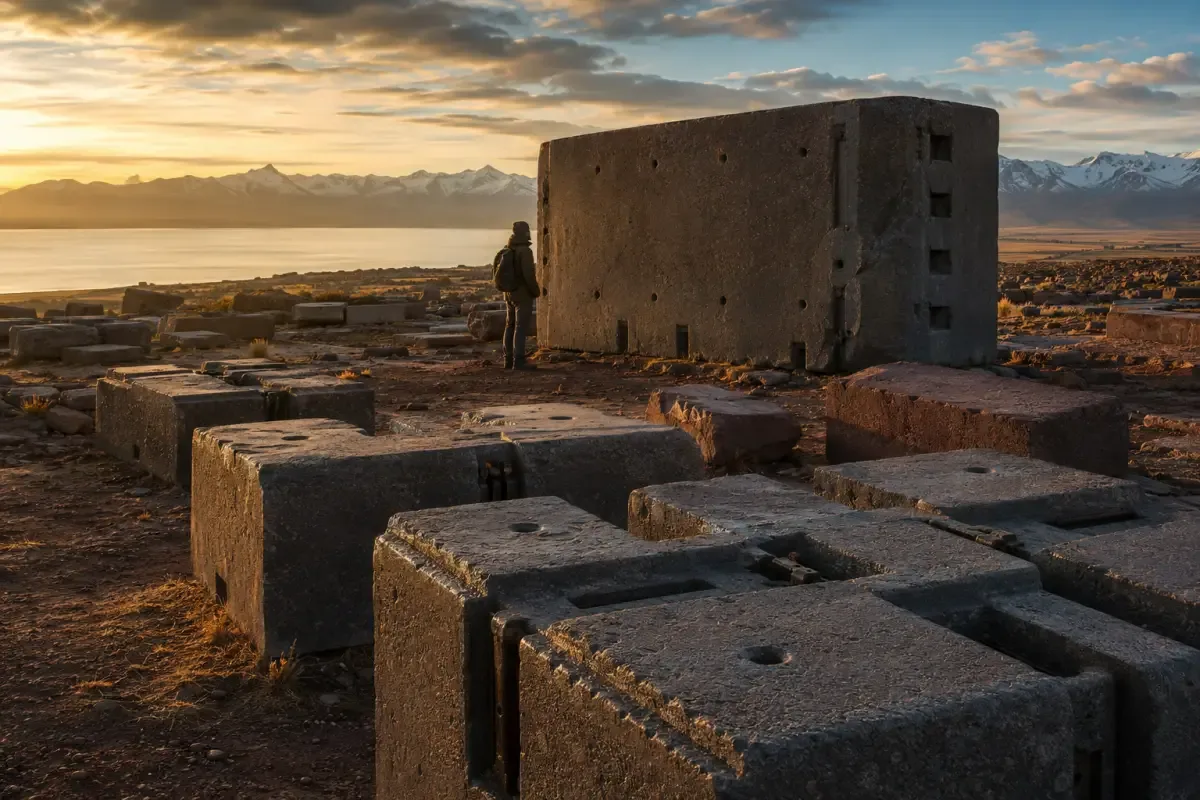
At 12,600 feet above sea level — where the air carries barely 60 percent of the oxygen you'd find at the coast — an anonymous workforce erected something that has never stopped demanding an explanation.
Sustained labor at this elevation leaves even conditioned bodies gasping.
Before the Inca. Before any Spanish chronicler arrived to record it. Before a written language existed on this side of the world.
An organized civilization quarried, transported, and assembled hundreds of stone blocks — some weighing over 130 metric tons — into a structure of such geometric precision that researchers are still debating the methods.
This is Puma Punku. And the real story is stranger, more impressive, and far more human than most people realize.
What drew me to this wasn't the mystery: it was how much we actually do know, once you push past the alien theories.
- 1.Where the Altiplano Meets the Ancient World
- 2.The Civilization Behind the Stone: Getting the Timeline Right
- 3.What Puma Punku Actually Was
- 4.The Stone: Correcting a Persistent Myth
- 5.Four Engineering Marvels That Actually Deserve Your Attention
- 6.The Logistical Nightmare: Moving Cathedrals at High Altitude
- 7.The Theories: From Plausible to Fantastical
- 8.The Real Wonder
Where the Altiplano Meets the Ancient World
Puma Punku — "Gate of the Puma" in the Aymara language — sits on the wind-scraped altiplano plateau of western Bolivia.
It is roughly 70 kilometers west of La Paz, about 15 kilometers from the southeastern shore of Lake Titicaca.
The site is part of the larger Tiwanaku archaeological complex — a sprawling ancient urban center that UNESCO designated a World Heritage Site in 2000.
At its peak, the Tiwanaku metropolis may have housed 10,000 to 20,000 people. It was one of the largest cities in the pre-Columbian Americas.
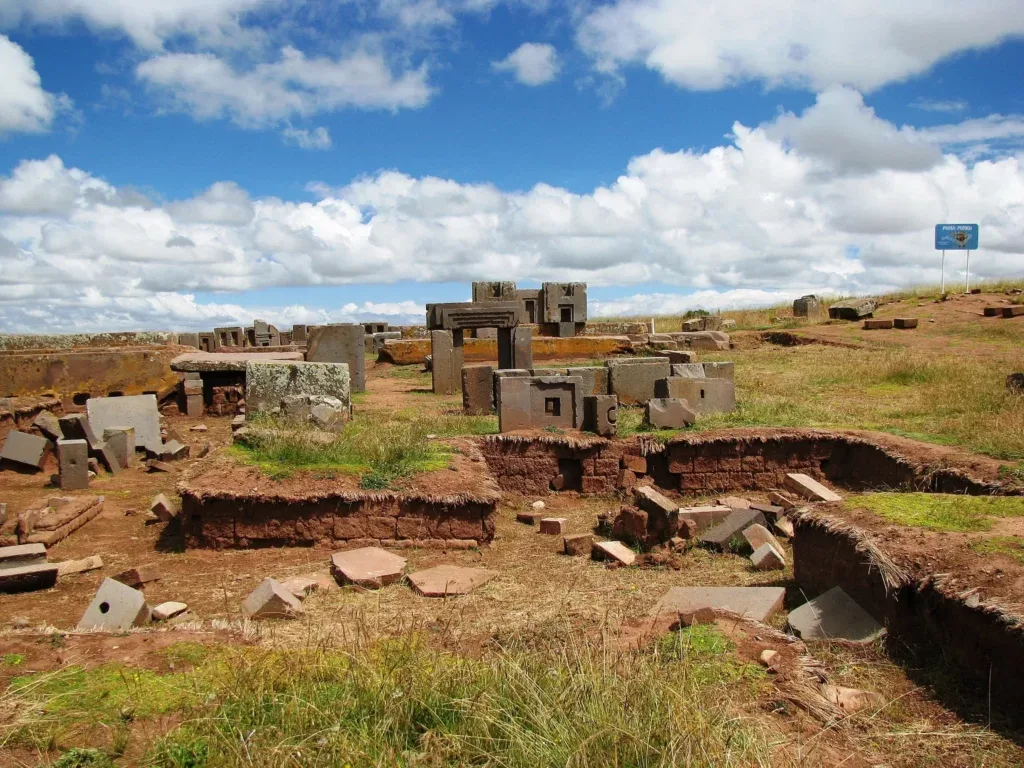
Puma Punku itself occupies the southwestern corner of this complex.
What visitors encounter today is largely a scatter of enormous stone blocks and fragments. The legacy of centuries of looting, colonial-era demolition, and seismic activity.
Spanish builders stripped the site wholesale for construction material.
But enough survives to communicate something extraordinary. This was a carefully engineered, architecturally sophisticated ceremonial platform. Its builders knew precisely what they were doing.
The Civilization Behind the Stone: Getting the Timeline Right
Here is where popular accounts routinely get the history wrong, sometimes by a thousand years or more.
Tiwanaku did not flourish in the centuries before the Common Era.
The civilization reached its architectural zenith between approximately 400 and 1000 CE — the same era that saw the rise of the Byzantine Empire and the Viking Age.
Radiocarbon dating places Puma Punku's main construction phase around 500 to 600 CE.
This matters enormously. Tiwanaku was not some impossibly distant proto-civilization operating in the darkness of prehistory.
They were sophisticated, organized, and deeply experienced builders. They worked within a well-developed social and economic system that had been refining its skills for generations.
Their achievements extended far beyond stonework:
- Raised-field agriculture: Networks of elevated planting beds separated by water channels, which moderated temperature extremes at impossible elevations.
- Advanced metallurgy: They mastered bronze, copper, and gold — and could pour molten metal with engineering precision.
- Long-distance trade networks: Cultural influence stretching from the Pacific coast deep into Peru, Chile, and Argentina.
These were not primitive builders struggling against the limits of their era. They were specialists working at the height of a mature, confident civilization.
What Puma Punku Actually Was
The best current reconstruction suggests Puma Punku was a massive ceremonial platform mound.
A raised earthen and stone structure likely used for ritual, political assembly, or religious ceremony. It featured a large open plaza flanked by buildings, with stone-faced terraces rising in successive stages.
Think of it less as a scattered field of rubble and more as a deliberately tiered monumental structure.
Comparable in civic ambition to the great temple complexes of Mesoamerica, but expressed in an entirely different architectural vocabulary that prioritized raw geometric precision over sculptural decoration.
The platform measures roughly 167 by 116 meters at its base.
The stonework now collapsed and scattered across the site once formed the facing, gateways, and interior structures. At its original height, it commanded the altiplano skyline.
The Stone: Correcting a Persistent Myth
No aspect of Puma Punku generates more confusion — or more bad information — than the question of what the blocks are actually made of.
A persistent claim insists the stones are composed of diorite — a rock so hard that cutting it would supposedly require diamond-tipped tools. This claim is false.
Geological analysis identifies two primary materials:
- Red sandstone — comprises the largest blocks. A relatively soft sedimentary rock that can be shaped with harder stone tools, controlled abrasion, and patient labor.
- Andesite — a volcanic rock used for the more intricately worked pieces. Harder than sandstone, but still significantly more workable than diorite.
The nearest sandstone quarries lie approximately 10 kilometers from the site.
The andesite presents a more serious logistical puzzle. The closest confirmed sources are on the Copacabana Peninsula — roughly 90 kilometers away across Lake Titicaca.
Correcting the stone type doesn't diminish the mystery. If anything, it sharpens it.
The real engineering challenges at Puma Punku are extraordinary enough without inventing fictional ones.
Four Engineering Marvels That Actually Deserve Your Attention
1. The Precision of the Cuts
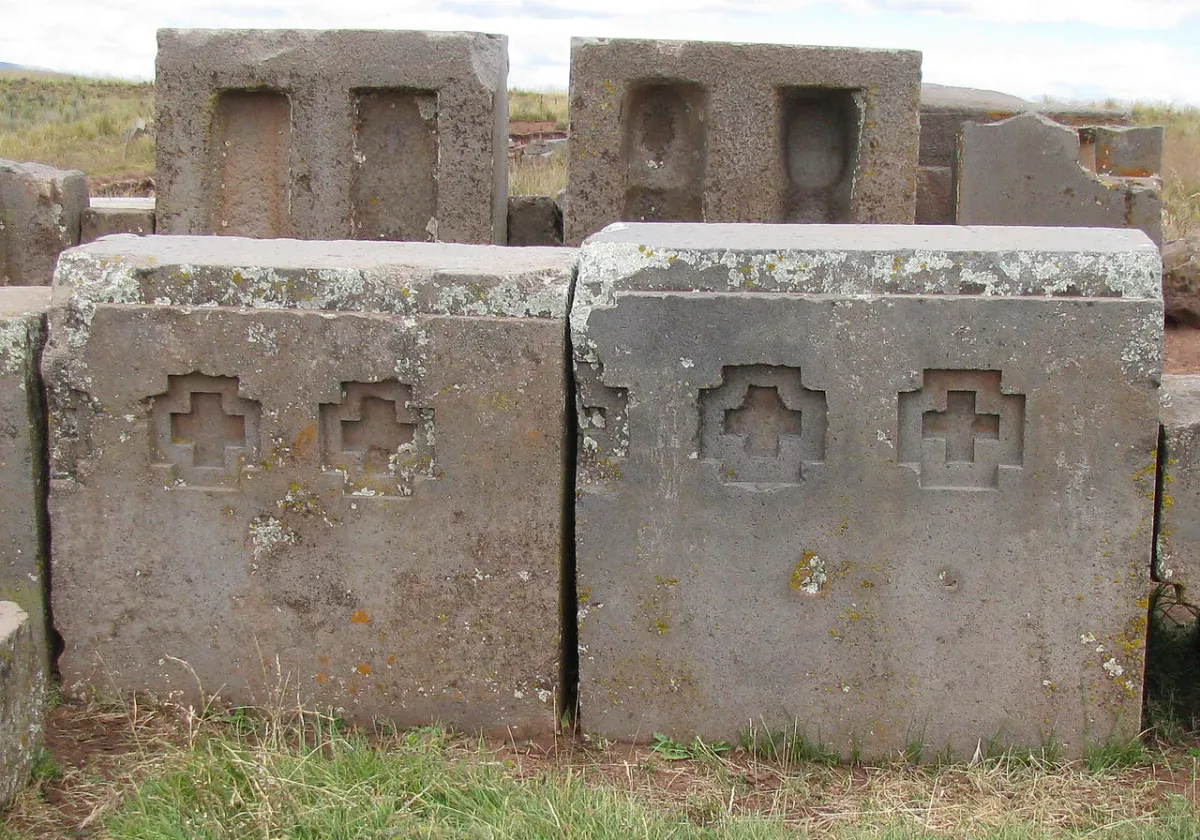
The most immediately striking feature of Puma Punku's stonework is the sharpness of edges and the flatness of surfaces.
Blocks weighing tens of tons have been shaped with straight edges, right angles, and flat planes that would not embarrass a modern stonemason.
The original fits between adjacent blocks were tight to a degree that requires explanation.
While the "razor blade" claim is somewhat overstated — centuries of seismic activity and looting have shifted many stones — the precision of the original cuts is real, documented, and consistent across many examples.
Experimental archaeology offers a plausible mechanism. Jean-Pierre Protzen's research demonstrated that skilled workers using harder stone tools and abrasive slurries could achieve extraordinarily precise results.
The method involves progressive refinement: rough shaping, then grinding with increasingly fine abrasives, then final polishing.
Slow, demanding work — but work that human hands can do.
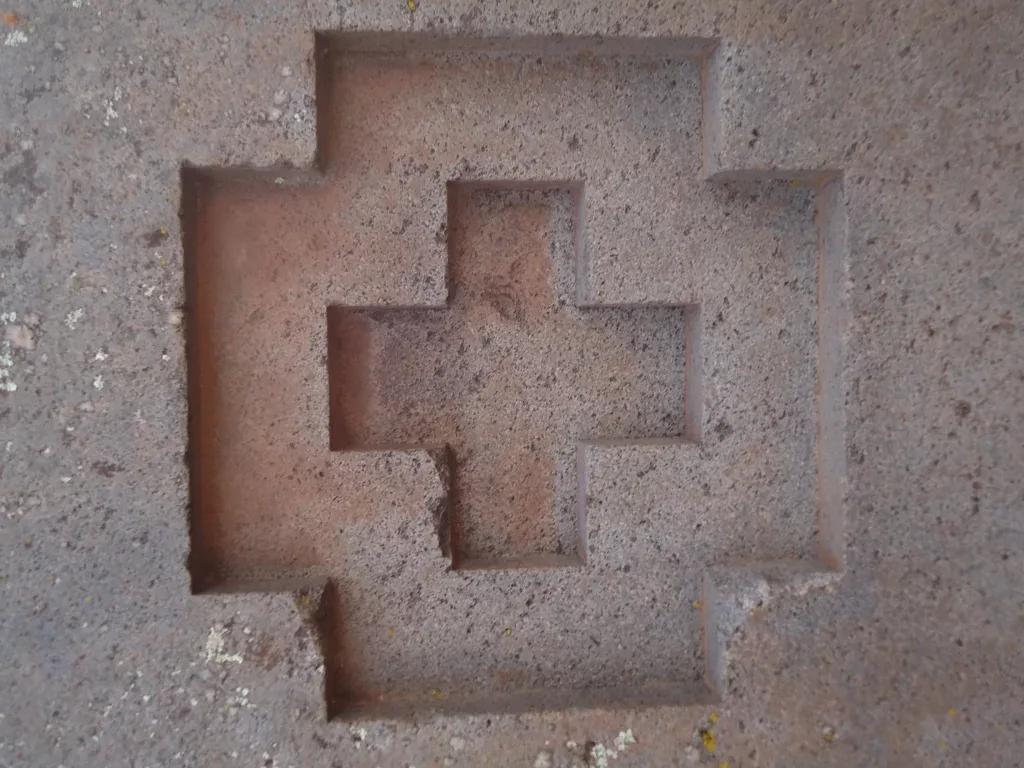
2. The Modular H-Blocks
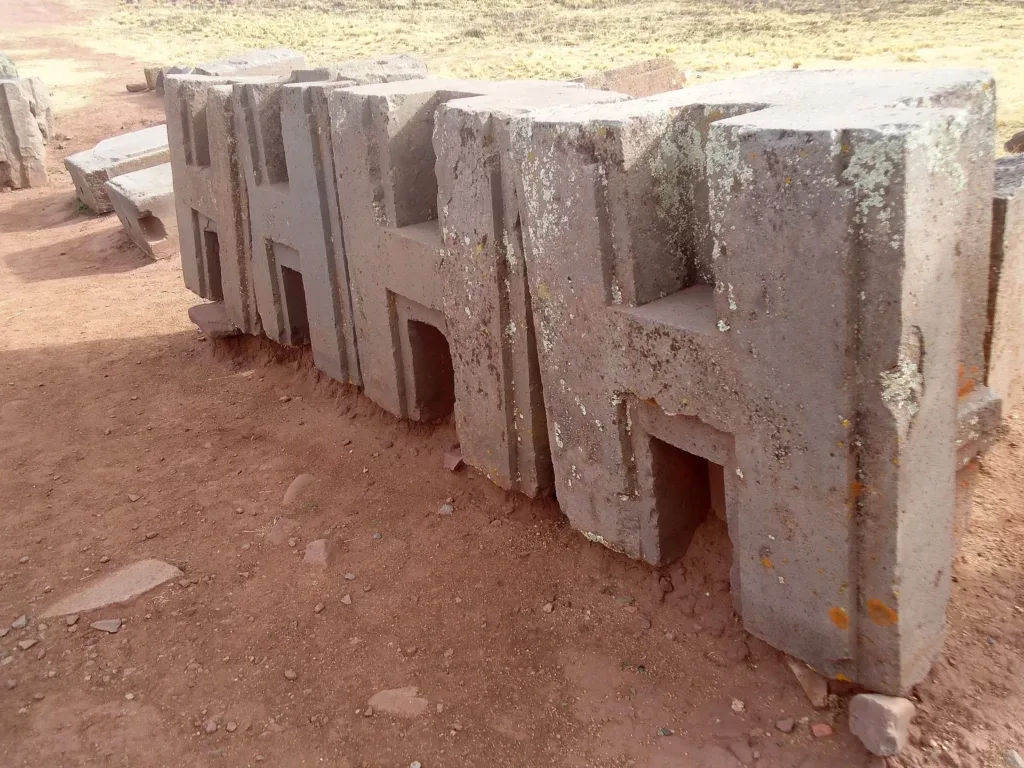
Among the most photographed elements of Puma Punku are the so-called H-shaped blocks — stone pieces with flanges, recesses, and interlocking channels.
These are not decorative accidents. They appear to be standardized modular building components, designed to lock together without mortar.
The recesses and flanges align between adjacent blocks, creating stable interlocking assemblies. Like machined mechanical parts fitting together.
The consistency across multiple H-blocks — matching dimensions, parallel lines, repeating angles — indicates the builders were working from a shared design system.
They were executing a plan. Whether that plan existed as drawn blueprints, carved templates, or deeply internalized craft knowledge remains unresolved.
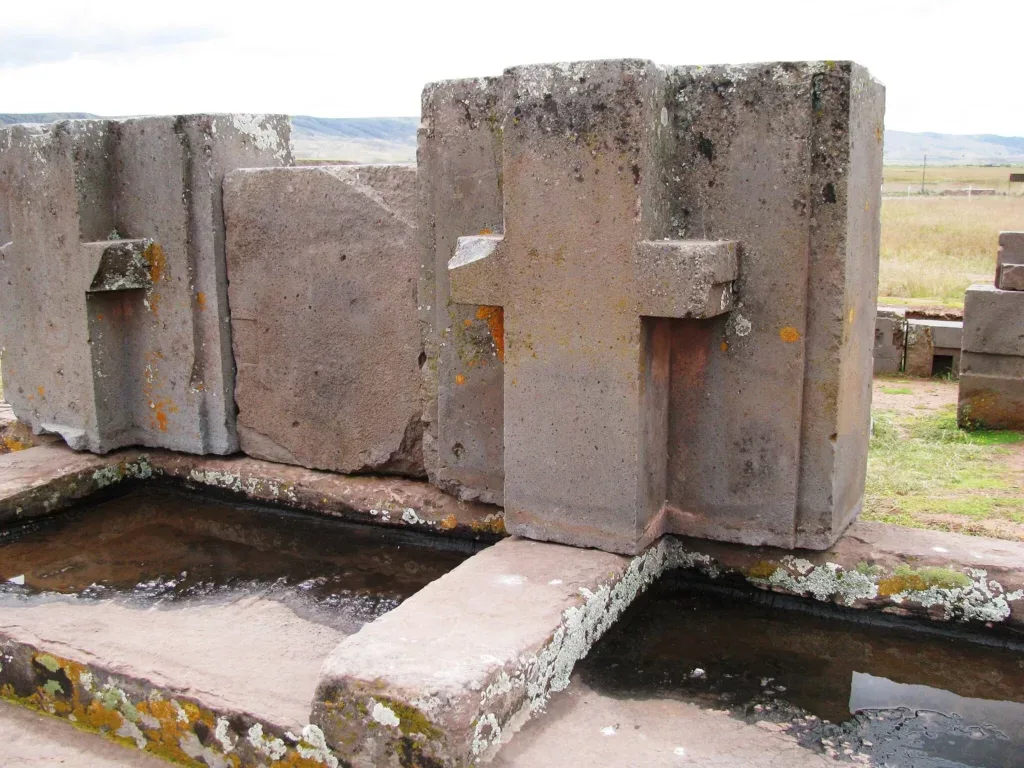
3. The Bronze Clamp System: Ancient Earthquake Engineering
This is perhaps the most technically sophisticated element of Puma Punku's construction. It is almost entirely absent from popular accounts of the site.
The bronze clamps are what got me. Not the size of the stones, not the precision of the cuts. The fact that someone figured out you could pour molten metal between two rocks and make them hold. That's a different kind of intelligence than just being strong.
The builders used I-shaped metal clamps to join adjacent stone blocks at critical structural joints.
What makes this technique remarkable is not merely the clamps. It is how they were manufactured in place.
The Tiwanaku craftsmen carved matching grooves into the facing surfaces of two adjacent blocks, then poured molten bronze or copper directly into those channels on-site. As the metal cooled and contracted, it locked the two stones into a permanent metallic joint.
This technique served two distinct engineering functions:
- Structural integrity: Bound adjacent blocks into a unified assembly that resisted lateral forces.
- Seismic resilience: The altiplano is earthquake-prone. Metal clamps allow a structure to absorb ground movement rather than shattering along its joints.
The clamps — and the carved channels that received them — have been found at Puma Punku and other Tiwanaku structures. Their presence is unambiguous evidence of sophisticated materials science and structural engineering.
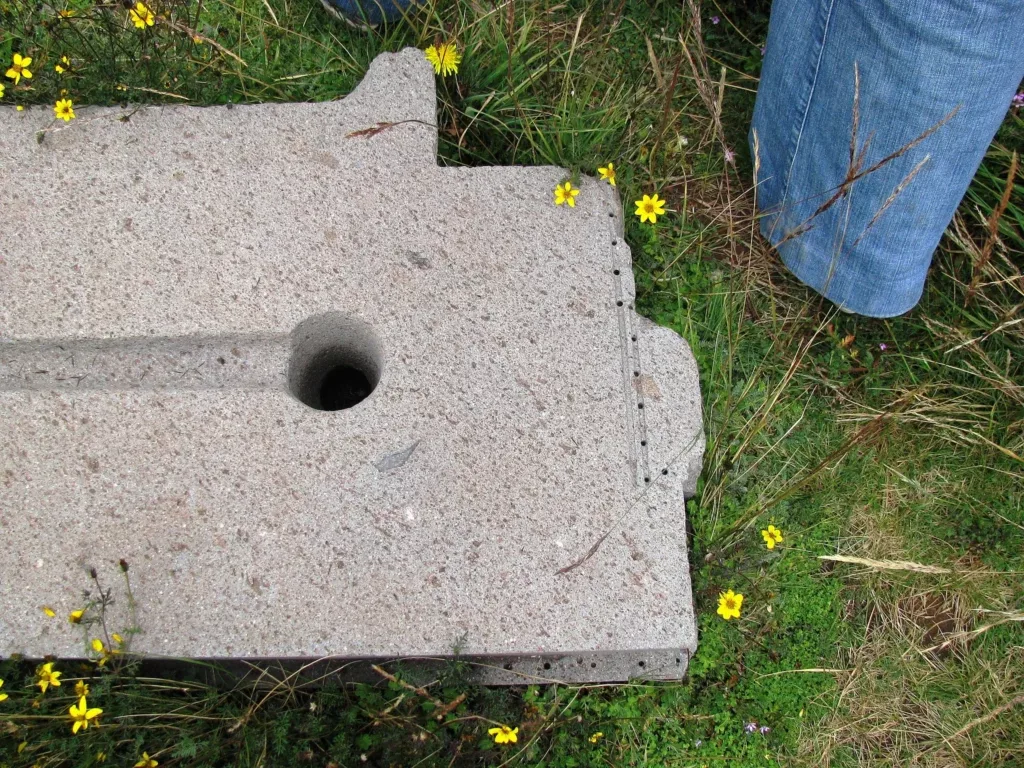
4. The Drilled Holes and Internal Channels
Across numerous blocks, carefully drilled circular holes appear at regular, deliberate intervals. They are uniform in diameter and depth.
Their exact purpose remains debated. Leading hypotheses include:
- Water distribution or drainage across the platform
- Anchor points for metal staples or fixtures
- Mounting points for wooden or metal elements now lost
The regularity of these holes suggests a standardized drilling process, possibly using tubular drill cores rotated against an abrasive medium.
Whatever the exact method, the uniformity implies specialized tools and skilled operators who had done this many times before.
The Logistical Nightmare: Moving Cathedrals at High Altitude
Even setting aside how the blocks were shaped, getting them to the site deserves its own reckoning.
The numbers are sobering:
- The largest sandstone block: approximately 131 metric tons — heavier than most ocean shipping containers.
- Andesite blocks transported from 90 kilometers away across lake and mountain terrain.
- All at 3,850 meters above sea level, where oxygen is thin and labor is punishing.
The Tiwanaku had no wheeled vehicles. Llamas could carry 35-40 kilograms each. Moving a 131-ton block with llamas is not an engineering problem — it is a mathematical impossibility.
The consensus among researchers is that massive, coordinated human labor using sledges, rollers, ramps, and ropes accomplished this feat.
The same organizational capacity that built their agricultural system applied to construction. An entire civilization pulling in one direction.
The Theories: From Plausible to Fantastical
The Mainstream Archaeological View
The dominant position among professional archaeologists is clear:
Tiwanaku craftsmen and laborers built Puma Punku using specialized stone-working skills developed across generations. An organized workforce capable of enormous collective projects.
What remains open is the granular detail. Specific tool assemblages. Exact transport methods. The social and economic mechanisms that mobilized labor at this scale.
The archaeological record is badly compromised — looted before systematic excavation, disrupted by earthquakes and centuries of agriculture.
Every answer the site yields comes at significant interpretive cost.
The Lost Civilization Hypothesis
Some researchers suggest Puma Punku implies a predecessor civilization, an advanced culture that transmitted knowledge the Tiwanaku could not have developed independently.
The evidence is indirect at best. Puma Punku fits coherently within the documented trajectory of Andean civilization. A millennia-long development of increasingly sophisticated stone-working, social organization, and architectural ambition.
There is no material evidence of a prior culture at the site. The absence of evidence is not proof of absence, but it is a significant obstacle.
This line of thinking connects to a broader scientific question: the Silurian Hypothesis, which asks whether any evidence of a pre-human industrial civilization could survive in the geological record at all.
The Ancient Alien Theory — and Why It Sells the Tiwanaku Short
The ancient alien theory, popularized by Erich von Däniken in his 1968 book Chariots of the Gods?, holds that extraterrestrials assisted in or directly undertook the construction. He also applied the same framework to the Nazca Lines.
This theory gained traction through the misidentification of the stone as diorite.
As we have established, the stones are sandstone and andesite. The premise collapses under geological scrutiny.
But beyond factual problems, there is something more troubling. Invoking aliens to explain Puma Punku reduces the Tiwanaku people to passive bystanders in their own history.
A civilization sophisticated enough to be used as a workforce, but not sophisticated enough to have conceived the work themselves.
It is a position that says more about the assumptions of its proponents than it does about ancient Bolivia.
The actual Tiwanaku were accomplished farmers, metallurgists, traders, and architects. Their achievements at Puma Punku belong to them.
The Real Wonder
Here's the thing that mainstream archaeology doesn't always admit: we don't know how they moved the stones. We have good theories, plausible theories, but nobody has actually done it. That gap between theory and practice is where the humility lives.
There is a particular kind of intellectual impoverishment in treating Puma Punku as evidence of the impossible.
The site is genuinely, verifiably extraordinary. But its wonder does not depend on aliens or vanished super-civilizations to be earned.
It depends on this: around 500 CE, human beings at nearly 4,000 meters above sea level, without wheeled vehicles, without iron tools, without a written engineering manual, worked out how to quarry stone from nearly a hundred kilometers away.
They transported blocks weighing over a hundred tons across mountains and a lake. Cut them to tolerances measured in fractions of a millimeter. Locked them together with poured bronze in a structure designed to withstand earthquakes.
They did not leave notes. They did not leave signatures.
What they left is the stone itself. And the stone is enough.
Puma Punku does not need to be unexplainable to be extraordinary. It needs only to be seen for what it is: a monument to the ingenuity, ambition, and organizational genius of a civilization that history has consistently underestimated.
Every time I look at those H-blocks, I catch myself thinking: somebody stood here fifteen hundred years ago, looked at the same stone I'm looking at, and knew exactly what to do with it. That's more impressive to me than any ancient astronaut theory.
SOURCES
-
Kolata, Alan L. The Tiwanaku: Portrait of an Andean Civilization. Oxford: Blackwell Publishers, 1993. The foundational English-language scholarly treatment of Tiwanaku society, economy, and material culture. Essential for understanding the civilization in its full context.
-
Janusek, John Wayne. Ancient Tiwanaku. Cambridge: Cambridge University Press, 2008. A comprehensive, field-research-grounded synthesis of Tiwanaku archaeology covering architecture, urbanism, ritual practice, and the political economy of the Tiwanaku state.
-
Young-Sánchez, Margaret (ed.). Tiwanaku: Ancestors of the Inca. Denver: Denver Art Museum / University of Nebraska Press, 2004. An exhibition catalogue featuring essays by leading Tiwanaku specialists on art, architecture, and material culture. Accessible without sacrificing scholarly rigor.
-
Protzen, Jean-Pierre. "Inca Stonemasonry." Scientific American 254, no. 2 (February 1986): 94–105. Protzen's experimental archaeology on Andean stone-cutting techniques — demonstrating that highly precise surfaces can be achieved with harder stone tools and abrasive methods — directly informs the debate about how Puma Punku's blocks were shaped.
Aron Corvin
A researcher of the unknown who loves a good story, but doesn't sell sensationalism. I research every topic in detail before I publish it. If you enjoy what I write, your support would mean a lot and help me keep going.