
The Silurian Hypothesis: Was There a Civilization Before Us?
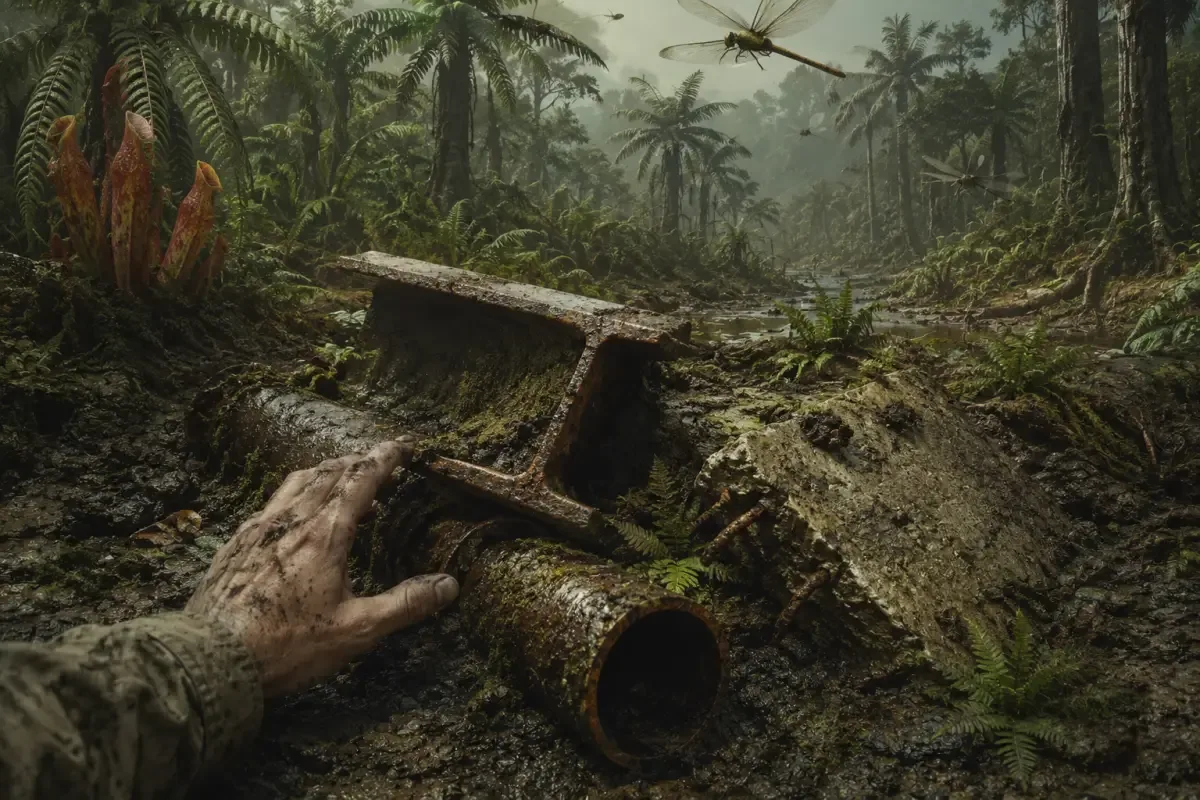
Fifty-six million years ago, the world was barely recognizable as the same planet we inhabit today.
Picture Antarctica carpeted in dense, dripping rainforest. Crocodilians lazed in shallow rivers above the Arctic Circle.
The global ocean, stripped of its oxygen in the shallower layers, offered a hostile welcome to most of the life that had previously thrived in it. Average global temperatures ran perhaps 15 degrees Celsius hotter than today.
The poles — which we associate reflexively with ice and silence — brimmed with humid, tropical warmth. There were no ice caps. There were no glaciers. The great refrigerators of Earth's climate system had simply switched off.
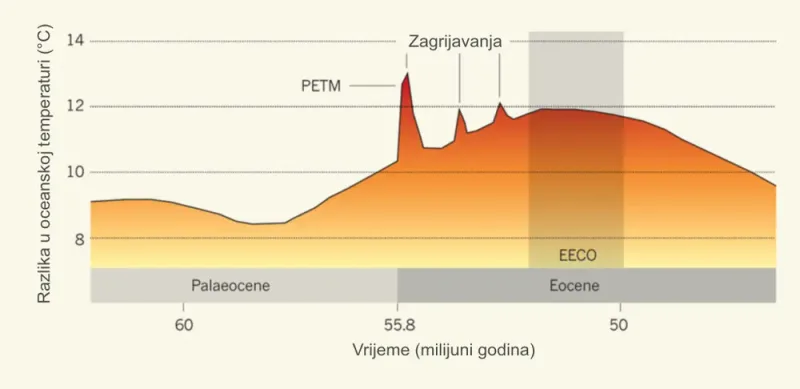
This is not a description of an alien world. This is the Paleocene-Eocene Thermal Maximum, or PETM: a 170,000-year episode of extreme global warming that began approximately 56 million years ago, right at the boundary between two geological epochs.
Its cause remains a subject of vigorous scientific debate, though most researchers attribute it to a massive release of carbon into the atmosphere, one that happened with unusual — and, to some scientists, disquieting — speed.
Here is where the question becomes strange. The carbon record from that period shows not just an increase in atmospheric CO₂, but a particular kind of carbon: lighter isotopes, the kind associated with biological or thermogenic sources, not with volcanic outgassing from the deep mantle.
It is the same isotopic fingerprint that our own industrial civilization is currently pressing into the geological record.
What if it was not natural?
That question, posed not by fringe theorists but by two of the world's most credentialed earth and planetary scientists, forms the backbone of what is now known as the Silurian Hypothesis.
I stumbled across Frank and Schmidt's paper while researching something else entirely, and I spent the rest of the day staring at walls. It's one of those ideas that changes how you see the ground beneath your feet: literally.
It does not claim that lizard-people built pyramid factories in the Eocene. It asks something far more philosophically unsettling: given the geological record's known limitations, would we even be able to detect a prior industrial civilization if one had existed?
And what does the carbon signal from the PETM tell us about that possibility?
The Architects of the Question
Adam Frank is not the kind of scientist who chases ancient mysteries. As an astrophysicist at the University of Rochester, his professional gaze is fixed outward: toward exoplanets, stellar evolution, and the physics of planetary systems far beyond our own solar neighborhood.
Gavin Schmidt, for his part, directs NASA's Goddard Institute for Space Studies and is one of the world's foremost climate modelers, spending his career mapping how Earth's atmosphere behaves across geological timescales.
Their 2018 paper in the International Journal of Astrobiology emerged not from a conversation about Earth history, but from a problem in exoplanet science.
As the search for extraterrestrial intelligence broadens from radio signals to what researchers call "technosignatures" — detectable signs of industrial activity — Frank and Schmidt confronted an embarrassing blind spot: they could not reliably specify what an industrial civilization's geological footprint would look like, because they had never tried to characterize their own.
"We were trying to figure out what we'd look for on another planet," Frank explained in a subsequent interview, "and we realized we'd never actually asked whether we could detect ourselves — or any civilization — in the ancient rock record."
The paper they produced was framed as a thought experiment, but a rigorous one. They were not asserting that a prior civilization existed.
They were constructing a falsifiability framework: if one had, what would we expect to find, and how confident can we be that we would find it?
Their answer, arrived at through a careful examination of taphonomy, stratigraphy, and isotope geochemistry, was more unsettling than they may have anticipated.
The temporal scale of the problem deserves a moment of genuine contemplation.
Our industrial civilization, measured from the onset of coal combustion, is roughly 300 years old. The Earth itself is approximately 4.54 billion years old.
Complex, multicellular animal life has been diversifying for at least 540 million years: a span so vast that, if compressed into a single calendar year, our entire industrial era would occupy the final two seconds of December 31st.
Within that 540-million-year window, the number of possible "slots" in which a prior intelligence could have risen and collapsed is effectively uncountable.
Frank and Schmidt did not claim any of those slots were occupied. They pointed out, simply and devastatingly, that we have no reliable method of ruling it out.
A Carbon Copy of the Anthropocene?
The PETM's carbon signal is what gives the hypothesis its most concrete scientific traction.
To understand why, it helps to understand how geologists read the chemistry of ancient carbon.
Carbon, the element at the core of all organic chemistry and all fossil fuel combustion, exists in two stable isotopic forms: Carbon-12 and Carbon-13. The numbers refer to the total number of protons and neutrons in the atom's nucleus.
Living organisms — plants, algae, bacteria — preferentially absorb the lighter Carbon-12 during photosynthesis, which means biological carbon sources are systematically "lighter" than the carbon locked in volcanic rock or the deep ocean crust.
When a geologist measures the ratio of these isotopes in ancient sediment, they are essentially reading a signature: heavy carbon suggests geological or volcanic sources; light carbon suggests biological origins, whether ancient organic matter (like coal or oil) or freshly combusted biomass.
At the PETM boundary layer, the isotopic record shows a sharp, dramatic shift toward lighter carbon.
This event, known as the Carbon Isotope Excursion (CIE), represents one of the most anomalous carbon perturbations in the entire Cenozoic record.
It indicates that a massive quantity of isotopically light carbon entered the atmosphere over a geologically brief period: possibly as methane from seafloor clathrates destabilized by warming, possibly from the contact metamorphism of carbon-rich sediments by magmatic intrusions, or, as researchers like Henrik Svensen have modeled in detail, from the thermogenic release triggered by sill intrusions into organic-rich basin sediments in the North Atlantic.
Svensen's 2012 work on the thermal evolution of the PETM offered compelling evidence that large igneous province activity could generate the observed carbon volumes through the cooking of organic sediments: producing both CO₂ and methane at rates that match the paleo-record.
I spent an afternoon trying to decide if I found Svensen's explanation comforting or disappointing.
Comforting, because it means the PETM probably had a natural cause. Disappointing, because the alternative is more interesting.
That tension is the whole article, really.
His models quantified ocean temperature anomalies during the PETM that align with the isotopic excursion, providing a natural mechanism that most researchers find plausible.
But plausible is not the same as proven.
And Frank and Schmidt's intervention is not to reject natural explanations: it is to note the structural similarity between the PETM's carbon excursion and what we are producing right now.
The comparison is illuminating and somewhat haunting.
The PETM involved the injection of roughly 3,000 to 7,000 petagrams of carbon into the atmosphere-ocean system over a period of perhaps 20,000 years, though some analyses suggest the initial onset was far faster, perhaps just a few thousand years.
Current human industrial activity is injecting carbon at a rate that, if sustained, would replicate the PETM's total input within a matter of centuries, not millennia.
This is where a crucial analytical complication emerges, and Frank and Schmidt address it directly.
The geological record does not preserve events at the same resolution across all timescales.
Sediment layers compress, bioturbation scrambles fine structure, and diagenetic processes alter isotopic ratios over millions of years.
A carbon injection that takes 200 years — the approximate duration of peak industrial civilization — would, after 56 million years of burial and compression, be effectively indistinguishable from one that took 5,000 years.
The rock simply cannot resolve the difference.
In other words: if our civilization collapsed today, the carbon we have produced would appear in future geological records as an anomalous "spike" strikingly similar in shape and isotopic character to the PETM.
And if the PETM was produced by a civilization that burned through its resources in a geological eyeblink, we would have essentially no way to tell it from a natural event.
The Erasure of Empires
The most immediate objection anyone raises to the Silurian Hypothesis is visceral and intuitive: where are the ruins?
Where are the cities, the highways, the landfills, the satellites? If something built factories 56 million years ago, why haven't we found a single gear, a single brick, a single shard of processed metal?
The answer requires understanding how catastrophically bad the geological record is at preserving evidence of surface life on human timescales.
Taphonomy — the study of how organisms and objects transition from the living world to the fossil record — reveals an almost comically inefficient system.
The fraction of organisms that die and eventually become fossilized is astronomically small.
Most bodies decompose. Most bones dissolve or fragment.
The conditions required for fossilization — rapid burial in fine-grained sediment, absence of oxygen, the right chemical microenvironment — are the exception, not the rule.
We know more about some species from a handful of teeth than we do about entire ecosystems that may have flourished for millions of years and left nothing behind.
Now apply this logic to built structures.
Stone is durable, but stone on the surface is attacked continuously by water, ice, and chemical weathering. Iron and steel corrode within centuries under typical surface conditions.
Glass devitrifies. Polymers break down through UV radiation and microbial action: some faster than others, but all eventually.
No surface material that human civilization has produced is stable against geological weathering on million-year timescales.
And then there is the deeper problem of tectonics.
Earth's crustal plates are not permanent fixtures.
They are constantly recycled: old oceanic crust subducted into the mantle, continental crust eroded, reworked, and redeposited.
Over 56 million years, the surface of the planet has been substantially rearranged.
Much of what was shallow seabed in the early Eocene is now mountain range.
Much of what was dry land is now ocean floor.
The specific sedimentary environments most likely to preserve traces of surface activity — river deltas, coastal margins, lake beds — are precisely the environments most subject to erosion, compaction, and recycling over such timescales.
Frank's own framing of this problem is precise: "It would be easy to miss an industrial civilization that lived only 100,000 years." He means this literally.
If a civilization rose, industrialized, and collapsed within 100,000 years — which is 500 times longer than the duration of our own industrial age — its physical remnants would constitute a layer in the rock record measured in millimeters or less.
A geologist driving core samples through Paleocene-Eocene strata might pass through it in seconds, logging it as a slightly unusual chemical horizon before moving on.
The absence of macroscopic evidence, in short, cannot be taken as evidence of absence.
The geological record's resolution is simply too coarse, and the destructive processes too comprehensive, to allow that inference.
There is one exception, and it is the exception Frank and Schmidt focus on.
Chemistry persists where structures do not.
How to Hunt for Ancient Ghosts
If buildings leave no trace, isotopes do.
The question Frank and Schmidt pose in their 2018 paper is: what specific chemical or isotopic anomalies would a technological civilization produce that could survive 56 million years of geological processing?
Their proposed technosignatures are precise.
Synthetic molecules not found in nature — certain chlorofluorocarbons, long-chain polymers, or highly specific organochlorine compounds — would, if present, represent an unambiguous signal of industrial chemistry.
The challenge is that many such compounds degrade relatively quickly under geological conditions, reducing their persistence.
More promising, perhaps, are anomalies in radioactive isotopes.
Nuclear fission produces isotopes — plutonium-244 is one example — in ratios and combinations that do not occur in natural radioactive decay series.
A detectable enrichment in fissile material in a sediment horizon would be extraordinarily difficult to explain without invoking a technological cause.
Nitrogen isotope anomalies are another candidate.
Industrial nitrogen fixation — the Haber-Bosch process that underpins modern agriculture — leaves a distinctive isotopic signature in soils and sediments.
Elevated concentrations of reactive nitrogen compounds in a geological layer, particularly in ratios inconsistent with natural biological nitrogen fixation, would be anomalous enough to warrant serious attention.
Frank and Schmidt are explicit that none of these signatures have been found in PETM sediments.
Their point is not to claim discovery. It is to observe that, until their paper, no one had been specifically looking for them in the right way.
Paleo-records are assembled for different purposes — reconstructing ocean temperatures, tracking species diversity, mapping atmospheric composition — and the chemical assays used for those purposes are not necessarily sensitive to the narrow suite of signals an industrial civilization would produce.
The implication is both humbling and practically important: the absence of detected technosignatures in geological records may reflect the limits of what we have chosen to measure, not the limits of what is actually encoded in the rock.
This is the part that stayed with me longest: not that someone might have been here before us, but that we might never know.
The silence of the geological record isn't an answer. It's just a silence.
The Existential Mirror
The Silurian Hypothesis would be merely a clever intellectual exercise if it stopped at paleontology. It does not.
Frank and Schmidt's framework contains a feedback loop that points directly at our present moment, and the logic of that loop is worth sitting with carefully.
Consider the central paradox: a civilization's detectability in the geological record is inversely proportional to how long it survives.
A civilization that industrializes explosively, consumes its planetary resources, and collapses within a few thousand years leaves a sharp, anomalous spike in the isotopic record: a scar visible across geological time, but no civilization to explain it.
A civilization that successfully manages its resource use, transitions to sustainable energy, and persists for millions of years leaves almost no geological trace at all, because it never injected enough carbon or synthetic chemicals to produce a detectable anomaly.
Catastrophe is legible. Wisdom is invisible.
If this framework is correct, then the very act of surviving long enough to be geologically forgettable is a marker of success.
The civilizations that leave the most dramatic signatures in the rock are, by definition, the ones that did not make it.
We are currently writing a signature.
The carbon we have released since 1750 is accumulating in sediments at the ocean floor, in the chemistry of coral reefs, in the isotopic ratio of atmospheric CO₂ preserved in ice cores and biological tissue.
If industrial civilization ended tomorrow — for whatever reason — future geologists, or future intelligences of any kind, would find a thin, dark, chemically unusual band in sedimentary sequences around the world, approximately 56 million years above the one they would have to look very carefully to find.
There is no comfortable resting place in that thought. The PETM's carbon spike, whether natural or otherwise, was followed by roughly 200,000 years of elevated temperatures before the climate system slowly restabilized.
Whatever lived through it — and a great deal did not — had no warning, no mechanism for understanding what was happening, no institutional memory of having caused it.
We have all three. The question the Silurian Hypothesis ultimately forces is not whether something built cities before us.
The question is whether we will leave the kind of mark in the geological record that signals a civilization that collapsed, or the kind that signals nothing at all, because it found a way to endure.
SOURCES
-
Frank, A., & Schmidt, G. A. (2018). "The Silurian hypothesis: would it be possible to detect an industrial civilization in the geological record?" International Journal of Astrobiology, 18(5), 1–9. https://doi.org/10.1017/S1473550418000095
-
Svensen, H. (2012). "How volcanoes cause warm climates." Nature, 483, 413–414. https://doi.org/10.1038/483413a
-
Kennett, J. P., & Stott, L. D. (1991). "Abrupt deep-sea warming, palaeoceanographic changes and benthic extinctions at the end of the Palaeocene." Nature, 353, 225–229. https://doi.org/10.1038/353225a0 — The foundational paper establishing the PETM as a major climatic and biotic event.
-
McInerney, F. A., & Wing, S. L. (2011). "The Paleocene-Eocene Thermal Maximum: A Perturbation of Carbon Cycle, Climate, and Biosphere with Implications for the Future." Annual Review of Earth and Planetary Sciences, 39, 489–516. https://doi.org/10.1146/annurev-earth-040610-133431
-
Zachos, J. C., Dickens, G. R., & Zeebe, R. E. (2008). "An early Cenozoic perspective on greenhouse warming and carbon-cycle dynamics." Nature, 451, 279–283. https://doi.org/10.1038/nature06588 — Key modeling work on carbon injection rates during hyperthermal events.
-
Dunkley Jones, T., et al. (2013). "Climate model and proxy data constraints on ocean warming across the Paleocene-Eocene Thermal Maximum." Earth-Science Reviews, 125, 123–145. https://doi.org/10.1016/j.earscirev.2013.07.004
Aron Corvin
A researcher of the unknown who loves a good story, but doesn't sell sensationalism. I research every topic in detail before I publish it. If you enjoy what I write, your support would mean a lot and help me keep going.