
The Mountain That Swallowed Them Whole: The Chilling Enigma of the Yuba County Five
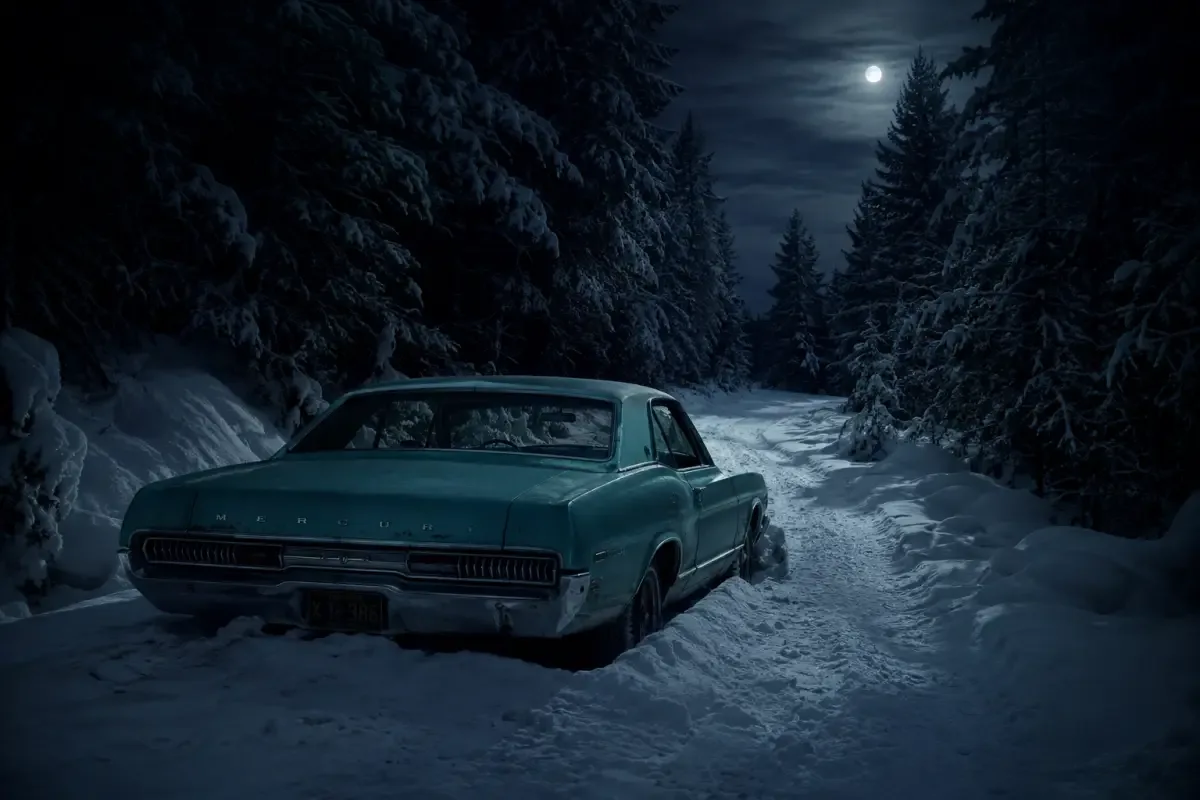
The 1969 Mercury Montego sat stuck in a snowdrift on a logging road above the Sierra Nevada foothills, exactly where someone had abandoned it four days before. The doors were unlocked. One window had been rolled halfway down, even with overnight temperatures well below freezing.
Candy wrappers and empty soda cans littered the seats and floor mats, leftovers from a quick stop at a Chico convenience store on what should have been a short drive home from a college basketball game.
When a deputy finally hot-wired the ignition, the engine caught on the first try. The fuel gauge read a quarter full.
Back at the station, officers found nothing under the chassis worth noting. No dents. No gouges. Not even mud caked on the low-hanging muffler, despite the rutted, washboard road it had supposedly climbed for miles.
I have read through a fair number of cold case files over the years. Few details refuse to sit still the way that spotless undercarriage does.
Five men had been riding in that car on the night of February 24, 1978. None of them walked out of those woods alive, and one of them was never found at all.
Five Men, One Bond
Gary Mathias, Jack Huett, Jack Madruga, Ted Weiher, and Bill Sterling were not an ordinary carful of friends headed home from a game.
Each one carried his own diagnosis or limitation. Their families, gently, called them "the boys."
Mathias, 25, had served in West Germany with the Army before a psychiatric discharge sent him home with paranoid schizophrenia.
By 1978 he was stable on medication, working in his stepfather's gardening business, and doing well enough that his doctors considered him something close to a model patient.
He was also the strongest of the group, a man who had once hitchhiked close to five hundred miles just to get back home.
Huett, 24, struggled badly with speech and learning. He rarely went anywhere without supervision and leaned on Weiher, who treated him like a younger brother, dialing the phone for him whenever a call needed making.
Madruga, 30, owned the Montego and guarded it jealously. An Army veteran and a careful driver, he was widely regarded as slow rather than formally disabled, and he never let anyone else take the wheel of his car.
Weiher, 32, was the gentle giant of the group: big, capable, mostly self-sufficient, but prone to startling lapses in judgment.
His family remembered a night his bedroom ceiling caught fire and he stayed in bed anyway, worried about being late for work the next morning.
Sterling, 29, was deeply religious and spent weekends visiting hospital patients to read to them. He was also, by his parents' own account, unusually easy to lead.
They played together on the Gateway Gators, a basketball team for adults with disabilities, and were due to compete in a Special Olympics tournament the very next morning.
Their uniforms were already laid out on their beds at home.
A Witness in the Dark
While searchers combed the wrong roads near Chico, a 55-year-old man named Joseph Schons was having his own brutal night on the very mountain where the Montego would soon turn up.
Schons had driven up to check on his cabin before a family ski trip when his car got stuck in the snow about 150 feet up the road.
While trying to dig it out, he felt the first symptoms of a heart attack and retreated inside, leaving the engine running for heat.
Six hours later, lying in pain, he saw headlights behind him. A vehicle had pulled up, and figures moved in the glow around it, one of them, he later said, a woman holding a baby.
He called out for help. The voices went quiet. The headlights switched off.
Later, flashlight beams appeared further back along the road. He called again. Those, too, went dark.
By the time his fuel ran out and the pain eased enough to move, Schons walked eight miles down the mountain to find help.
He passed the Montego on the way, not yet knowing whose car it was or what it would come to mean.
Doctors later confirmed he really had suffered a mild heart attack that night. Whether the figures he described were the missing men, or something else entirely sharing that same lonely road, was never settled by anyone.
What the Trailer Kept
Five months passed before the mountain gave anything back.
On June 4, a group of motorcyclists found a battered U.S. Forest Service trailer roughly twenty miles from the abandoned Montego. Its front window had been smashed in.
The smell reached them before the door fully opened.
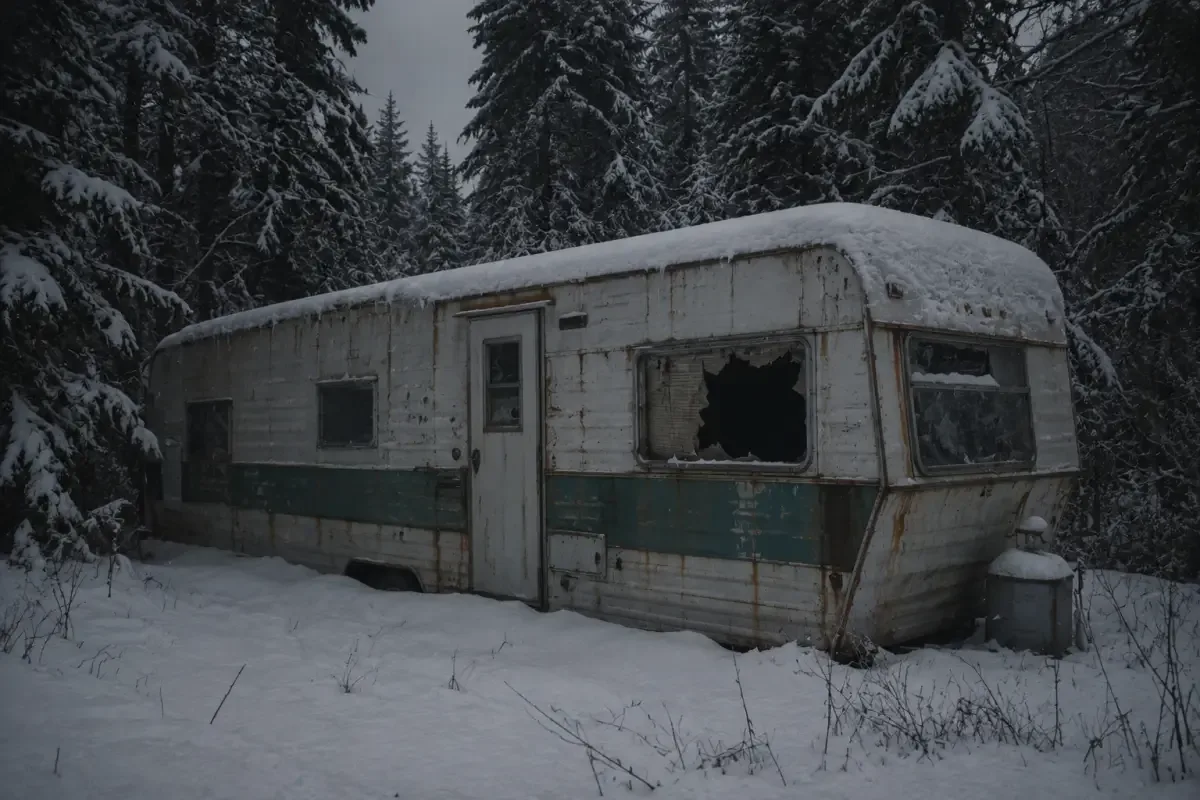
Inside, on one of the beds, lay the body of Ted Weiher, wrapped in eight sheets pulled up over his head.
He had lost close to half his body weight. His beard suggested he had been alive somewhere on that mountain for nearly three months after the night the men vanished.
His feet, ruined by frostbite, were almost gangrenous.
Here is the part that does not settle easily in the mind. A stocked shed sat just outside, holding enough dehydrated rations to feed five grown men for a year.
Thirty-six cans had already been opened and eaten, almost certainly with a military-style can opener that only Mathias or Madruga would have known how to use.
A second, far larger supply locker in that same shed had never even been unsealed. A butane tank stood nearby, its valve untouched, fully capable of heating the trailer at the turn of a single handle. Matches sat within reach.
So did paperback novels that could have fed a fire. None of it was used.
Weiher's family later said he had a habit of obeying rules to a fault, the kind of man who once stayed in a burning bedroom rather than risk being late for his job the next morning.
Investigators came to believe something similar happened here: that in his mind, the food and fuel inside that trailer belonged to someone else, and breaking that boundary to survive was a line he could not bring himself to cross, even as it killed him.
I keep returning to the photographs taken in that trailer. The disturbing part is not the decay. It is the order.
Someone had folded those sheets carefully over Weiher's ruined feet, in a way his own hands, by then, could no longer have managed.
The One Who Never Came Back
A day after the trailer was found, searchers located what remained of Jack Madruga and Bill Sterling on opposite sides of the road, roughly eleven miles from the Montego.
Both had died of hypothermia, perhaps within hours of each other. Jack Huett's remains turned up two days later, identified by his father from a backbone and a pair of shoes found beneath a manzanita bush.
Gary Mathias was never found. His own sneakers had been left behind inside the trailer, swapped, investigators believe, for Weiher's leather shoes, which were never recovered, possibly because Mathias's own feet had swollen from frostbite and no longer fit into his sneakers. His leather jacket stayed behind too.
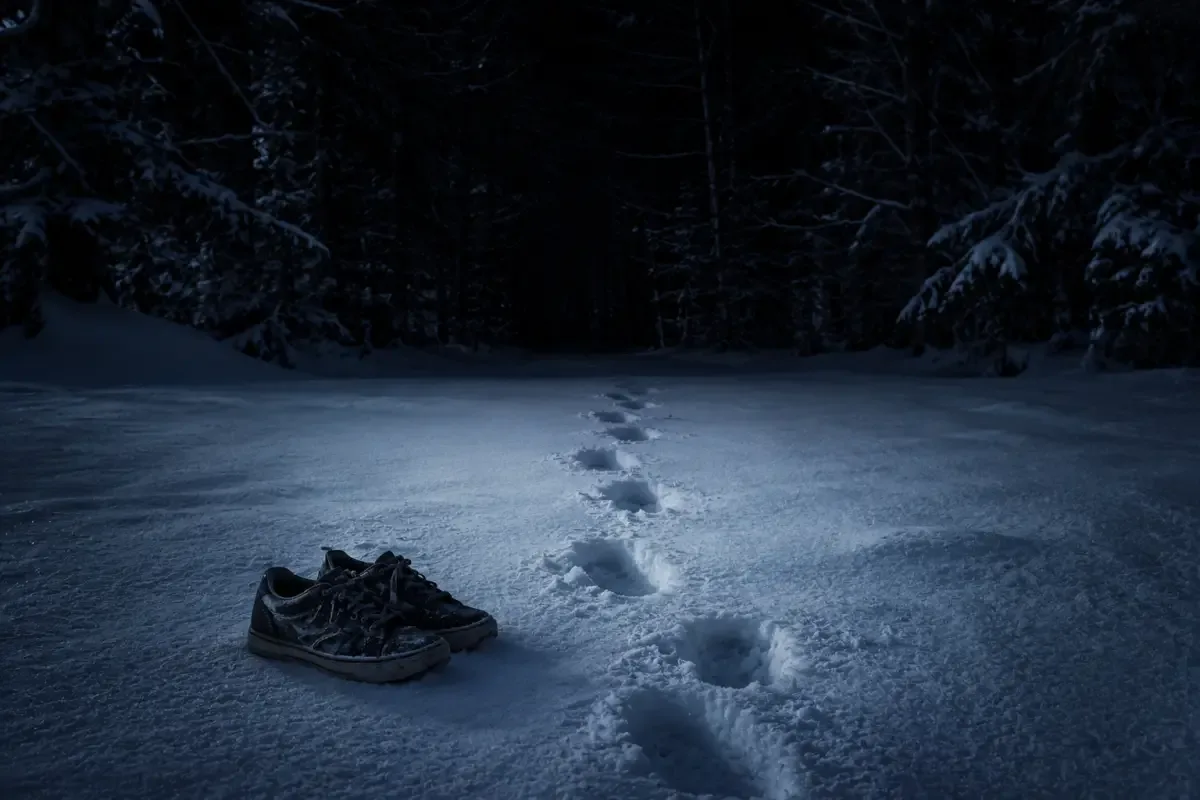
What that swap meant has never been agreed upon. It could mark the moment a frightened, undermedicated man pushed out into deep snow searching for help that never came. It could mark something else entirely.
Search teams covered the surrounding wilderness for weeks, then years. They found nothing. Not a bone. Not a thread. Mathias's photograph went out to psychiatric hospitals across California, in case he had wandered into one, lost and unrecognized, among strangers who never thought to ask his name.
No one ever called it in.
The trailer still sits in the case files, frozen in photographs taken that June: the folded sheets, the unopened locker, the butane valve nobody turned.
Whatever climbed that mountain with five men on a February night in 1978 left no fingerprints, no confession, and no second witness willing to speak as plainly as Joseph Schons once did, before even his own account dissolved into the kind of uncertainty that mountains keep for themselves.
SOURCES
- Yuba County Five — Wikipedia
- Cynthia Gorney, "5 'Boys' Who Never Came Back," The Washington Post, July 6, 1978
- "Five Men Vanish in Wilderness," The Desert Sun, March 9, 1978 — via the California Digital Newspaper Collection, UC Riverside
- "Cold case: Why did 5 Northern California men disappear in 1978?" The Sacramento Bee, February 26, 2019
- "What Happened to the Yuba County Five?" A&E Crime + Investigation
Aron Corvin
A researcher of the unknown who loves a good story, but doesn't sell sensationalism. I research every topic in detail before I publish it. If you enjoy what I write, your support would mean a lot and help me keep going.