
Hoia-Baciu: How a Romanian Forest Became "Haunted"
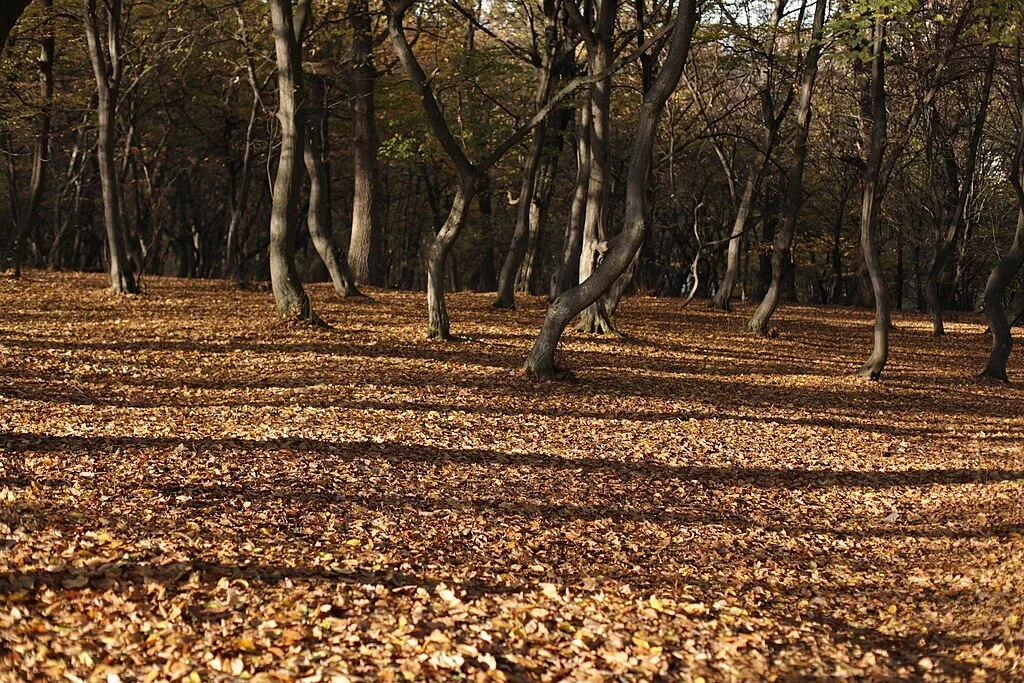
On the western edge of Cluj-Napoca, just past the Ethnographic Museum, a forest begins. Inside, there are mountain biking trails, paintball courses, and an archery range. And according to the stories that circulate about it, it's the most haunted forest in the world.
Hoia-Baciu isn't some remote wilderness. You can get there from the city in no time, and at its widest point it's barely over half a mile (1 kilometer) across. And yet its name keeps turning up on ghost-hunting shows, on lists of the world's scariest places, and in stories about disappearances, strange lights, and portals to other dimensions.
For some, it's a bike trail. For others, a doorway to another dimension. Same forest, same trees, but not the same stories. How did that happen?
Hoia-Baciu: A Forest Caught Between Bike Trail and Portal
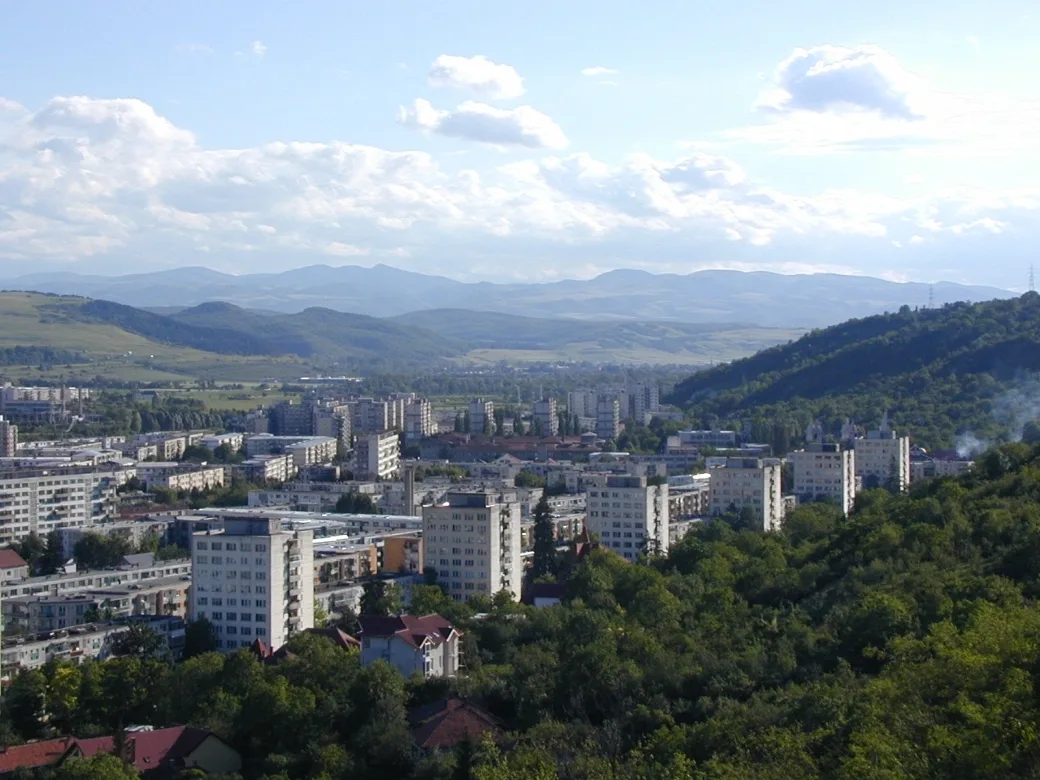
Hoia-Baciu sits west of Cluj-Napoca, in Romania's Transylvania region. According to a 2016 study on tourism development, it covers about 1.1 square miles (2.95 square kilometers).
Its southern edge starts on a ridge above the Someșul Mic River, and the northern edge slopes down toward Nadăș. The forest isn't a single administrative unit: it's split between the city of Cluj-Napoca and the communes of Baciu, Florești, and Suceagu.
At the edge of the forest, right past the Ethnographic Museum, a second layer of the story begins. The forest itself has mountain biking trails, paintball courses, an archery range, picnic spots, and places to ride horses.
Since 2014, the local Hoia-Baciu Project has been leading visitors through the forest, running photo tours, night walks, and workshops.
In 2015, according to the same study, about 1 percent of the 8,794 visitors who sought information at Cluj's Tourist Information Center asked about Hoia-Baciu. That's a small number, but enough to put the forest on the tourist map.
The study also notes the first tourism products built around it: day and night photo tours, yoga, escape rooms, team-building workshops, meditation, and archery.
The project also produced the forest's first tourist map, marking parking, picnic spots, and recommended gear. That's not a list of wonders. It's a list of what you can actually do there. For people in the surrounding area, the forest is just part of everyday life.
Transylvania is the correct label, but it's a broad one. Skeptoid points out that it's a historical name covering a huge swath of central Romania, not some specific place out of a Bram Stoker novel.
The story around the forest leans on that association anyway: Transylvania, Count Dracula, dense woods. Hoia-Baciu has become a place where fear gets sold as an experience.
The forest is real, ordinary, well-maintained, and open to visitors. So the question isn't whether the forest is really there. The question is how a forest for mountain bikers became a forest for portals.
Where the Portal Story Comes From
The story has several layers. The most famous one involves a five-year-old girl who walked into the forest, disappeared, and came back five years later with no memory of the missing time.
The researcher behind this investigation went looking for her name, the date, and a news record. He found none of them. There's no record of any such disappearance in Romanian newspapers, and the forest is small enough that a search party could cover it in a single day. By all appearances, the story is an urban legend.
The second layer is a clearing. Inside the forest is Poiana Rotundă, a roughly circular spot about half an acre (2,000 square meters) in size.
Photos of a perfect circle circulate online, but the same fact-check warns that some of them are fakes. The actual clearing isn't a perfect circle, and a main dirt road cuts straight through it.
The third layer is a photograph. The 2016 study notes that in 1968, a military technician named Emil Barnea photographed a flying object above Poiana Rotundă, and that some experts labeled it a UFO.
The photo made its way into the tourism narrative, but it never became proof of anything. Media outlets kept recycling it, and few people ever bothered to check what it actually showed.
The same study notes that the forest landed on lists of the most haunted and eeriest places, and that media promotion starting in 2012 was intense, and more than a little exaggerated. That's an important detail: the study itself acknowledges that part of the forest's image was manufactured through promotion.
The fourth layer is made up of lights, and the feeling that something invisible is following you.
The analysis records stories about red and orange lights, and about strange feelings visitors report. Some of these stories made their way into an episode of Ghost Adventures, which filmed in the forest in 2014.
But that very episode also shows the limits of these claims: the crew saw a light in the distance, described it as a big glowing ball, and moved on. They never went to investigate it.
The portal is the final layer in these stories. The portal story has never been measured or verified; it's just the conclusion the narrative reaches on its own. If the clearing isn't ordinary, if the lights aren't ordinary, if the disappearances aren't ordinary, then the forest must be a passage to other worlds.
What Researchers Actually Found in the Forest
Poiana Rotundă is real. The analysis describes it as a clearing of about half an acre (2,000 square meters), near the southwest corner of the forest, with a main dirt road running through it. It isn't a perfect circle, despite how some photos have shown it. And it isn't the only clearing like it in the region.
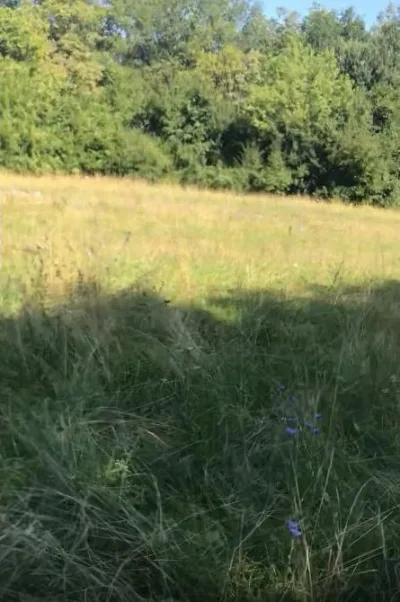
Natural explanations exist. The same analysis mentions "persistent meadows," ecosystems where grass and low vegetation dominate because groundwater sits close to the surface, bedrock is shallow, or the soil is boggy.
The forest is made up of beech, hornbeam, ash, and elm, species that, in this part of the world, often leave open meadows behind. That doesn't rule out anything unusual, but it does explain why a clearing could be just as old as the forest itself.
A geomagnetic anomaly is the next claim. A check of public geomagnetic field data turned up no basis for the story about powerful fields that throw off compasses.
The same holds for the claim that the forest is a site of disappearances: there's no record of any, and the forest is small enough to be searched in a single day. That doesn't mean nothing strange has ever happened there. It means the story hasn't been confirmed.
In 2015, the Hoia-Baciu Project ran a photo contest on what the forest means to locals. Many of the photos portrayed it as dark, mystical, and paranormal.
The 2016 study analyzed those photos and concluded that the forest's reputation had already become part of the local identity, even for people who see it as nothing more than a picnic spot.
The 2014 episode of Ghost Adventures brought the forest attention, but it's also a textbook example of how a television investigation turns into entertainment.
The crew used an amateur ghost-hunting meter in the clearing, filmed the darkness, and described someone having a panic attack. They never measured an actual source of anything, never compared their readings against a control location, and never went to check out the light they'd seen in the distance.
The same analysis points out that the TVR Cluj broadcast tower and the Cluj airport, about 6 miles (10 kilometers) away, both sit nearby, and that the runway and landing lights face toward the forest. That's not proof the light came from the tower or the airport. It's an explanation that can actually be checked, unlike the portal story.
Adrian Pătruț, a chemistry professor and an officer of the Romanian Society for Parapsychology, has written about "bioplasma," ectoplasm, and psychic energy projects. The analysis found no data, no measurements, and no testable hypotheses anywhere in that body of work.
That's a harsh judgment, but a useful one: if the forest really has unexplained phenomena, the first step isn't a portal, it's measurement. The analysis concludes that there's nothing in the forest to justify the rumors about portals.
The forest is real. What's in dispute is the story.
Why People Keep Coming Anyway
If the forest has no verifiable wonders, why doesn't the story ever stop?
A 2025 study on dark tourism analyzed visitor comments on TripAdvisor and Google Maps, along with news articles and blog posts.
Using Leximancer software, the authors concluded that visitors see the forest as having a dual nature: appealing, interesting, and mysterious, but also repellent, haunted, and frightening. Thrill-seekers come for both feelings at once: pleasure and fear, together.
The same study adds that the forest's image is shaped by cultural context, not just personal experience. The fear isn't only in the forest itself. It's also in the stories visitors heard before they ever arrived.
The 2016 study describes a similar split. For locals, Hoia-Baciu is just an ordinary forest for picnics and walks. For tourists, it's part of dark and paranormal tourism. For some, it's a stop on a bigger trip through Transylvania; for others, it's part of everyday life.
The study also notes that visitors were specifically looking for stories and legends, not just trails. The Hoia-Baciu Project even picked up an ambassador: Dacre Stoker, a descendant of Bram Stoker's brother, started spreading the story, especially in the United States.
That's where the circle closes. The forest is real, but its reputation is a product that can be organized and sold: photo tours, night walks, paintball, portal stories.
Visitors don't come looking for proof. They come for the feeling of standing on the edge of something. If that feeling sells, the forest doesn't actually need a portal. It just has to look like it might have one.
In the end, a handful of things remain checkable. The forest exists. The clearing exists. The 1968 photograph exists, but it doesn't prove a UFO. The story about the girl has no name and no date attached to it. The lights in the distance can have perfectly ordinary sources. And yet people keep coming, the cameras keep rolling, and the story keeps going.
The forest itself hasn't changed. What's changed are the stories told about it. Hoia-Baciu isn't a portal. It's a forest that learned how a story turns into a destination.
Cover photo: The Hoia-Baciu forest near Cluj-Napoca. Photo: Cristian Bortes, CC BY 2.0, via Wikimedia Commons.
SOURCES
- Marius-George Oprea, Marius-Cristin Lazin and Elena-Cristina Martiuc, "The Niche Tourism Development of One of the Most Mysterious Forests in Romania: The Hoia-Baciu Forest", Territorial Identity and Development, 2016
- Viorel Mionel and Oana Mionel, "Definitely gets the Adrenaline Pumping!" Fright and Dark Tourism in a Haunted Forest, Tourism Planning & Development, 2025
- Brian Dunning, "Solving the Haunted Hoia-Baciu Forest", Skeptoid, 2016
- Travel Channel, "Romania: Targoviste Castle and Hoia-Baciu Forest", Ghost Adventures
Aron Corvin
Curiosity draws me to stories that lie at the edge of the known and the unknown. I explore mysteries, unusual phenomena, and forgotten events, taking the time to research each subject thoroughly, without sensationalism or unfounded claims. Thank you for reading Anomyst. If you enjoy my work and would like to support it, your support means a great deal to me and helps me continue exploring and sharing new stories.